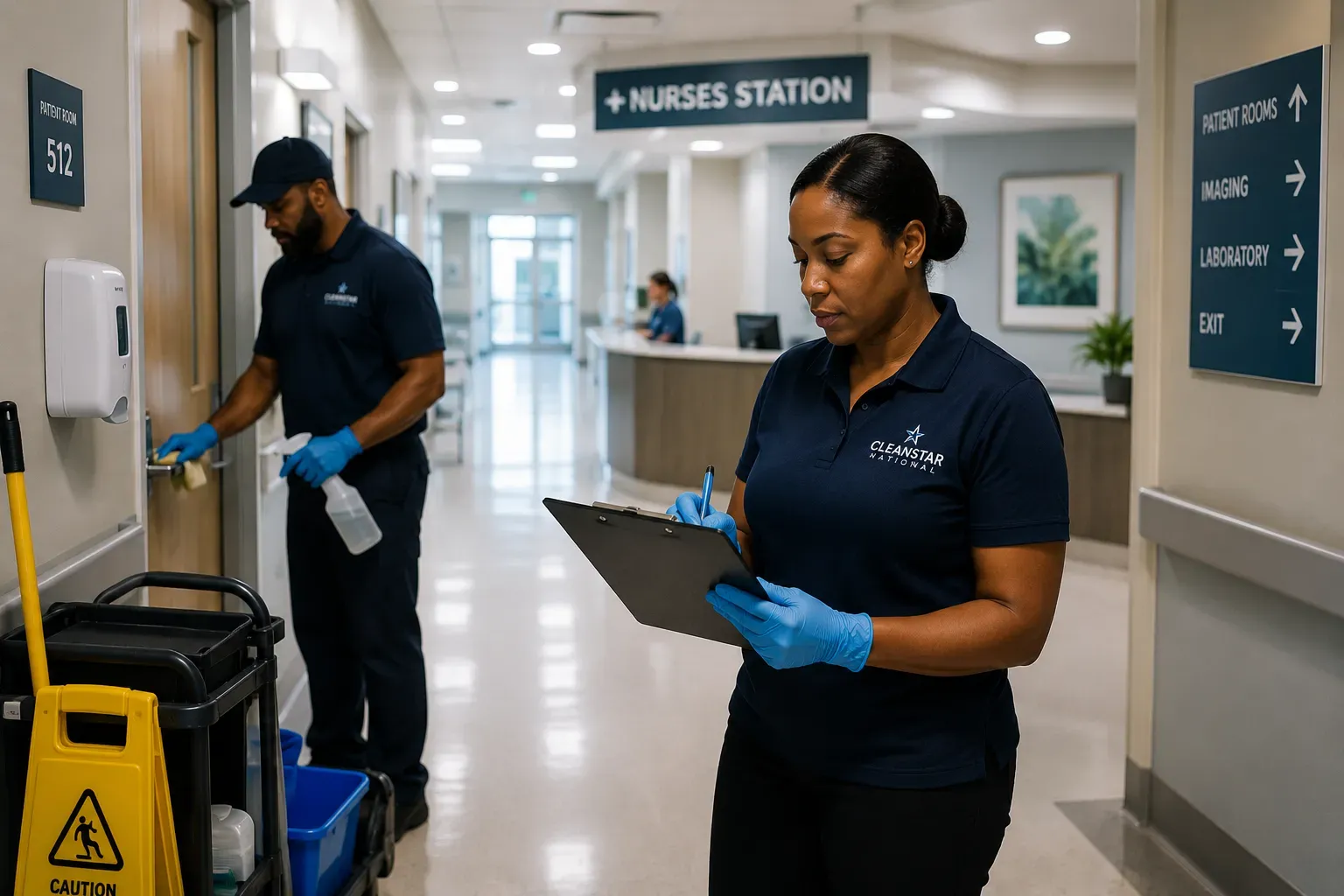
Every Commercial Inspection Begins Before the Inspector Arrives
Atlanta facility managers are judged before the inspector ever opens a clipboard. Floors, restrooms, high-touch surfaces, loading docks, break rooms, entrances, mechanical areas, and visible dust all send a signal about how well a building is managed.
For commercial properties across Atlanta, Marietta, Buckhead, Midtown, Sandy Springs, Alpharetta, South Fulton, Cobb County, Fulton County, DeKalb County, and Gwinnett County, inspection readiness is no longer just about appearance. It is about safety, compliance, operational continuity, risk reduction, and reputation.
At Cleanstar National , we help commercial, healthcare, industrial, warehouse, construction, education, hospitality, government, and commercial real estate facilities maintain cleaner, safer, inspection-ready environments throughout Metro Atlanta.
Executive takeaway: A commercial facility inspection checklist is not a cleaning list. It is a risk-control tool for facility managers, property managers, operations leaders, healthcare administrators, general contractors, and building owners who need the facility to perform under scrutiny.
What Is a Commercial Facility Inspection Checklist?
A commercial facility inspection checklist is a structured review used by facility managers, property managers, building engineers, operations teams, and general contractors to confirm that a building is clean, safe, organized, and ready for inspection, turnover, tenant use, executive review, or regulatory evaluation.
The checklist should cover more than basic janitorial tasks. It should evaluate the areas that influence health, safety, compliance, tenant confidence, employee morale, visitor experience, and operational performance.
For Atlanta businesses, this matters because the region includes major healthcare campuses, corporate offices, logistics hubs, industrial buildings, airports, hospitality venues, government facilities, schools, construction projects, and mission-critical environments that cannot afford preventable cleaning failures.
Quick Navigation
- Who should use this checklist?
- Why inspection readiness matters
- Commercial facility inspection checklist
- Industry-specific inspection priorities
- Related Cleanstar National services
- Facility inspection FAQ
Who Should Use This Checklist?
This checklist is built for decision-makers responsible for facility readiness, safety, appearance, compliance support, tenant experience, patient confidence, operational continuity, and vendor accountability.
- Facility managers
- Property managers
- Operations managers
- Building engineers
- General contractors
- Healthcare administrators
- Warehouse and logistics managers
- Manufacturing supervisors
- Commercial real estate teams
- Government and education facility leaders
Cleanstar insight: The best inspection outcomes happen when cleaning is managed before the walkthrough, not corrected after the problem is visible.
Why Inspection Readiness Matters in 2026
Commercial cleaning affects more than how a facility looks. It connects directly to slip-and-fall prevention, infection-control support, indoor environmental quality, equipment protection, employee confidence, patient trust, tenant retention, and brand reputation.
The U.S. Occupational Safety and Health Administration requires walking-working surfaces to be kept clean, orderly, and sanitary. That makes housekeeping part of facility safety, not just appearance. Healthcare guidance from the CDC also emphasizes environmental cleaning, disinfection, and high-touch surface management as part of infection prevention. For indoor environments, EPA guidance continues to emphasize source control, ventilation, and cleaning practices that reduce contaminants in occupied buildings.
| Inspection Area | What It Signals | Facility Risk If Missed |
|---|---|---|
| Entrances and lobbies | Professional control | Poor first impression, tenant concern, visitor complaints |
| Restrooms | Sanitation discipline | Odor issues, complaints, reduced occupant confidence |
| Floors | Safety and maintenance quality | Slip hazards, visible neglect, surface damage |
| High-touch surfaces | Infection prevention awareness | Cross-contamination concerns and health-risk perception |
| Loading docks and warehouses | Operational readiness | Debris, dust, blocked pathways, productivity disruption |
| Construction turnover areas | Project completion quality | Punch-list delays, owner dissatisfaction, occupancy delays |
The 2026 Commercial Facility Inspection Checklist
1. Entrances, Lobbies, and First-Impression Areas
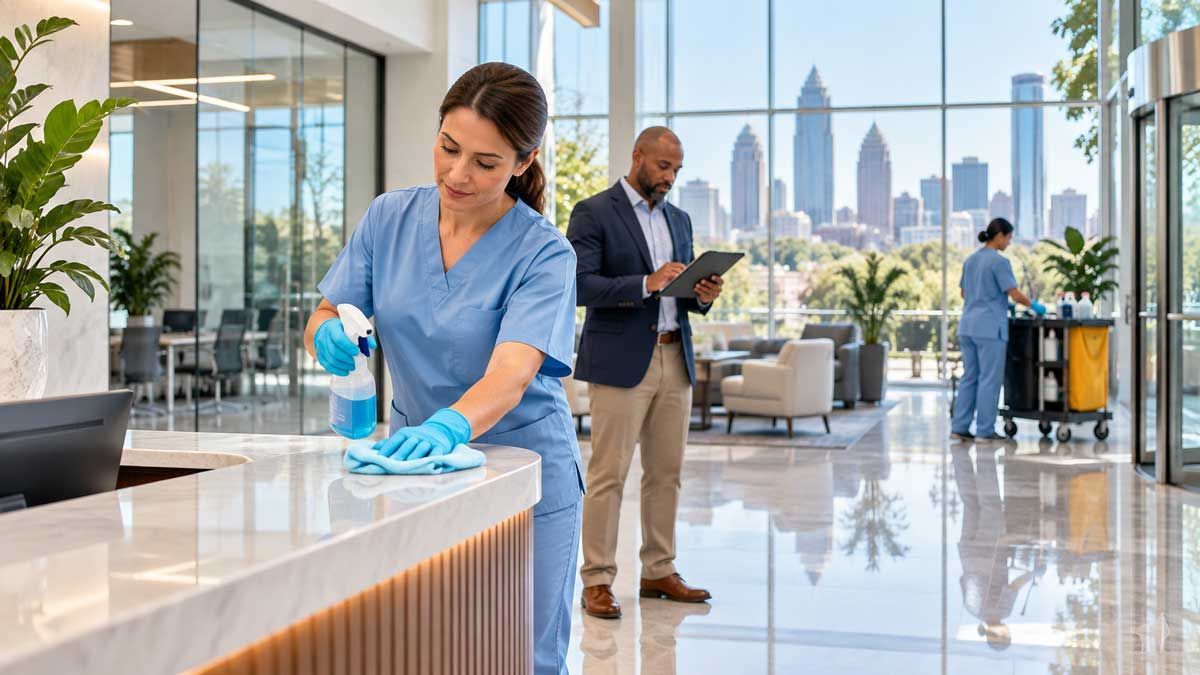
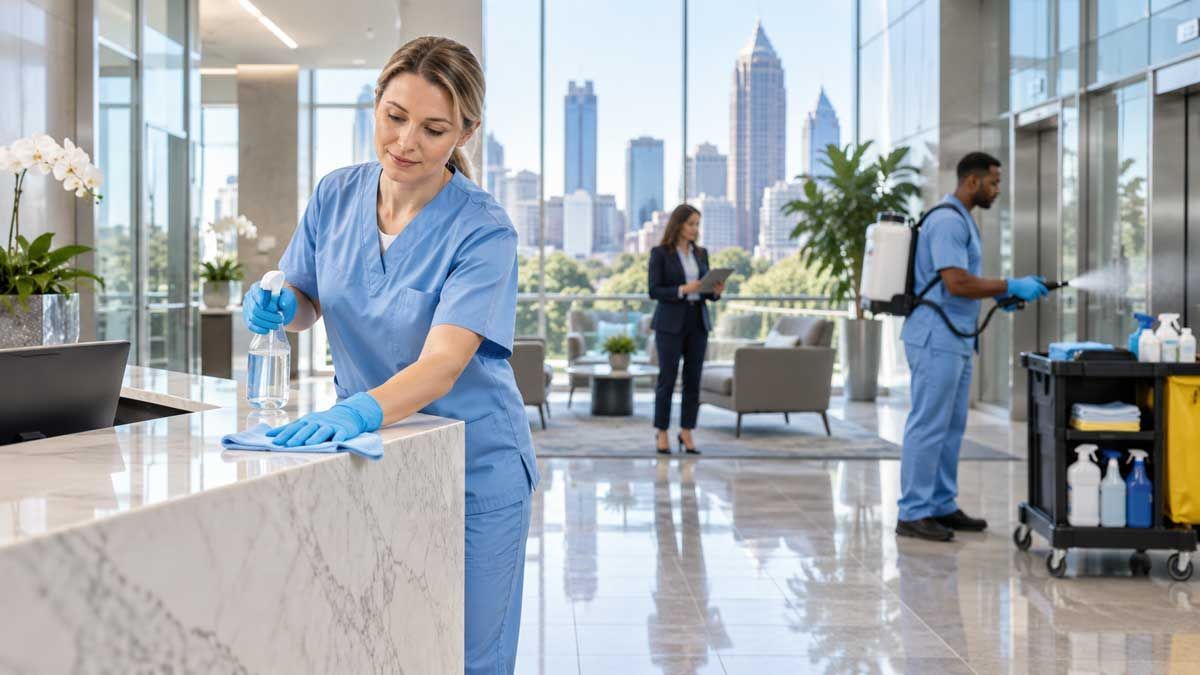
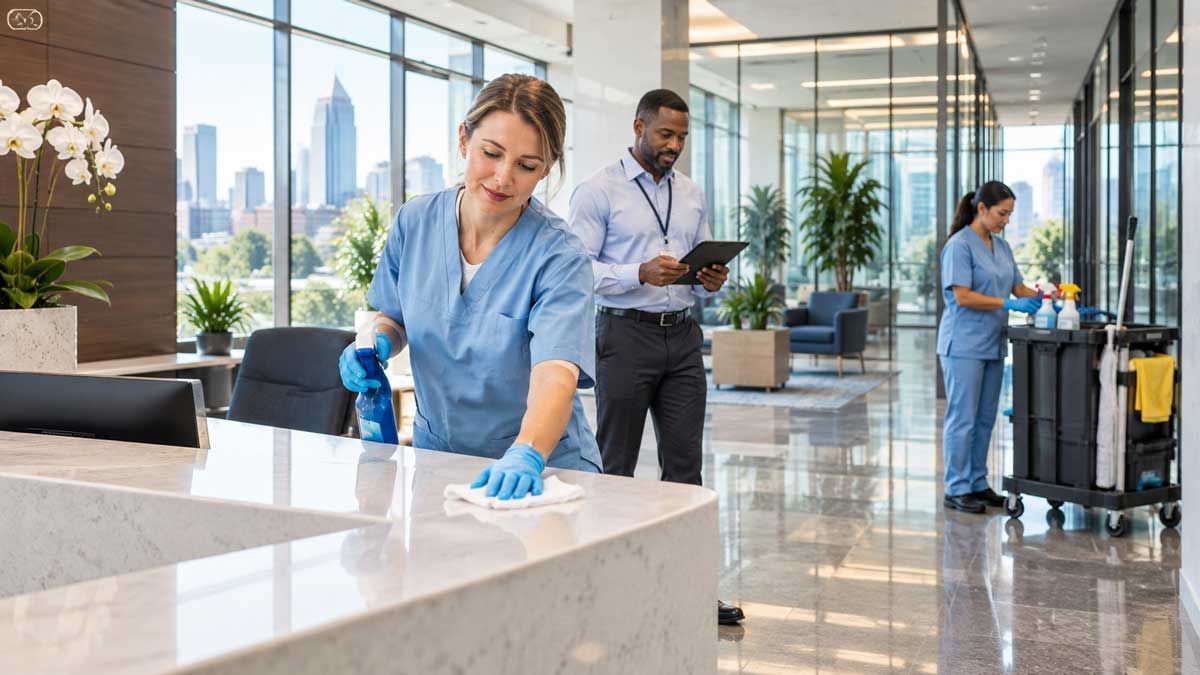
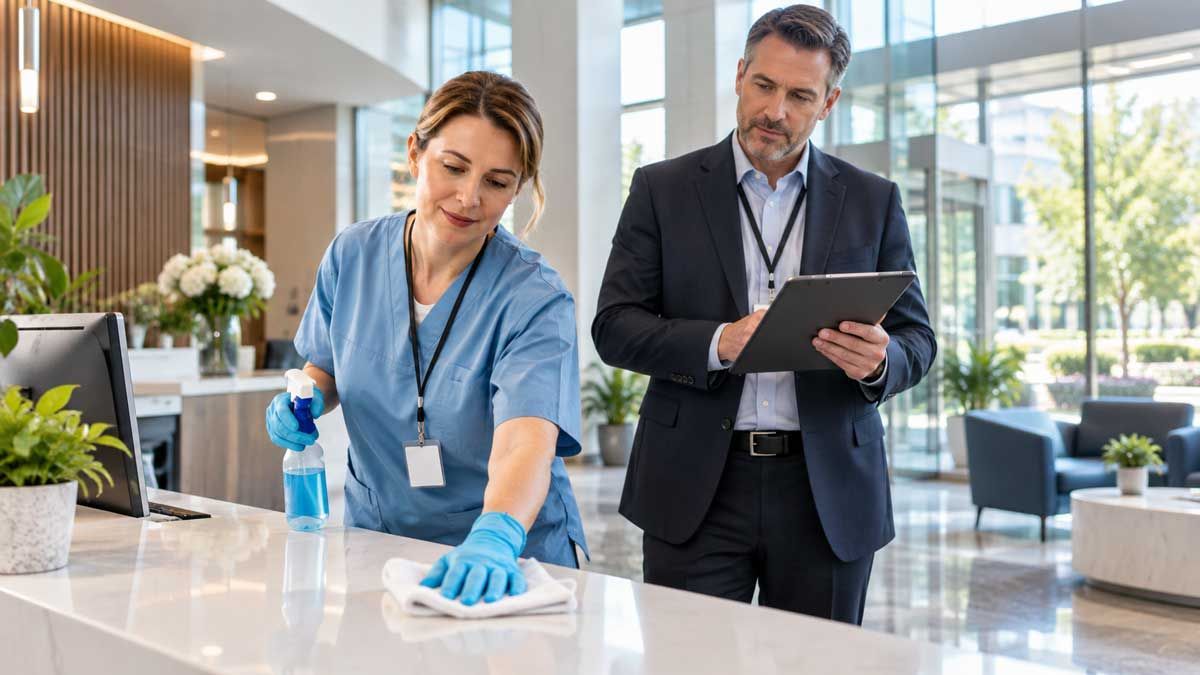
Inspectors, tenants, patients, visitors, employees, and executives form an opinion within seconds of entering a facility. Entry areas should be clean, organized, dry, safe, and free from visible dust, debris, fingerprints, odors, overflowing trash, stained flooring, and clutter.
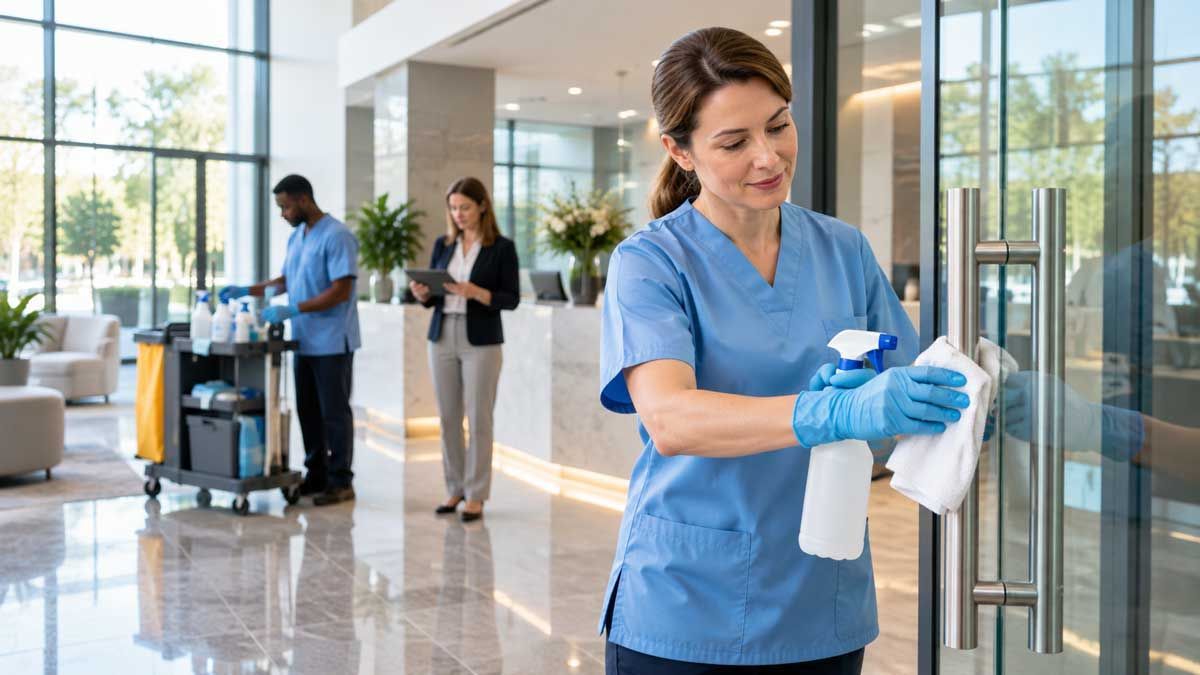
- Glass doors and entry windows are clean
- Walk-off mats are vacuumed and positioned correctly
- Floors are free of stains, dust, debris, and slip hazards
- Reception counters and seating areas are cleaned and sanitized
- Trash and recycling areas are emptied
- Signage and directional areas are visible and clean
For corporate offices and managed properties, pair this section with corporate janitorial services and building maintenance services.
2. Restrooms and Sanitation Zones
Restrooms remain one of the fastest ways to reveal whether a cleaning program is controlled or reactive. A facility can look polished in the lobby and still fail the trust test if restrooms are neglected.
- Toilets, urinals, sinks, counters, and partitions are cleaned and disinfected
- Soap, paper towels, toilet tissue, and hand sanitizer are stocked
- Floors are clean, dry, and odor-free
- Mirrors and fixtures are free of streaks and buildup
- Trash receptacles are emptied before overflow
- Touchpoints are sanitized throughout the day when traffic requires it
Inspection note: Restrooms are not minor spaces. They are one of the clearest signals of whether a building is being actively managed or passively serviced.
3. Floors, Carpets, and Hard Surfaces
Floor condition communicates maintenance quality immediately. Scratched, dusty, stained, slippery, or neglected floors can create safety concerns and damage the perceived value of the facility.
- Hard floors are swept, scrubbed, mopped, or burnished as appropriate
- Carpets are vacuumed and spot-treated
- High-traffic pathways are monitored
- Floor drains and edges are clean
- Slip hazards are corrected quickly
- Construction dust, warehouse dust, and tracked-in debris are removed
For facilities with visible flooring, heavy traffic, or tenant-facing areas, review Cleanstar National’s commercial floor care services.
4. High-Touch Surfaces
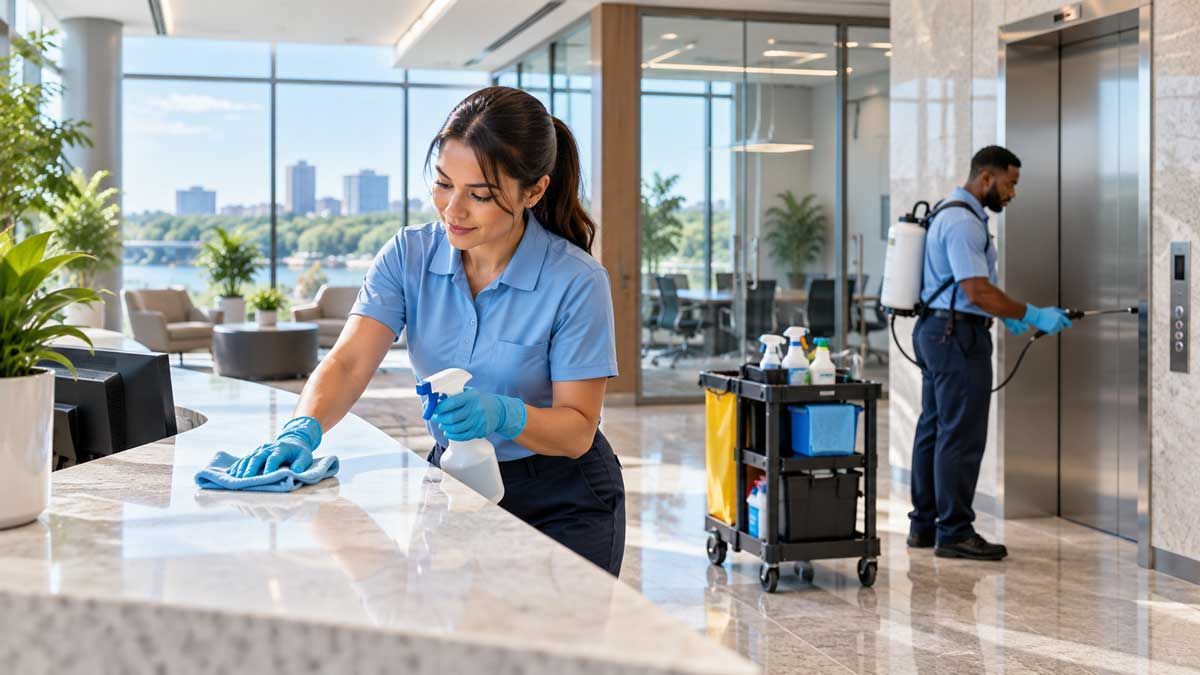
High-touch surfaces are essential in healthcare, offices, schools, hospitality, industrial facilities, and public-facing properties. These surfaces should be cleaned consistently because they influence infection prevention, safety, and occupant confidence.
- Door handles
- Elevator buttons
- Light switches
- Handrails
- Reception counters
- Shared tables
- Break room surfaces
- Restroom touchpoints
- Shared equipment controls
For healthcare, medical, and high-risk environments, this connects directly to advanced infection control cleaning in Atlanta.
5. Break Rooms, Kitchens, and Employee Areas
Employee areas are often overlooked during inspections, but they reveal whether cleaning standards apply across the whole facility or only in customer-facing areas.
- Counters, tables, sinks, and appliance handles are cleaned
- Trash is removed before overflow occurs
- Floors are free of food debris and spills
- Microwaves, refrigerators, and shared surfaces are maintained
- Odors are controlled
- Supplies are restocked where applicable
6. Loading Docks, Warehouses, and Back-of-House Areas
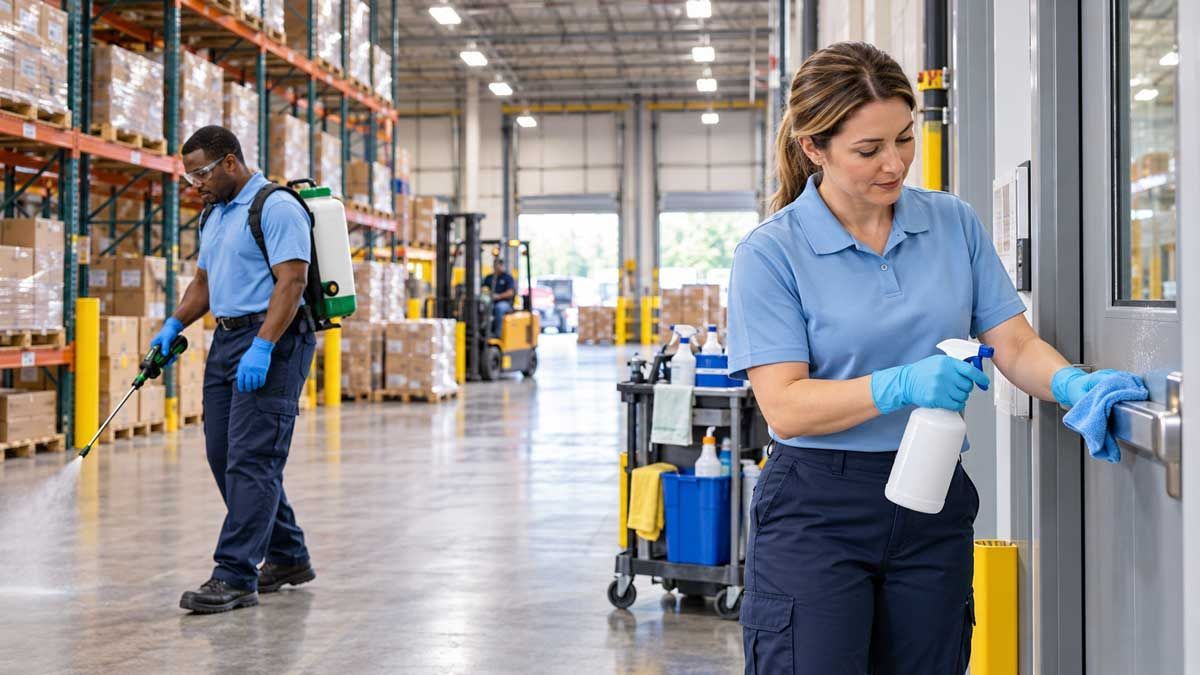
For Atlanta logistics, warehouse, manufacturing, and distribution facilities, inspection readiness must include operational areas. Dust, debris, blocked pathways, dirty dock plates, and neglected back-of-house spaces can create safety and productivity risks.
- Loading docks are free of debris
- Warehouse floors are swept or scrubbed
- Dust is controlled around racking, equipment, and pathways
- Trash and packaging waste are removed
- Walkways and emergency routes are clear
- Restrooms and employee areas are maintained
For logistics and automation-heavy operations, see automated fulfillment center cleaning in Atlanta, industrial cleaning, and industrial cleaning services in Atlanta, GA.
7. Healthcare and Patient-Facing Areas
Healthcare facilities require a higher level of consistency because cleanliness affects patient perception, infection prevention, staff confidence, and operational readiness.
- Waiting rooms are clean and organized
- Patient-facing surfaces are disinfected
- Floors are maintained without disrupting operations
- Restrooms are serviced frequently
- Exam-adjacent areas are cleaned according to facility expectations
- High-touch surfaces receive priority attention
Cleanstar National supports healthcare facility cleaning in Atlanta, hospital cleaning in Atlanta, medical office cleaning, and medical cleaning services in Atlanta, GA.
8. Post-Construction and Turnover Areas
For general contractors, developers, and property owners, post-construction cleaning is directly tied to punch-list completion, turnover timing, and first impressions. Dust left behind after construction can affect floors, glass, fixtures, HVAC returns, millwork, restrooms, elevators, and tenant spaces.
- Construction dust is removed from visible and hidden surfaces
- Windows, glass, and frames are cleaned
- Floors are cleaned according to surface type
- Restrooms, fixtures, and hardware are detailed
- Trash, labels, adhesive, and debris are removed
- Final presentation supports owner walk-throughs and occupancy
For project closeout support, review construction cleaning, post-construction cleaning in Atlanta, and turnover cleaning for general contractors.
9. Exterior Touchpoints and Public Areas
Exterior areas influence safety and perception before anyone enters the building. This is especially important for commercial real estate, hospitality, education, healthcare, and government facilities.
- Entrances are free of litter and debris
- Sidewalks and high-traffic areas are maintained
- Exterior trash receptacles are emptied
- Windows and visible glass are clean
- Outdoor seating or common areas are serviced
- Loading or service areas are controlled
For exterior-facing needs, consider commercial window cleaning, high-rise window cleaning, and commercial pressure washing.
10. Documentation, Communication, and Quality Control
A strong commercial cleaning program should not depend on hope. Facility teams need clear scopes, repeatable standards, communication, escalation paths, and quality control. Inspection readiness improves when cleaning partners understand the building’s risks, usage patterns, and operational schedule.
- Cleaning scope is documented
- Priority areas are clearly defined
- Service schedules match facility traffic
- Issues are reported quickly
- Quality checks are performed consistently
- Facility managers know who to contact when needs change
Facility manager rule: If the cleaning scope is vague, the inspection outcome will be inconsistent. A professional cleaning program should be documented, measurable, and aligned with the building’s real operating conditions.
Industry-Specific Inspection Priorities
Healthcare Facilities
Healthcare facilities require stronger controls for high-touch surfaces, waiting rooms, patient areas, restrooms, floors, clinical-adjacent spaces, and staff areas. Cleaning must support patient safety, staff confidence, infection prevention, and the expectations of healthcare administrators.
- Operating room cleaning support in Atlanta
- OR terminal cleaning services in Atlanta
- Hospital infection control cleaning in Atlanta
- ATP testing for hospital cleaning validation
Warehouses, Logistics, and Distribution Centers
Warehouses and logistics facilities need inspection routines that focus on dust, debris, floor condition, dock areas, pedestrian pathways, equipment zones, employee restrooms, break rooms, and racking-adjacent buildup.
- Atlanta warehouse cleaning
- OSHA-compliant warehouse spill response
- Micro-dust and sensor risks in automated warehouses
- Cold storage cleaning in Atlanta
Industrial and Manufacturing Facilities
Industrial environments require cleaning programs that respect production schedules, safety zones, equipment proximity, dust control, floor condition, workflow, and downtime sensitivity. The goal is not just clean space. The goal is operational continuity.
Explore industrial cleaning and industrial cleaning services in Atlanta.
Data Centers, Server Rooms, and Critical Environments
Critical environments require specialized cleaning discipline because dust, residue, static-sensitive procedures, airflow disruption, and particle contamination can affect equipment reliability and uptime.
- Data center cleaning
- Data center cleaning in Atlanta, GA
- Cleanroom and data center cleaning
- Critical environment risk audit
- Server room cleaning checklist
Commercial Offices and Real Estate Properties
Office and commercial real estate inspections should focus on lobby presentation, restrooms, tenant corridors, conference rooms, elevators, glass, flooring, break rooms, common areas, trash control, odor control, and consistency across occupied spaces.
Relevant services include janitorial service, corporate janitorial services, and commercial day porter services.
Atlanta Facility Readiness: Local Areas Cleanstar National Supports
Cleanstar National supports facility managers and commercial properties throughout Metro Atlanta, including Atlanta, Marietta, Buckhead, Alpharetta, Roswell, Cobb County, Fulton County, DeKalb County, Gwinnett County, and surrounding commercial corridors.
For a broader view of service coverage, visit areas we service.
Related Cleanstar National Services
| Facility Need | Recommended Cleanstar Service |
|---|---|
| Daily facility cleanliness | Janitorial service |
| Corporate offices and managed buildings | Corporate janitorial services |
| Healthcare and patient-facing spaces | Healthcare facility cleaning in Atlanta |
| Construction closeout and turnover | Construction cleaning |
| Industrial buildings | Industrial cleaning |
| Floors and high-traffic surfaces | Commercial floor care |
| Ongoing daytime support | Commercial day porter services |
| Critical environments | Critical environment risk audit |
What Facility Managers Should Ask Before Hiring a Cleaning Partner
Before choosing a commercial cleaning provider, facility leaders should ask whether the vendor understands the environment, traffic patterns, safety concerns, industry expectations, and inspection risks of the building.
- Does the cleaning provider understand your industry?
- Can the provider support inspection readiness, not just routine cleaning?
- Are scopes, schedules, and quality checks documented?
- Can the provider handle high-touch surfaces and priority zones?
- Does the provider understand healthcare, warehouse, industrial, or construction-specific risks?
- Can the provider scale for special events, audits, turnovers, or executive visits?
- Is there a clear communication path when facility needs change?
Bottom line: The cheapest cleaning vendor can become expensive fast if poor service creates complaints, delays, safety risks, rework, or failed expectations.
Related Resources for Atlanta Facility Managers
- Atlanta Facility Manager 2026 Blueprint
- The Ultimate Guide to Commercial Cleaning in Atlanta
- Enterprise Janitorial Services vs. Standard Cleaning Contracts
- Critical Environment Cleaning Standards in Atlanta Facilities
- Atlanta World Cup Cleaning Services
- Commercial Cleaning FAQs in Atlanta
- Industries Cleanstar National serves
Commercial Facility Inspection FAQ
What should facility managers inspect before an audit?
Facility managers should inspect entrances, restrooms, floors, high-touch surfaces, employee areas, storage rooms, loading docks, exterior areas, documentation, communication processes, and any industry-specific compliance zones.
Why is cleaning important before a facility inspection?
Cleaning affects safety, compliance perception, occupant confidence, first impressions, and operational readiness. A clean facility signals control, professionalism, and risk awareness.
How often should commercial facilities be inspected internally?
High-traffic commercial facilities should be reviewed frequently, with daily checks for priority areas and deeper inspections scheduled weekly, monthly, or before major audits and site visits.
What types of Atlanta facilities does Cleanstar National support?
Cleanstar National supports commercial offices, healthcare facilities, warehouses, distribution centers, industrial buildings, construction sites, hospitality properties, education facilities, government buildings, and commercial real estate environments throughout Metro Atlanta.
Does Cleanstar National provide post-construction cleaning?
Yes. Cleanstar National provides post-construction and turnover cleaning for contractors, developers, property owners, and facility teams preparing buildings for inspection, occupancy, or owner walk-throughs.
Can Cleanstar National support inspection readiness for healthcare facilities?
Yes. Cleanstar National supports healthcare, hospital, medical office, surgical center, and patient-facing cleaning needs across Metro Atlanta, including high-touch surface cleaning, restroom sanitation, floor care, and infection-control support.
Can Cleanstar National help with facility cleaning before executive visits or tenant walk-throughs?
Yes. Cleanstar National helps commercial properties prepare for tenant tours, executive visits, audits, inspections, owner walkthroughs, and high-visibility events by focusing on the details that shape perception and readiness.
Schedule a Facility Risk Audit in Atlanta
If your facility is preparing for an inspection, audit, turnover, executive visit, tenant move-in, or operational review, Cleanstar National can help identify cleaning risks before they become visible problems.
Cleanstar National helps Atlanta facilities stay inspection-ready, operationally confident, and professionally presented.
Request a quote or contact Cleanstar National to schedule a facility risk conversation.
Last reviewed: July 2026.