

The Ultimate Guide to Data Center Cleaning in Metro Atlanta and Georgia
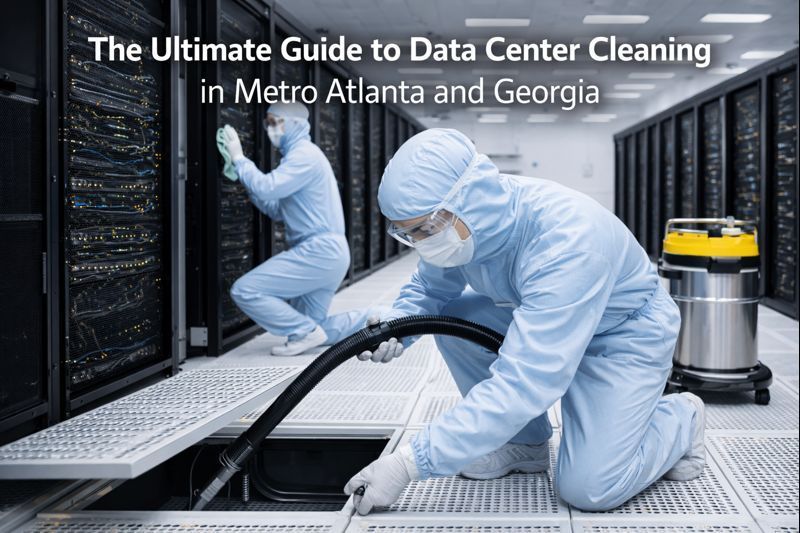
Data center cleaning is not standard janitorial work. It is controlled, ESD-aware, mission-critical maintenance designed to protect uptime, airflow, and sensitive infrastructure. In live environments, the objective is simple but unforgiving: remove contaminants without introducing operational risk.
For organizations operating data centers, server rooms, and critical IT facilities across Metro Atlanta and Georgia, proper cleaning is a foundational part of long-term reliability. Dust, debris, and unmanaged buildup can interfere with cooling systems, restrict airflow, and gradually degrade equipment performance if left unchecked.
This guide explains how professional data center cleaning works, why it matters, and what Georgia facilities should look for when evaluating data center cleaning companies.
What Is Data Center Cleaning?
Data center cleaning is a structured process that removes dust and contaminants from controlled environments using ESD-safe tools, HEPA-filtered equipment, and methodical procedures. Unlike general commercial cleaning, it is performed inside live facilities where uptime, airflow balance, and equipment protection are critical.
Common focus areas include server racks, vents, cable trays, raised floors, subfloors, entryways, and high-traffic paths that introduce airborne particles into the environment.
Data Center Cleaning Services in Metro Atlanta and Georgia
Cleanstar National provides data center cleaning services throughout Metro Atlanta and across Georgia, supporting facilities in Atlanta, Alpharetta, Marietta, Norcross, Sandy Springs, Roswell, Duluth, Peachtree Corners, and surrounding markets.
Our teams work inside active environments with established access controls, security protocols, and facility-specific change procedures. Cleaning is coordinated around approved maintenance windows, including after-hours and overnight schedules, to avoid disrupting operations.
Whether the facility is a regional data center, enterprise server room, network operations center, or mission-critical IT environment, our focus remains the same: controlled cleaning that supports reliable performance.
Why Regular Data Center Cleaning Matters
Dust and debris do more than create visual clutter. In data centers, contaminants can restrict airflow, contribute to heat retention, and settle in areas that are difficult to monitor.
Routine professional cleaning helps support:
- Clear airflow paths for cooling systems
- Reduced risk of overheating caused by blocked vents or underfloor buildup
- Improved visibility of cables, connections, and infrastructure
- Safer working conditions for IT and facilities teams
- Consistent maintenance allows small issues to be identified early, before buildup contributes to larger operational concerns.
How Data Center Cleaning Is Performed in Georgia Facilities
Georgia facilities often operate continuously and experience high foot traffic, making flexible scheduling and controlled execution essential.
A professional data center cleaning process typically includes:
Pre-Clean Assessment
Access rules, ESD requirements, airflow layouts, and restricted zones are reviewed with facility leadership before work begins.
Controlled Cleaning Methods
ESD-safe tools and HEPA-filtered vacuuming are used to remove contaminants from racks, vents, cable trays, and surfaces without re-aerosolizing particles.
Subfloor and Raised Floor Cleaning
Underfloor areas are cleaned methodically to address hidden debris that can impact airflow and cooling efficiency.
Verification and Documentation
Cleaning summaries and visual documentation are provided where permitted to support internal records and compliance needs.
This structured approach allows cleaning to be completed safely while supporting operational stability.
Enhancing Airflow Efficiency in Server Rooms
Airflow management is central to data center performance. Dust accumulation on vents, floor grates, and cooling pathways can restrict air movement and contribute to uneven temperature distribution.
Professional cleaning focuses on keeping airflow routes clear so cooling systems can function as designed. HEPA-filtered equipment captures fine particles rather than spreading them across sensitive areas.
Maintaining Clean Subfloors
Raised floors conceal areas where debris can accumulate unnoticed. Over time, this buildup may be disturbed by airflow or maintenance activity and redistributed throughout the facility.
Subfloor cleaning reduces hidden contaminant reservoirs and supports consistent cooling performance. It is performed carefully to avoid disturbing cabling, airflow panels, or infrastructure beneath the floor system.
Anti-Static Measures and Equipment Protection
Static electricity is an invisible risk in data center environments. Professional cleaning incorporates ESD-safe practices, including appropriate tools, materials, and grounding procedures, to help protect sensitive electronic components during maintenance.
Using ESD-safe methods reduces the chance of accidental discharge while cleaning around active equipment.
Cable Organization and Accessibility
Disorganized cabling can restrict airflow, complicate cleaning, and increase the risk of accidental disconnection. Cleaning sessions often include visual inspection of cable pathways to identify areas where improved organization may support safer maintenance.
Clear cable routing also makes future cleaning and inspection more efficient.
Scheduling Professional Data Center Cleanings
Cleaning frequency depends on facility usage, environmental conditions, foot traffic, and operational requirements. Many Georgia data centers benefit from quarterly or semiannual cleanings, with more frequent attention given to entryways and high-traffic zones.
A professional provider evaluates site conditions and recommends a schedule that supports consistent performance without unnecessary disruption.
What Georgia Facilities Should Look for in a Data Center Cleaning Company
When evaluating data center cleaning companies in Georgia, facilities should prioritize providers that demonstrate:
- Experience working in live data centers and critical IT environments
- ESD-safe cleaning methods appropriate for sensitive equipment
- HEPA-filtered vacuuming instead of dry dusting or compressed air
- Ability to work after hours or during approved maintenance windows
- Clear coordination with facility managers and security teams
- Documentation suitable for audits and internal reporting
The right partner understands that protecting uptime comes first.
Frequently Asked Questions About Data Center Cleaning in Georgia
Do you provide data center cleaning throughout Metro Atlanta?
Yes. Cleanstar National services Metro Atlanta and surrounding Georgia markets, including Alpharetta, Marietta, Norcross, Sandy Springs, and nearby areas.
Can cleaning be performed after hours or overnight?
Yes. Most data center cleaning is scheduled during approved maintenance windows to avoid disrupting live operations.
Is data center cleaning different from standard commercial cleaning?
Yes. Data center cleaning requires ESD-safe tools, HEPA filtration, controlled methods, and coordination with facility operations.
Do you clean under raised floors?
Yes. Subfloor cleaning is a critical part of reducing hidden debris that can impact airflow and cooling performance.
Conclusion
A clean data center supports stable airflow, safer operations, and long-term equipment reliability. Professional cleaning is not about appearance; it is about protecting critical infrastructure through disciplined, controlled maintenance.
For organizations across Metro Atlanta and Georgia, working with an experienced data center cleaning company helps ensure that contaminants are removed without introducing risk. The right partner operates within your access controls, respects your uptime requirements, and delivers documentation that supports operational confidence.
Cleanstar National: Expert B2B Cleaning Solutions for Atlanta's Critical Industries