Healthcare Facility Cleaning in Atlanta: Infection Control, Compliance, and Patient Safety
Healthcare Facility Cleaning in Atlanta: Infection Control, Compliance, and Patient Safety
In healthcare environments, cleanliness directly affects patient confidence, staff safety, infection prevention, and operational trust. Hospitals, clinics, surgical suites, and medical offices require more than standard janitorial service. They require structured healthcare cleaning systems built around consistency, accountability, and contamination control.
In medical environments, small oversights can become clinical risks.
Why Healthcare Cleaning Requires Specialized Protocols
Medical environments experience constant exposure to high touch surfaces, biological contaminants, patient traffic, staff movement, and shared equipment. Unlike general commercial spaces, healthcare facilities must support infection prevention while maintaining operational continuity around patients, providers, and visitors.
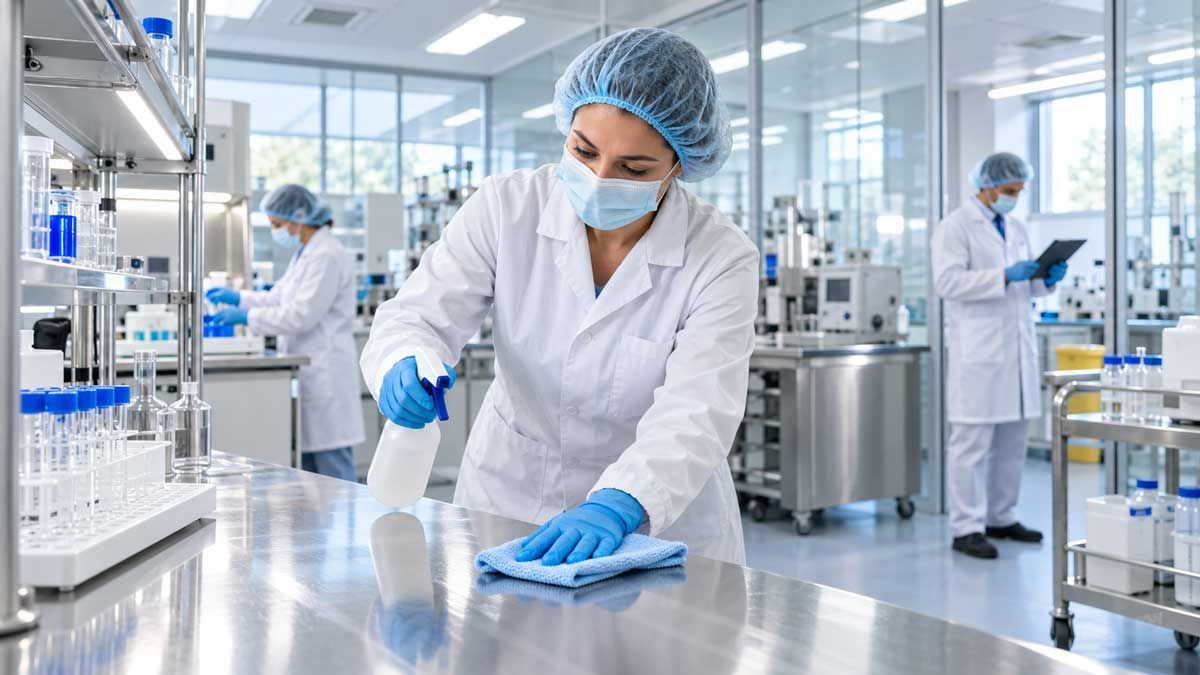
A visible clean appearance matters, but healthcare cleaning goes deeper. Surface disinfection, restroom sanitation, touchpoint control, floor maintenance, and procedural consistency all contribute to a safer environment.
Critical Healthcare Cleaning Priorities
- High touch surface disinfection
- Restroom sanitation and odor control
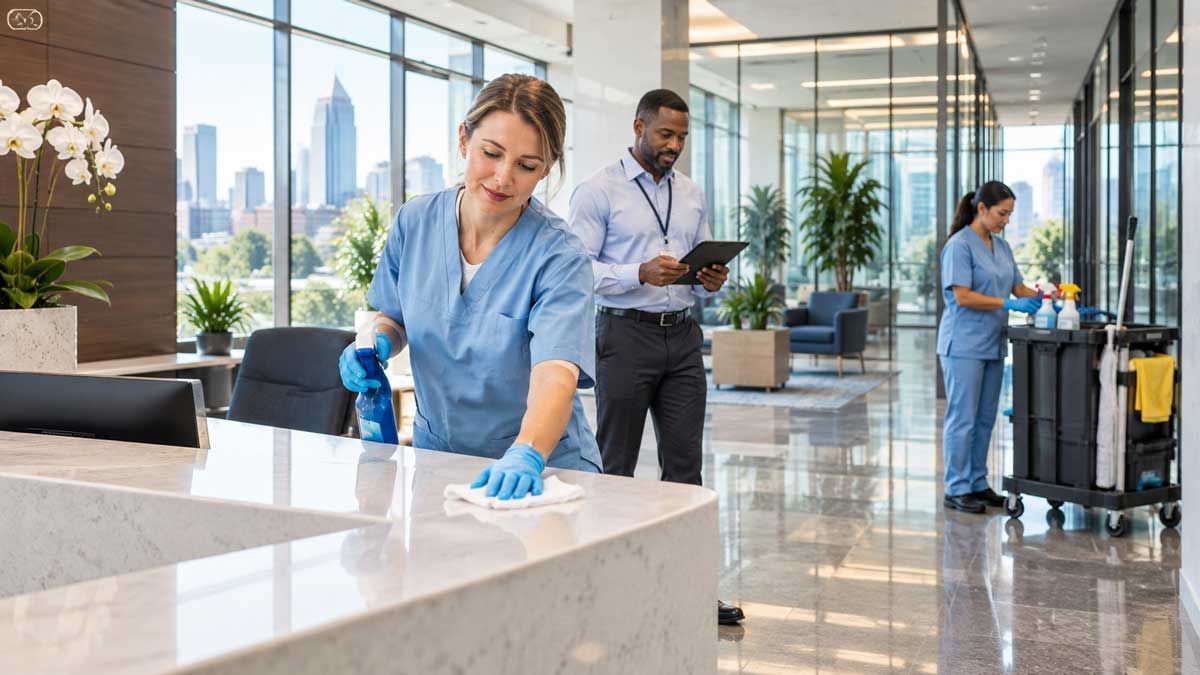
- Waiting room and lobby maintenance
- Floor cleaning and contamination reduction
- Patient room sanitation
- Cross contamination prevention
- Cleaning documentation and accountability
Infection Control Depends on Daily Consistency
Infection control is not achieved through occasional deep cleaning alone. It depends on repeatable daily procedures carried out consistently across the entire facility.
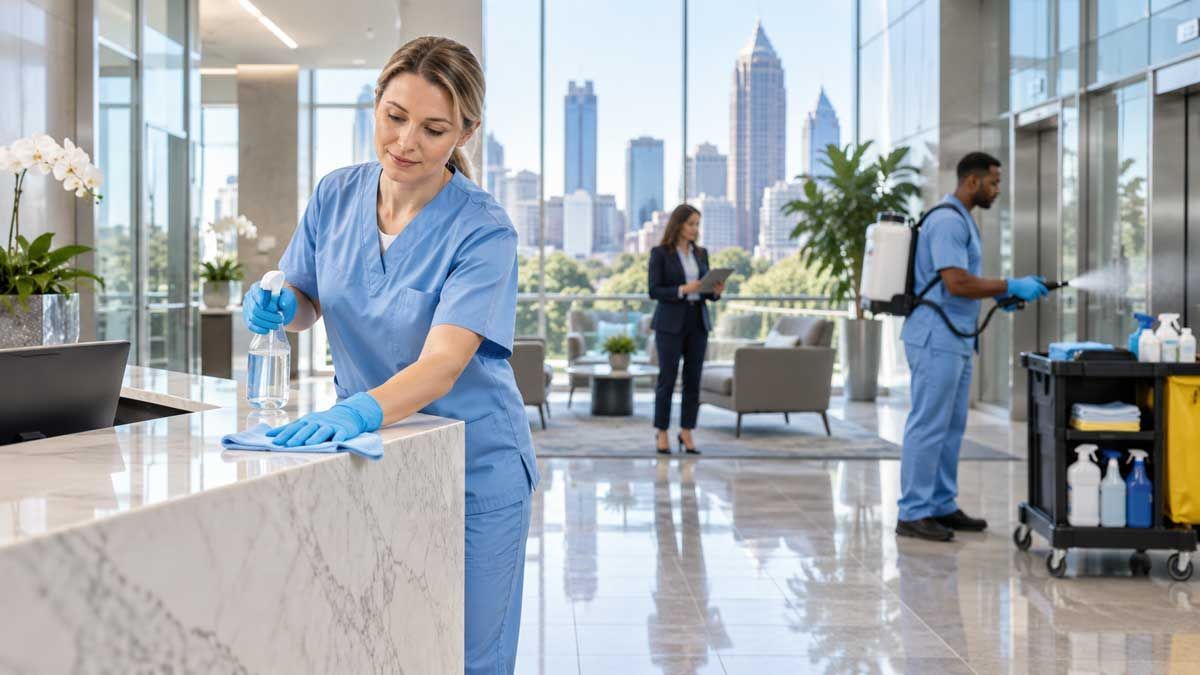
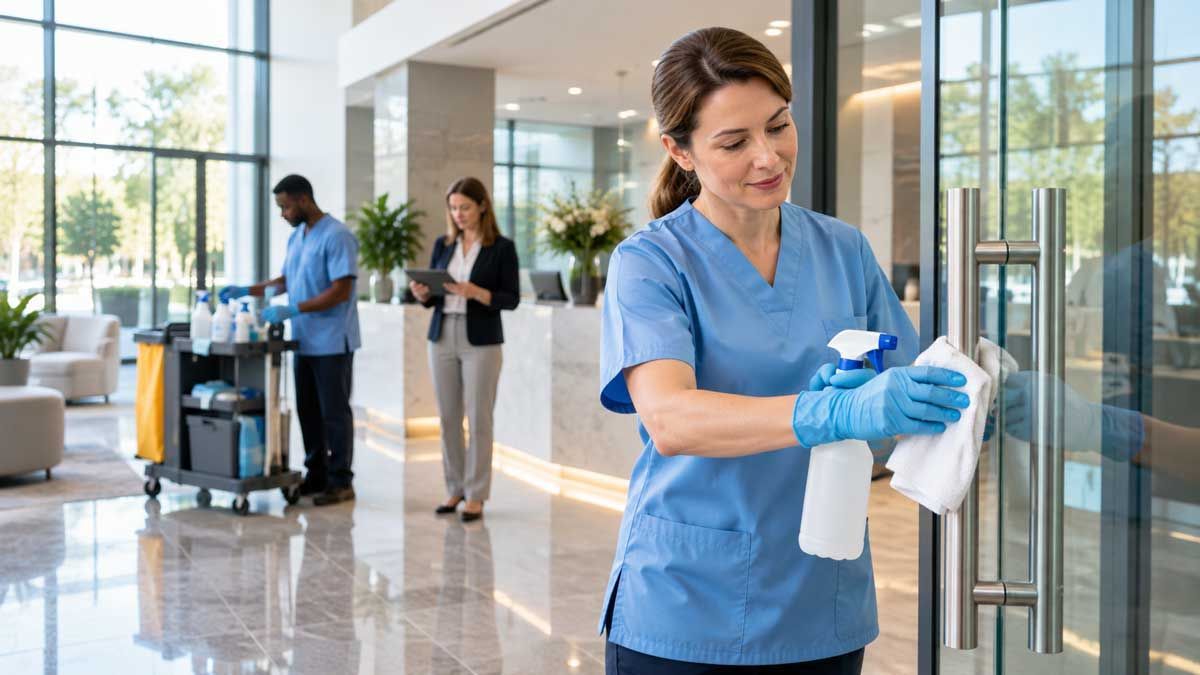
Door handles, waiting room furniture, counters, elevators, shared equipment, restrooms, and reception areas receive constant contact throughout the day. Without structured cleaning schedules, contamination risk increases quickly.
Learn more in our guide to Hospital Infection Control Cleaning in Atlanta.
Standard Cleaning Limitations
- Inconsistent touchpoint disinfection
- Limited healthcare specific protocols
- General purpose chemical usage
- Minimal procedural documentation
- Reactive instead of preventive cleaning
Healthcare Focused Cleaning
- Structured infection control procedures
- Healthcare aware cleaning schedules
- Touchpoint focused disinfection systems
- Documented accountability and consistency
- Preventive contamination reduction
Restroom Sanitation Directly Affects Patient Experience
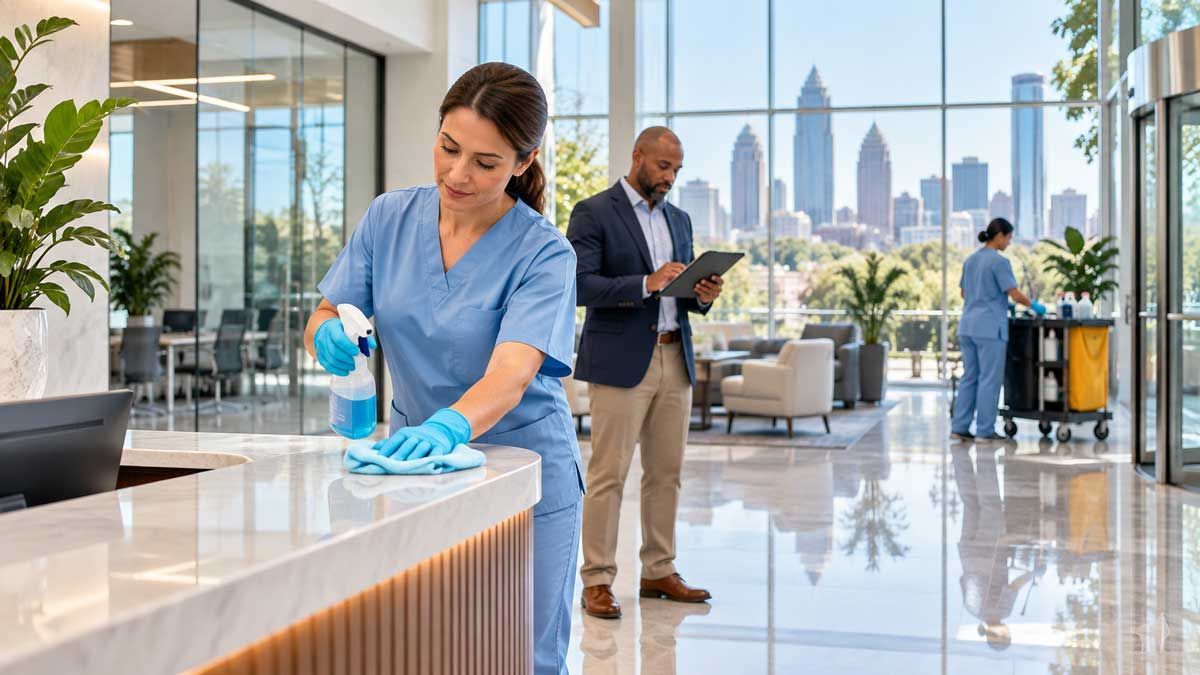
Patients and visitors often judge healthcare cleanliness through restroom conditions first. Empty dispensers, odors, wet floors, and neglected touchpoints create immediate concern.
Healthcare restroom maintenance requires active monitoring, supply replenishment, floor cleaning, odor control, and high touch disinfection throughout operating hours.
For healthcare supply support, Cleanstar National works alongside Globe Chemical Company, which provides restroom products, cleaning chemicals, odor control solutions, floor care products, paper products, and janitorial supplies across the Atlanta metro.
Operating Rooms and Surgical Areas Require Higher Controls
Surgical environments require stricter cleaning precision because contamination risks directly affect procedural safety.
Terminal cleaning procedures focus on disinfecting surgical surfaces, reducing particulate buildup, and maintaining cleaner procedural environments between operations.
Read more about OR Terminal Cleaning Services in Atlanta.
ATP Testing Helps Validate Cleaning Performance
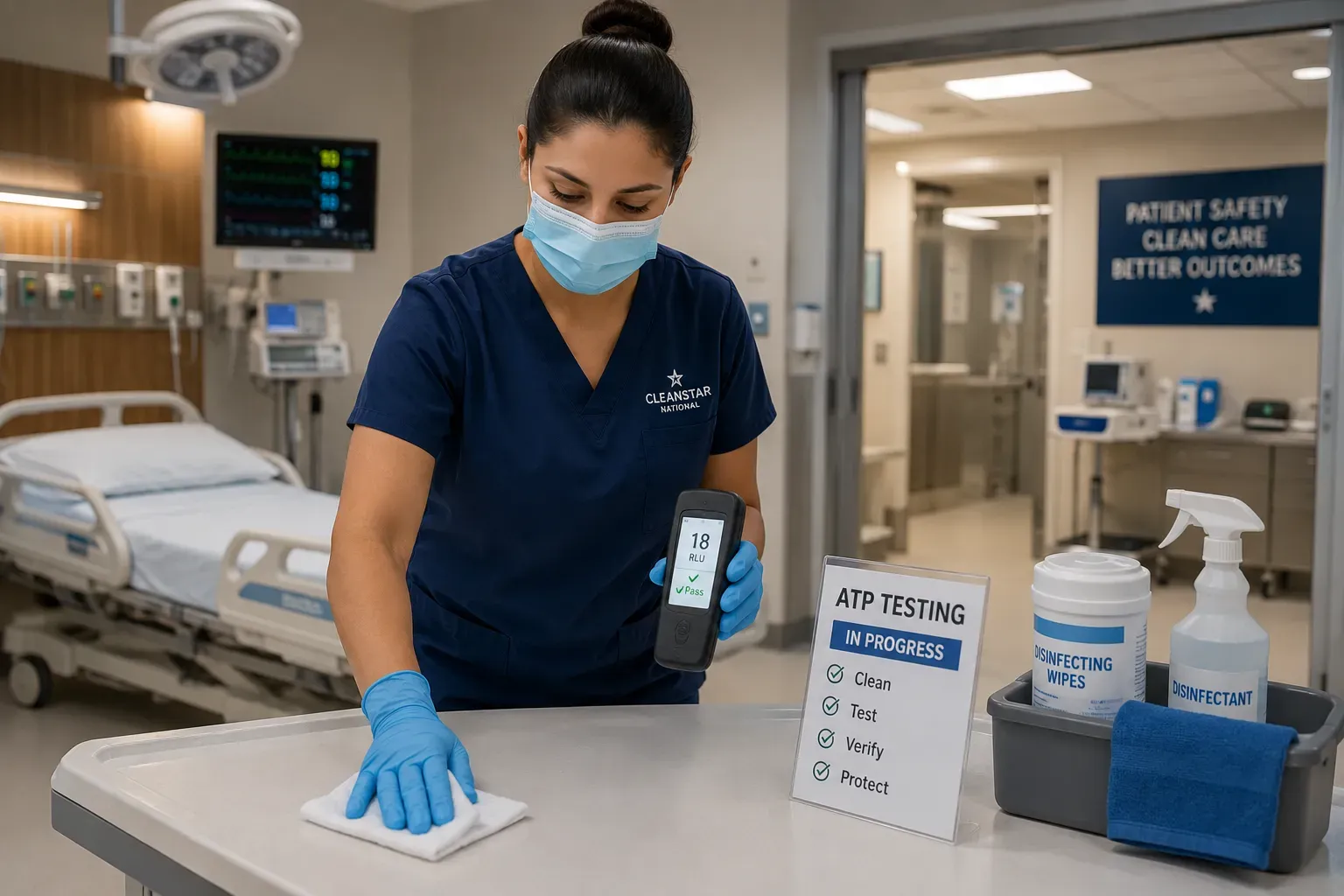
Healthcare facilities increasingly rely on measurable cleaning verification instead of visual appearance alone. ATP testing provides measurable feedback that helps validate cleaning consistency and procedural performance.
Learn more in ATP Testing for Hospital Cleaning in Atlanta.
For infection prevention guidance and healthcare environmental cleaning resources, facilities may also review information from the Centers for Disease Control and Prevention.
Healthcare Cleaning FAQ
What makes healthcare facility cleaning different from standard janitorial cleaning?
Healthcare facility cleaning requires stronger procedures for high touch surfaces, patient areas, restrooms, waiting rooms, clinical spaces, contamination control, and cleaning documentation.
Does Cleanstar National clean medical offices and clinics in Atlanta?
Yes. Cleanstar National provides healthcare cleaning support for medical offices, clinics, hospitals, surgical environments, and healthcare campuses across Metro Atlanta.
Why is infection control cleaning important in healthcare facilities?
Infection control cleaning helps reduce contamination risk on high touch surfaces, shared equipment, restrooms, patient areas, and public spaces where patients, staff, and visitors move throughout the day.
What supplies support healthcare cleaning programs?
Healthcare cleaning programs often require disinfectants, restroom supplies, soap dispensers, odor control products, paper products, floor care tools, gloves, and janitorial supplies.
Healthcare Environments Require Operational Discipline
Healthcare cleaning supports more than appearance. It supports patient trust, staff confidence, infection prevention, and operational consistency across the entire facility.
Cleanstar National provides healthcare focused commercial cleaning services for hospitals, clinics, surgical environments, and medical facilities across Metro Atlanta.
Cleanstar National: Expert B2B Cleaning Solutions for Atlanta's Critical Industries