Criteria for Choosing a Biotech Cleaning Services Contract in Atlanta

Biotech facilities in Atlanta face stringent requirements for site safety, regulatory compliance, and staff training. Each cleaning contract should address the standards and operational needs unique to the life sciences sector.
You need support from partners prepared to meet these requirements consistently in Atlanta. Contracts should protect research spaces with clear protocols that keep equipment safe and reduce cross-contamination risk.
The right approach considers proven methods, from appropriately selected EPA-registered disinfectants to documented staff training, to help prevent gaps that could affect operations or inspection readiness. Facilities also benefit from experience managing controlled areas and supporting flexible schedules shaped by actual biotech workflows.
Your team should first check that the proposed scope accounts for applicable local, state, and federal requirements for the specific Atlanta site.
Compliance with Atlanta and Federal Biotech Cleaning Regulations
Compliance with Atlanta and federal requirements is a key factor when you pick your facility services partner. Your contract should account for applicable requirements and guidance from agencies such as OSHA, the EPA, and the CDC, depending on the facility's activities and risk profile.
These agencies provide requirements or guidance relevant to workplace safety, disinfection, environmental health, and waste handling. Your chosen provider should be able to demonstrate an understanding of the requirements relevant to the specific biotech environment.
You need a clear process for adapting procedures when applicable requirements or facility expectations change. This matters because gaps in required procedures can create operational, safety, or inspection risks. There is little room for inconsistency where controlled areas and cross-contamination are concerned.
Suitable contracts include internal checks and clear records of completed work. It is also vital that you and your cleaning partner review applicable guidance and facility requirements as they change. That approach supports day-to-day stability and inspection readiness for every
biotech facility cleaning in Atlanta.
You can support facility performance when regulatory and operational requirements are clearly reflected in your cleaning contract.
Expertise in Specialized Biotech Facility Protocols
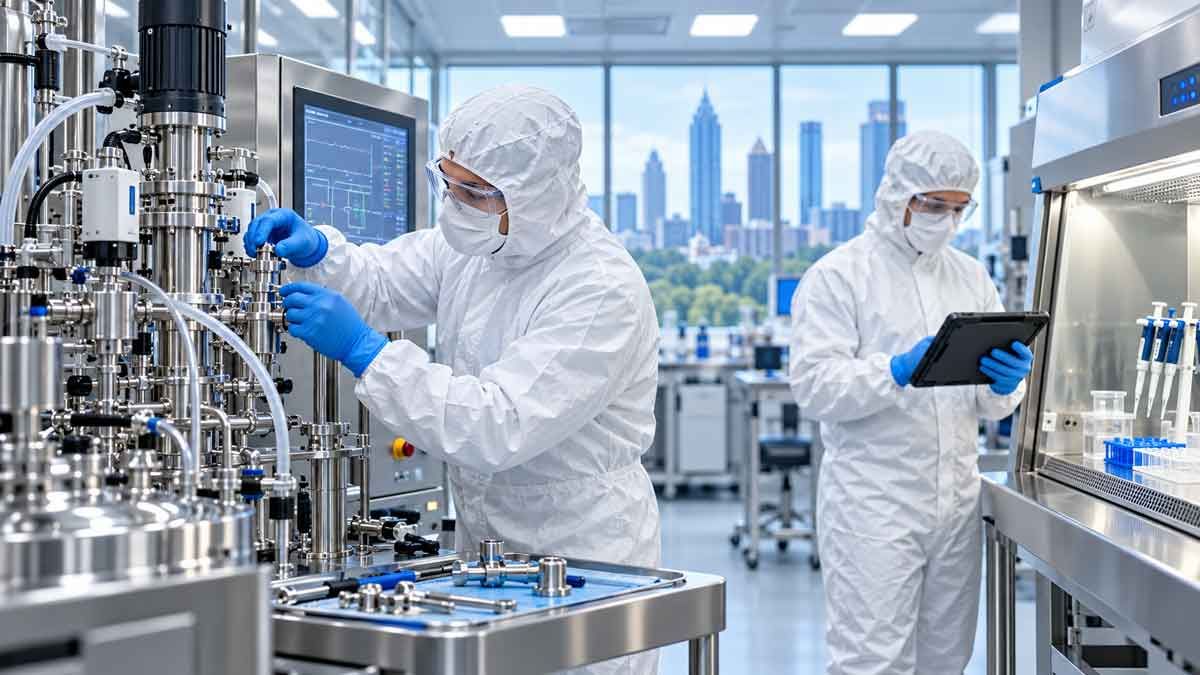
Expertise with biotech site protocols is a key point to consider when you compare contracts. These steps protect your teams, help safeguard equipment, and reduce risk at every stage.
- Protocol Mastery: Specialized cleaning services should recognize that biotech labs require detailed, step-by-step protocols for different zones. Staff should follow established methods for cleanrooms, waste areas, and sensitive equipment to reduce contamination risk. You get more consistent results when these steps are understood and followed under day-to-day operating conditions.
- Contamination Control Experience: A partner with relevant biotech experience should have documented systems for preventing, identifying, and responding to contamination risks. Appropriate PPE, zone controls, and established workflows can help limit exposure events in a lab setting.
- Equipment-Safe Procedures: Specialized teams must use cleaning tools and products appropriate for fragile lab instruments and surfaces. You must avoid agents or procedures that could damage biotech equipment or affect research activities. Equipment compatibility should be reviewed before products or methods are introduced.
Use of EPA-Registered Disinfection Products
Strict adherence to established biotech protocols also includes selecting the right disinfectants for sensitive environments. Products should be EPA-registered for their intended uses and applied according to applicable label directions and facility procedures.
- EPA Registration Supports Appropriate Use: EPA-registered disinfectants are registered for specified uses and should be selected and used according to their applicable labels. This helps establish clear requirements for application, contact time, handling, and other directions relevant to the product.
- Compatibility with Biotech Surfaces: EPA-registered products are not automatically suitable for every biotech surface or piece of equipment. You and your cleaning partner should review compatibility information before use to reduce the risk of chemical reactions, corrosion, residue, or equipment damage.
- Support for Inspection Readiness: Properly selected and documented disinfectant use can support inspection readiness in Atlanta biotech labs and other controlled environments. Records can demonstrate that products were selected and applied according to established procedures.
- Transparency of Active Ingredients: Product labels provide information about active ingredients and directions for use. You and your team can review this information to confirm that each disinfectant is appropriate for the intended application and that safety procedures are followed.
Employee Training and Certification Standards
Employee training and certification standards influence the quality of biotech cleaning services in Atlanta. A trusted partner should have a clear training plan for every cleaning technician assigned to the site.
The plan should cover hazard awareness, the use of protective gear, and biotech-specific protocols established by the facility and applicable industry practices. It is important to understand how to use proven cleaning methods for controlled and sensitive spaces.
Training should be ongoing, tracked, and documented with clear records for each employee. Relevant certifications can provide additional evidence of specialized training, but the facility should verify what each certification actually covers and whether it applies to the required work.
You can ask to review appropriate training logs, attendance records, qualifications, and certifications tied to the services provided.
You can have greater confidence when your cleaning provider has staff whose training aligns with applicable industry and facility requirements. Cleanstar National Inc. emphasizes appropriate employee training as part of consistent facility service delivery.
Experience with Containment Zones and Cross-Contamination Prevention
The ability to work in controlled areas and prevent cross-contamination provides protection beyond strong staff training.
- Containment Zone Protocols: Cleaning teams should use zone-specific workflows and dedicated gear where facility procedures require them. Color-coded tools, defined gowning steps, and material controls can help reduce the movement of contaminants between areas.
- Cross-Contamination Barriers: Controlled procedures should separate areas according to their risk profiles, with distinct cleaning materials and tools where required. Supplies should not be mixed between designated areas when facility procedures prohibit such practices.
- Routine Verification Systems: Teams should follow documented steps for each shift, with appropriate checks to verify that controls remain in place. Daily logs, supply checks, and management reviews can help maintain consistent practices and support inspection readiness.
Customizable Cleaning Schedules for Biotech Operations
Flexible schedules are important for biotech cleaning in Atlanta, where each operation follows established cycles and demand shifts with workflow. The right contract should let you shape a cleaning plan that fits sensitive work while minimizing unnecessary downtime.
- Shift-Coordinated Coverage: Service times should align with lab shifts or production windows where practical, helping reduce interruption to research or other critical activities.
- Frequency Adjustments: Your plan can increase cleaning when facility activity, testing, research cycles, or risk levels require additional attention and adjust during lower-demand periods.
- Facility Zone Customization: The scope can be adjusted for each area, including controlled suites, common hallways, and support spaces, based on facility procedures and risk levels.
- Emergency Response Scheduling: Contract terms can address response procedures for spills, contamination events, or inspection preparation, with expectations established in advance.
Transparent Pricing and Contract Flexibility
Transparent pricing matters when you review biotech cleaning service contracts in Atlanta. You will want clear pricing plans that spell out charges by task, timing, and special needs for your site. It is important that your partner shows applicable costs up front, so you can manage the scope without unexpected charges.
The right contracts allow clear invoicing so you can track the budget impact of each service you select. Open terms help you plan for facility operations and reduce billing disputes or delays.
A pricing model that adjusts to your lab workload or site size can provide flexibility as demand changes. Contract terms should also explain how changes to scope, staffing, schedules, or special services are handled.
The right contract lets you add appropriate tasks, adjust cleaning cadence, or modify coverage if you rework lab zones. This helps ensure that your scope remains aligned with current operational requirements rather than becoming outdated.
A clearly defined approach keeps your Atlanta biotech facility adaptable while giving you visibility into costs. That way, you can balance budget planning with changing facility needs.
Discreet Handling of Sensitive Biological Materials
Confidential care of biological materials should be a top priority when setting your criteria for a biotech cleaning services contract in Atlanta. Your service provider should handle, move, and remove sensitive materials according to established site procedures while minimizing risks to research, privacy, and site safety.
- Chain-of-Custody Controls: Every applicable handoff or disposal step for sensitive biological materials should be documented according to site procedures and limited to authorized personnel.
- Secure Transport Systems: You should use closed containers and appropriate sealed packaging during on-site moves when required to help prevent leaks or exposure during routine and emergency situations.
- Unmarked Storage and Transit: Areas and containers for sensitive materials should be managed according to site security and privacy procedures without unnecessarily exposing confidential research information.
- Private Waste Disposal Routes: Waste tied to biological research should follow designated handling and pickup procedures and remain separate from regular waste where required.
- Minimal On-Site Exposure: Technicians should limit open handling to the time required for approved cleaning steps and follow established procedures for securing materials, containers, and work surfaces afterward.
Proven Track Record with Local Atlanta Biotech Clients
A strong history with comparable biotech or controlled-environment facilities can help you evaluate a prospective provider's experience rather than relying only on service claims.
A provider's experience with technically demanding sites matters when small details can affect facility performance and research activities. You can ask prospective providers to demonstrate relevant experience with similar environments, workflows, equipment, and cleaning requirements.
You gain useful information when you can review documented examples of consistent facility-care work in comparable settings. A relevant body of experience can provide additional evidence of a provider's ability to work within strict procedures and controlled environments.
Long-standing client relationships may provide another reference point when evaluating consistency. Past work in comparable biotech environments can also demonstrate familiarity with specialized equipment, controlled procedures, and inspection preparation.
Ask for references or other appropriate evidence from comparable facilities where available. This gives your team additional information when evaluating a cleaning services contract and identifying potential operational gaps.
Set your criteria carefully before signing a biotech cleaning services contract in Atlanta. Look for a partner that can demonstrate relevant procedures, appropriate training, and experience with controlled environments. Detailed attention to applicable requirements supports safety and reliable facility performance.
Your site needs flexible contract terms that reflect the actual pace and scale of biotech work. Clear cost plans help you anticipate the impact on your budget without unexpected fees. Trained staff can help ensure that cleaning aligns with established practices for contamination control and specialized lab spaces.
Reliable critical environment cleaning can support research protection and daily operations when it is integrated with the facility's established procedures. You want discreet handling and appropriate disposal procedures for biological materials built into the relevant contract details. Documented experience with comparable facilities can also provide useful evidence when evaluating potential partners.
The more relevant documentation, procedures, training records, and comparable experience a partner can demonstrate, the more information your team has for evaluating its fit with the facility's requirements. Cleanstar National Inc. supports Atlanta Metro organizations as a Commercial Facility Services Partner, with a focus on operational continuity, inspection readiness, and professionally maintained, risk-conscious facilities.
Cleanstar National: Expert B2B Cleaning Solutions for Atlanta's Critical Industries