Routine Operation
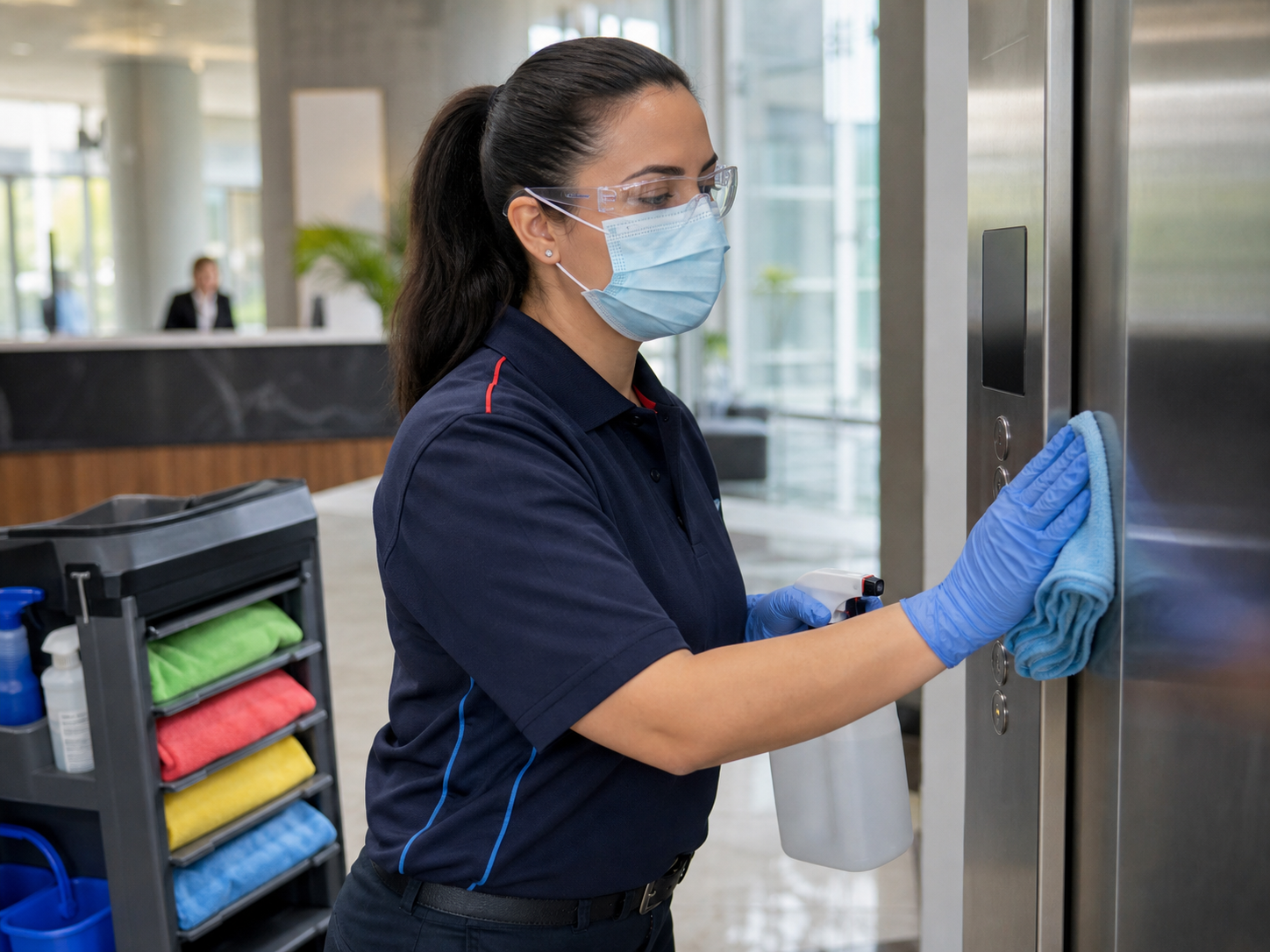
Maintain scheduled cleaning with regular attention to frequently touched surfaces, restrooms and shared areas.
Primary approach: Cleaning
Over 30 years of Commercial Janitorial Service across Georgia
Cleanstar National builds site-specific cleaning and targeted disinfection programs for workplaces responding to reported illness, high-traffic operations or elevated hygiene needs. Every scope is planned around the facility, affected zones, surfaces, access and operating schedule.
✓ Cleaning and disinfection support a broader facility health strategy; no service can guarantee that illness or transmission will be prevented.
A commercial COVID-19 cleaning service is a site-specific program that can combine routine cleaning, high-touch surface cleaning and targeted disinfection where conditions or facility procedures call for it. The purpose is to reduce surface contamination through an approved, documented process—not to promise a sterile environment.
Cleaning and disinfection are different steps. Cleaning removes soil and many germs from a surface. When appropriate, disinfection follows cleaning and uses a product registered for the organism and approved use site, applied according to its label directions.
Start with the reported condition and facility policy. Define the affected zones, clean the surfaces, add targeted disinfection only where appropriate, and document the work and return-to-use communication.
The right approach depends on what happened, where it happened, how the space is used and which facility or public-health procedures apply.
Maintain scheduled cleaning with regular attention to frequently touched surfaces, restrooms and shared areas.
Primary approach: Cleaning
Review the affected zones and facility procedures, then define cleaning and any targeted disinfection required for those areas.
Primary approach: Targeted Response
Adjust high-touch cleaning frequency and consider targeted disinfection based on traffic, risk and current site guidance.
Primary approach: Adjusted Frequency
Follow the facility's infection-control leadership, approved procedures, use-site requirements and applicable regulations.
Primary approach: Setting-Specific
The final scope is defined during the facility assessment. Only approved zones, tasks, products and methods are included.
Cleaning removes visible soil and organic material that can interfere with the performance of a disinfectant.
When included, disinfection focuses on approved hard, nonporous surfaces using a product and method permitted for the use site.
Recurring attention can be assigned to surfaces touched frequently throughout the facility's operating day.
Clear records help facility teams understand what was included, what was excluded and how exceptions were handled.
Current CDC guidance recommends regular cleaning of frequently touched surfaces and notes that routine cleaning is sufficient in most community settings. Targeted disinfection may be appropriate when people have been ill, in high-traffic areas or when a facility or public-health authority calls for it.
COVID-19 primarily spreads through respiratory particles. Surface cleaning does not replace cleaner air, hand hygiene, staying home when sick, well-fitted masks when appropriate or healthcare setting-specific infection-control measures.
Cleanstar National provides commercial facility cleaning services—not medical diagnosis, exposure determination or a guarantee against infection. Facility leadership remains responsible for return-to-work, health and regulatory decisions.
A commercial COVID-19 cleaning service begins with the facility, affected zones and operating requirements. The agreed scope may combine routine cleaning, high-touch surface cleaning and targeted disinfection using facility-approved products and methods appropriate for each surface.
No. CDC guidance says regular cleaning is enough in most community settings. Targeted disinfection may be appropriate where people have been ill, in high-traffic areas, during an outbreak, or when facility procedures or public-health authorities call for it. Healthcare and regulated environments should follow their setting-specific requirements.
Cleanstar National starts by reviewing the reported areas, access restrictions, timing, surfaces and facility procedures. The resulting scope defines included zones, cleaning steps, any targeted disinfection, product requirements, verification and return-to-use communication.
Product and application-method selection depends on the organism of concern, use site, surface and facility requirements. When disinfection is included, the selected EPA-registered product must be used according to its label, including dilution, application method, required wet contact time, ventilation and protective-equipment directions.
No. Wide-area spraying is not an automatic substitute for direct cleaning. CDC guidance says fogging, fumigation and wide-area or electrostatic spraying are generally not recommended as primary surface-disinfection methods unless the product label permits that application. Cleanstar National matches the method to the approved scope and label directions.
Service scheduling can be coordinated around occupancy, shifts, security and operational requirements. Metro Atlanta and surrounding Georgia corridors are Cleanstar National's core service area. Availability depends on facility type, location, timing and scope.
Tell Cleanstar National what happened, which areas are involved and how your operation runs. The team can confirm fit, define the scope and prepare a site-specific proposal.
Commercial cleaning programs designed around the operating rhythm, access, surfaces and quality expectations of Metro Atlanta facilities.
Corporate office
540 Collins Rd