Pharmacy cleaning contracts · Georgia
Pharmacy Cleaning in Atlanta & Across Georgia
Environmental cleaning for hospital pharmacies, compounding facilities, pharmacy cleanrooms and community pharmacy locations.
Based in Marietta, Cleanstar National develops pharmacy cleaning programs across Metro Atlanta, North Georgia, West Georgia and Central Georgia. Statewide service is available for contracts that fit the required scope, schedule and staffing.
From a single pharmacy to a regional portfolio, start with the locations, rooms and service schedule. For pharmacy and facility decision-makers.
Serving facility teams since 1995 Commercial facility experience.
Recurring & multi-location programs Location-specific scopes and schedules.
Georgia contract coverage Statewide opportunities reviewed by scope.
Healthcare and institutional experience
Established experience. A pharmacy-specific plan.
Cleanstar National’s experience includes work for Grady Memorial Hospital, Piedmont Healthcare, Emory University, Emory Healthcare facilities and the University of Georgia. Your pharmacy’s work requires its own room list, procedures and service plan.
 Grady Memorial Hospital
 Piedmont Healthcare
 Emory University
 University of Georgia
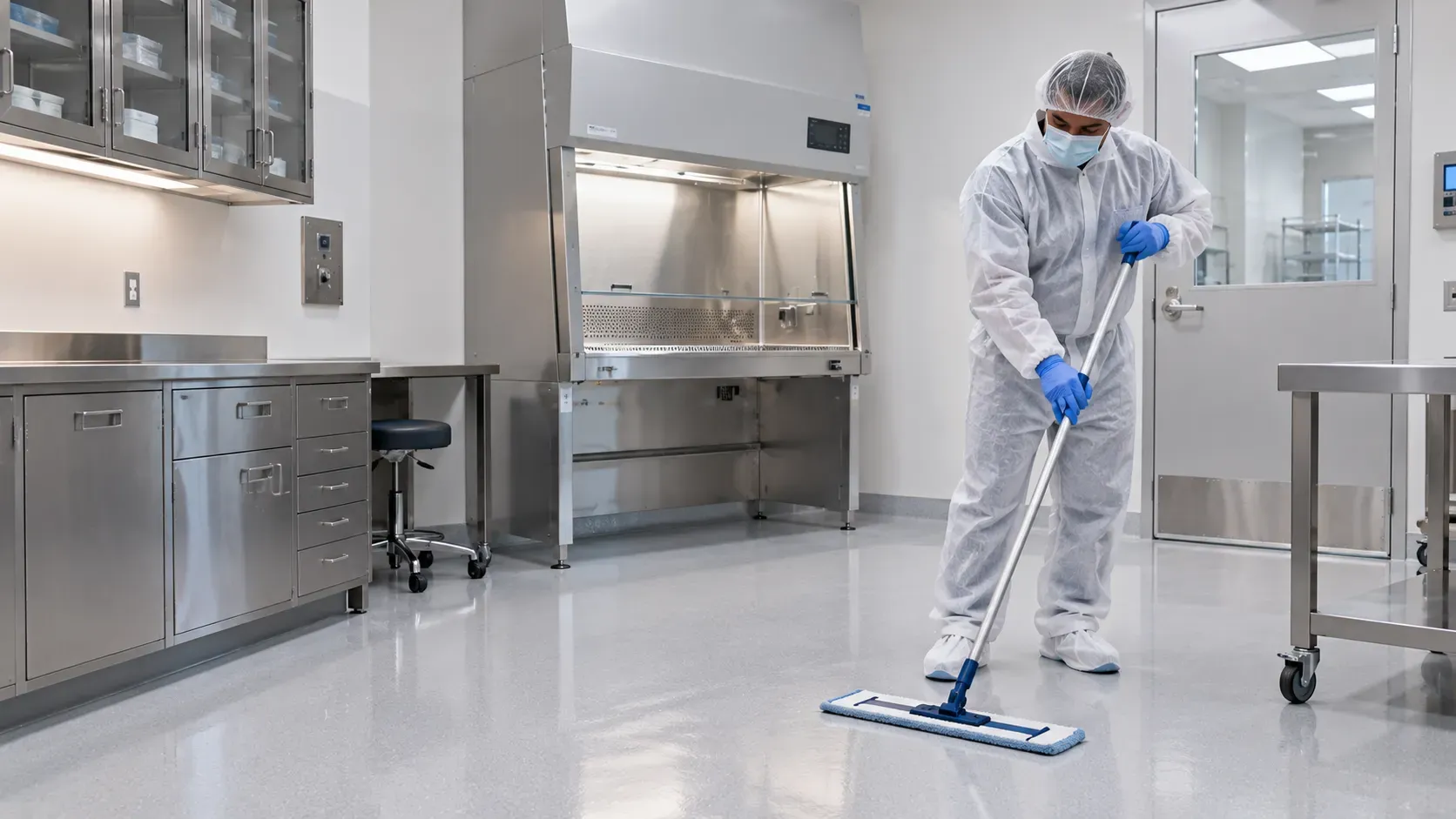
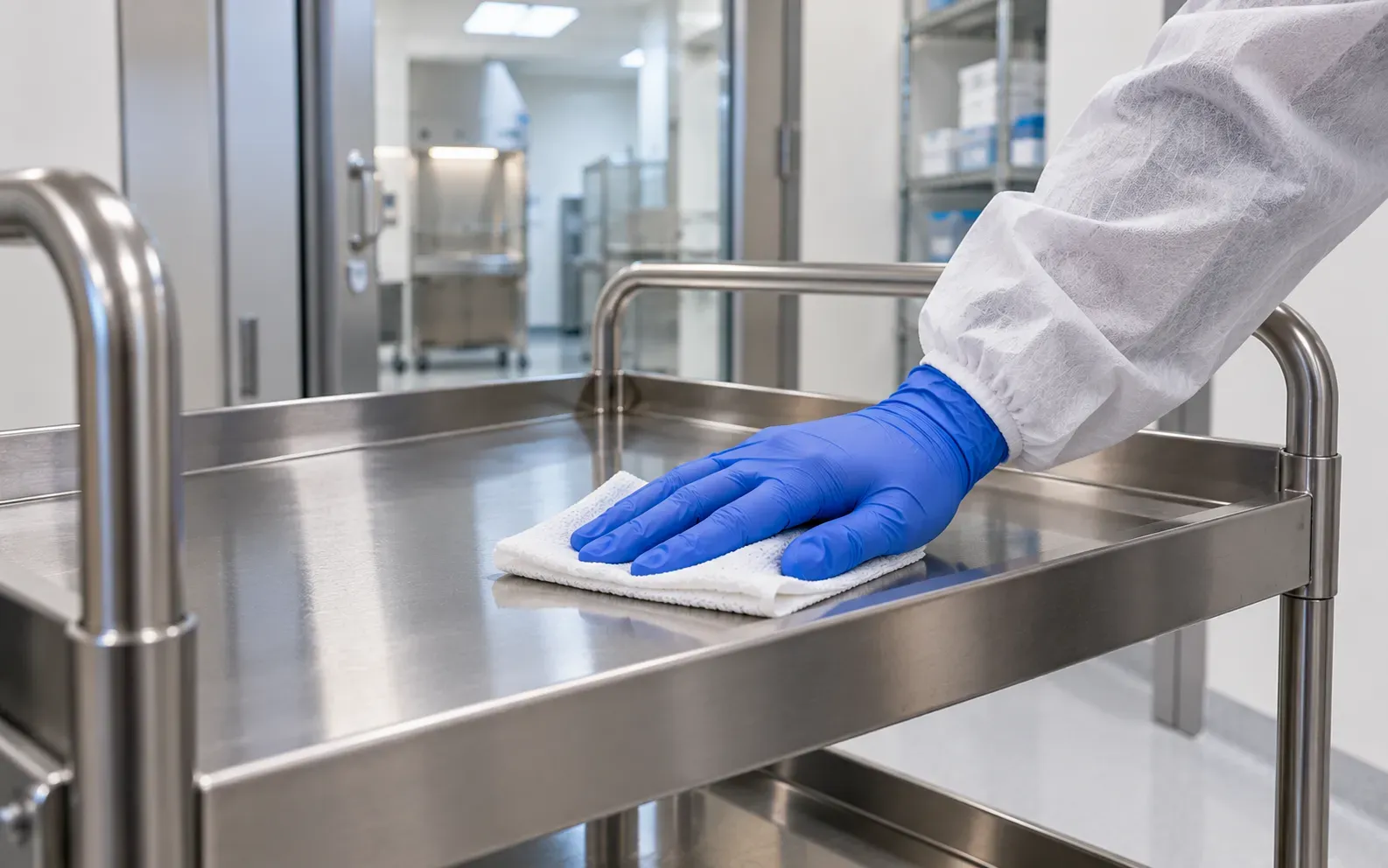
Selected organizational experience; scopes vary by project. These relationships are not presented as pharmacy contracts at every named institution. Service images are illustrative.
The environment sets the requirements
Pharmacy spaces need different cleaning plans.
Pharmacy cleaning is environmental cleaning and disinfection of designated rooms and surfaces. The work starts with how those spaces are used—not an assumption that every pharmacy operates the same way.
Hospital pharmacies
Designated pharmacy rooms, controlled spaces and support areas, coordinated with pharmacy leadership and the facility team.
Compounding pharmacies
Environmental cleaning for the specified sterile or nonsterile compounding setting. Identify room use, surfaces and required service intervals before work begins.
Community & specialty pharmacies
Recurring cleaning for agreed public, staff, storage and work areas. Identify any controlled or compounding spaces separately rather than treating every pharmacy alike.
Pharmacy cleanrooms
Designated cleanroom, buffer-room, ante-room and transition surfaces. Entry, garbing, tools and material movement belong in the operating plan.
For pharmacy directors, pharmacists-in-charge, compounding personnel, facilities leaders and procurement teams. The pharmacy retains responsibility for medication preparation and product decisions.
From the room list to the proposal
Know which surfaces and responsibilities are included.
Use the following planning guide to build the scope. Identify the actual areas, cleaning tasks, methods and review requirements instead of relying on “complete pharmacy cleaning.”
- Room surfaces
- Designated floors, walls, ceilings, doors and touchpoints. Confirm the finish, access, method and frequency for each assigned surface.
- Transition spaces
- Ante-rooms, gowning areas and other entry spaces. Specify boundaries, tool assignments and how supplies move into and out of the area.
- Cleared work surfaces
- Agreed counters, shelving and transfer surfaces. Name who clears or protects medications, supplies and equipment before cleaning.
- Pharmacy support areas
- Offices, corridors, storage and staff spaces included in the program. Keep their methods and tools distinct from controlled-area assignments.
This is an illustrative scope guide, not a universal pharmacy procedure.
Surfaces, products and procedures
The right method is part of the service.
Bring room procedures, surface-care instructions and product requirements into the review. Confirm the tools, preparation, application and any residue-removal steps for the work assigned.
For an EPA-registered disinfectant, the label specifies permitted uses, application conditions and contact time. The surface must remain visibly wet for the required contact time; any rinsing or removal follows the applicable instructions. [4]
Cleaning, disinfection and any separately specified sporicidal treatment should be named accurately. They do not make every surface treatment interchangeable.
Know which USP chapter applies to the operation.
USP <795> addresses nonsterile compounding. USP <797> addresses sterile compounding. USP <800> addresses hazardous-drug handling, including sterile and nonsterile products and preparations.
The pharmacy identifies its applicable requirements and procedures. These chapter references are not a cleaning-company certification or a guarantee of inspection results. Environmental cleaning remains distinct from medication preparation, monitoring, facility certification and validation.
Recurring service and planned projects
Build the schedule around the work—not just closing time.
Recurring environmental cleaning
Assigned tasks at the intervals required for the room and procedure. Confirm preparation, access and the person who coordinates service.
Periodic detail work
Clearly identified additional surfaces or tasks. State what is included in the regular program and what is priced separately.
Maintenance and project cleaning
Cleaning for designated areas after maintenance, renovation or changes in use. Agree on readiness, protection of supplies and the completion review.
A busy pharmacy still needs required work completed. If an area is unavailable, the plan should identify the next action and responsible contact. Traffic levels alone do not determine the cleaning intervals for a compounding environment.
For the broader healthcare service, review aseptic and terminal cleaning. Pharmacy cleaning and hospital terminal cleaning are not interchangeable schedules.
People and preparation
Put the working details in place before the first visit.
Discuss task-specific training, observed competence and supervision with the service team. Site orientation should connect the written instructions with the areas and tasks personnel will actually encounter.
- Entry and access: designated rooms, sign-in, garbing and any escort requirements.
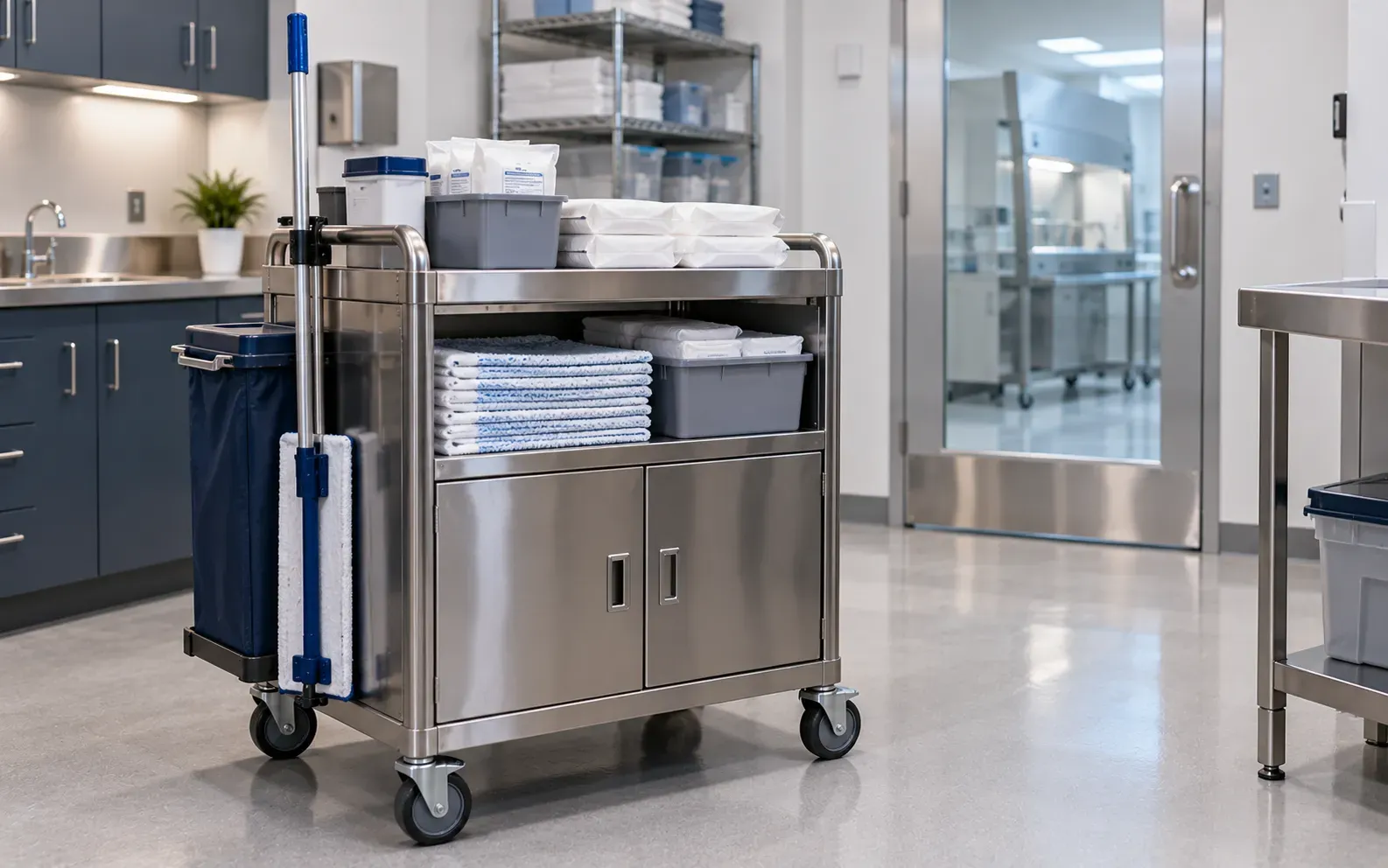
- Prepared materials: approved tools, products, storage and handling of used supplies.
- Protected surfaces: medications, records, instruments and other no-touch items.
- Changed conditions: the contact for unexpected residue, unavailable rooms or requests outside the assignment.
Share the competency and vendor-documentation evidence your pharmacy requires during proposal review.
Documentation and review
Know what happened in each assigned area.
The service record should separate a completed task from restricted access, a maintenance referral or work awaiting correction. Agree on the format and reviewer before service begins.
Illustrative service record
- Area and assignment
- Designated transition-room surfaces; procedure reference.
- Timing and personnel
- Record the actual service date, time and responsible person.
- Status and exception
- Not completed: access unavailable during the service window.
- Next action and review
- Name the follow-up owner, confirm access and record closure.
Planning example only—not an actual Cleanstar National service record or a test result. Cleaning completion does not establish sterility, classification or validation.

Professional standards
Company credentials and associations.
 Safety standards alignment
 IICRC credentials
 IJCSA member
 Green Seal program
These are the company’s existing credential, membership and program designations—not USP or pharmacy-facility certifications. Review the relevant credential scope and personnel requirements during vendor qualification. About Cleanstar National.
Broader Georgia service coverage
Pharmacy cleaning contracts beyond Metro Atlanta.
From Atlanta and Athens to Macon, Columbus, LaGrange and North Georgia, we review pharmacy cleaning contracts around the facility—not a fixed mileage cutoff.
Cleanstar National can travel statewide for suitable contracts. Service frequency, the rooms involved, personnel requirements, access and the number of locations determine the proposed service arrangements. The markets below are a starting point, not the limits of our coverage.
Atlanta & the central metro
Atlanta, Marietta, Smyrna, Sandy Springs, Roswell, Alpharetta, Johns Creek and Decatur.
Pharmacy locations within hospital campuses, medical-office districts and commercial properties, including Buckhead, Midtown, Cumberland and Perimeter-area inquiries.
Northeast Atlanta & Gwinnett
Chamblee, Doraville, Tucker, Lilburn, Norcross, Peachtree Corners, Duluth, Suwanee and Lawrenceville.
Contract planning along the I-285/I-85 approaches and the Lawrenceville Highway corridor, with each location’s service window identified.
Athens & the connecting corridors
Dacula, Winder, Bethlehem, Statham, Bogart, Watkinsville and Athens, plus Stone Mountain, Snellville, Loganville and Monroe.
Coverage includes the SR 316/University Parkway and US 78 approaches. Include surrounding communities and sites between the major cities in your inquiry.
West Georgia & I-20
Lithia Springs, Douglasville, Villa Rica, Carrollton, Dallas and Hiram.
Single-site and multi-location pharmacy inquiries across the western metro and surrounding healthcare, college and commercial communities.
LaGrange & Columbus corridors
Newnan, Peachtree City, LaGrange, West Point and Columbus.
Recurring pharmacy programs and regional accounts along the I-85 and I-185 corridors, with staffing and travel arrangements defined before service.
South Metro & Central Georgia
Stockbridge, McDonough, Locust Grove, Griffin, Forsyth and Macon.
Hospital, community and compounding-pharmacy contracts along I-75 and connecting Central Georgia markets. Ask about additional Central and South Georgia locations.
North Georgia & the foothills
Cumming, Gainesville, Braselton, Dahlonega, Cleveland, Helen, Demorest and Clarkesville.
Pharmacy and healthcare-facility inquiries across the GA 400, I-985 and connecting North Georgia routes.
Northwest Georgia & Blue Ridge
Kennesaw, Acworth, Woodstock, Canton, Jasper, Ellijay, Blue Ridge, Cartersville, Rome, Calhoun and Dalton.
Contract coverage along I-75, I-575 and GA 515, with site-specific planning for mountain and regional locations.
One pharmacy or several locations
Build a contract your regional team can manage.
For a hospital network, pharmacy group or campus portfolio, provide one location list and identify the required work at each property. Agree on the shared reporting approach while keeping room procedures, frequencies and access requirements specific to each site.
Location-by-location scope
Room types, cleanable area, recurring tasks, periodic work and exclusions. Do not assume every property in the portfolio has the same requirements.
Practical service coverage
Personnel competence, permitted hours, travel and supply arrangements, start dates and backup coverage to be agreed in the proposal.
Clear commercial terms
Included visits, review contacts, issue reporting and how additional work is authorized. Request site-level pricing and a clear portfolio summary.
Tell us where the facilities are located even if your procurement office is outside Georgia. The jobsite locations and requested work determine the service plan.
A useful proposal starts with your facility
Four details are enough to start.
Location. Pharmacy type and spaces. Recurring or project need. Preferred schedule. For a multi-site contract, provide the location list and any differences in scope or timing. Add approximate cleanable area and an existing scope when available. You do not need a completed RFP to make first contact.
Pricing depends on the actual tasks, frequency, staffing, travel, access and preparation, materials, documentation and separately assigned work. Compare those items together—not an unexplained price per square foot.
The button opens our existing quote form. In “Details about your service needs,” mention pharmacy cleaning and any RFP or procedures available for review. Arrange document transfer with the team; do not include patient information, credentials or confidential plans in the public message.
Answers for pharmacy and facility teams
Pharmacy cleaning questions.
What does pharmacy cleaning include?
Pharmacy cleaning covers the rooms, surfaces and environmental cleaning or disinfection tasks identified in the proposal. A scope can include designated floors, walls, ceilings, doors, cleared shelving, transfer surfaces and support spaces. It should also identify access, service frequency, materials, documentation and any separately assigned work.
Does Cleanstar National clean compounding pharmacy environments?
Yes. Cleanstar National provides environmental cleaning for compounding pharmacy environments and designated pharmacy cleanrooms. The plan identifies whether the work involves sterile or nonsterile compounding areas, the surfaces assigned to the team and the procedures that guide service. Medication preparation and pharmacy operations remain separate responsibilities.
How is pharmacy cleaning related to aseptic cleaning?
Pharmacy cleaning describes the setting and assigned work. Aseptic practices concern preventing microbial contamination. Environmental cleaning and disinfection support the facility’s procedures, but do not make the entire room sterile or replace the pharmacy’s compounding practices. Cleanstar National also provides broader aseptic and terminal cleaning services.
How do USP <795>, <797> and <800> relate to this service?
USP <795> addresses nonsterile compounding, <797> addresses sterile compounding, and <800> addresses hazardous-drug handling, including sterile and nonsterile products and preparations. The pharmacy identifies its applicable requirements and procedures. Referencing a chapter is not a cleaning-company certification or a guarantee that a facility meets every requirement.
Are hood interiors and hazardous-drug decontamination included?
Not automatically. Identify work inside compounding hoods, isolators or other primary engineering controls separately. Hazardous-drug deactivation, decontamination, spill response and regulated waste also require explicit task assignment and appropriate competence. This environmental cleaning offer does not include those activities by default; any proposed inclusion requires separate written confirmation.
Can service fit our pharmacy’s operating hours?
Yes. Share the required cleaning intervals, room availability, preparation needs and permitted access windows. The proposal coordinates service with those requirements rather than prescribing a schedule from foot traffic alone. Work that cannot be completed at the scheduled time needs an agreed next action and responsible contact.
What cleaning documentation can our team request?
Discuss the records your pharmacy needs before service begins. The agreed format can identify the date and time, room, assigned task, procedure reference, responsible person, completion or exception, follow-up owner and review status. A cleaning record does not, by itself, establish sterility, environmental test results, validation or cleanroom certification.
Does Cleanstar National provide pharmacy cleaning outside Atlanta?
Yes. We review pharmacy cleaning contracts across Georgia, including Athens, Macon, Columbus, LaGrange, Douglasville, Carrollton, Helen and Blue Ridge. These examples are not coverage boundaries. Statewide service is available for suitable contracts, with location, scope, staffing, frequency, access and travel arrangements confirmed in the proposal.
Can one proposal cover multiple pharmacy locations?
Yes. Send the Georgia location list, pharmacy types, areas needing service, required frequencies and target start dates. The proposal can establish a coordinated reporting and review approach with location-specific scopes, staffing and access arrangements. Identify pharmacy cleaning in the request-a-quote form or call (770) 425-6797 to start the discussion.
Related technical cleaning services.
Aseptic & terminal cleaning
The broader environmental-cleaning service for healthcare and technical spaces.
Explore aseptic and terminal cleaningCleanroom cleaning
Room use, designated surfaces, materials and procedures for controlled environments.
Explore cleanroom cleaning servicesBiotech & laboratory cleaning
Laboratory access, protected research materials and the facility’s assigned cleaning needs.
Explore laboratory facility cleaningGeorgia pharmacies. A clear contract.
Bring the locations, rooms and schedule.
Plan recurring pharmacy cleaning with Cleanstar National. Whether the work is in Atlanta, Athens, Macon, Columbus, LaGrange, North Georgia or another Georgia market, start with the facility requirements and contract scope.
Cleanstar National, Inc.Serving facility teams since 1995
540 Collins Rd, Marietta, GA 30066
Technical references
- USP <795>: nonsterile-compounding chapter scope.
- USP <797>: sterile-compounding chapter scope.
- USP <800>: hazardous-drug handling chapter scope.
- EPA: registered disinfectants, use directions and contact time.
The USP links provide chapter-scope previews, not the complete procedural text. These references explain terminology and do not endorse Cleanstar National. Facility procedures, applicable requirements and product instructions govern the work. Service imagery is illustrative.