Healthcare & technical environments
Aseptic & Terminal Cleaning in Atlanta
For hospitals, surgical facilities, cleanrooms, pharmacies and laboratories.
Cleanstar National provides environmental cleaning and disinfection built around your facility’s procedures, designated surfaces and service schedule.
Tell us which spaces need attention, when they are available and what your team needs documented.
Serving facility teams since 1995.
Metro Atlanta: 50 miles from our Marietta office. Athens: 10-mile coverage.
Healthcare and institutional experience
Experience with organizations that depend on their facilities.
Cleanstar National’s experience includes work for Grady Memorial Hospital, Piedmont Healthcare, Emory University, Emory Healthcare facilities and the University of Georgia.
 Grady Memorial Hospital
 Piedmont Healthcare
 Emory University
 University of Georgia
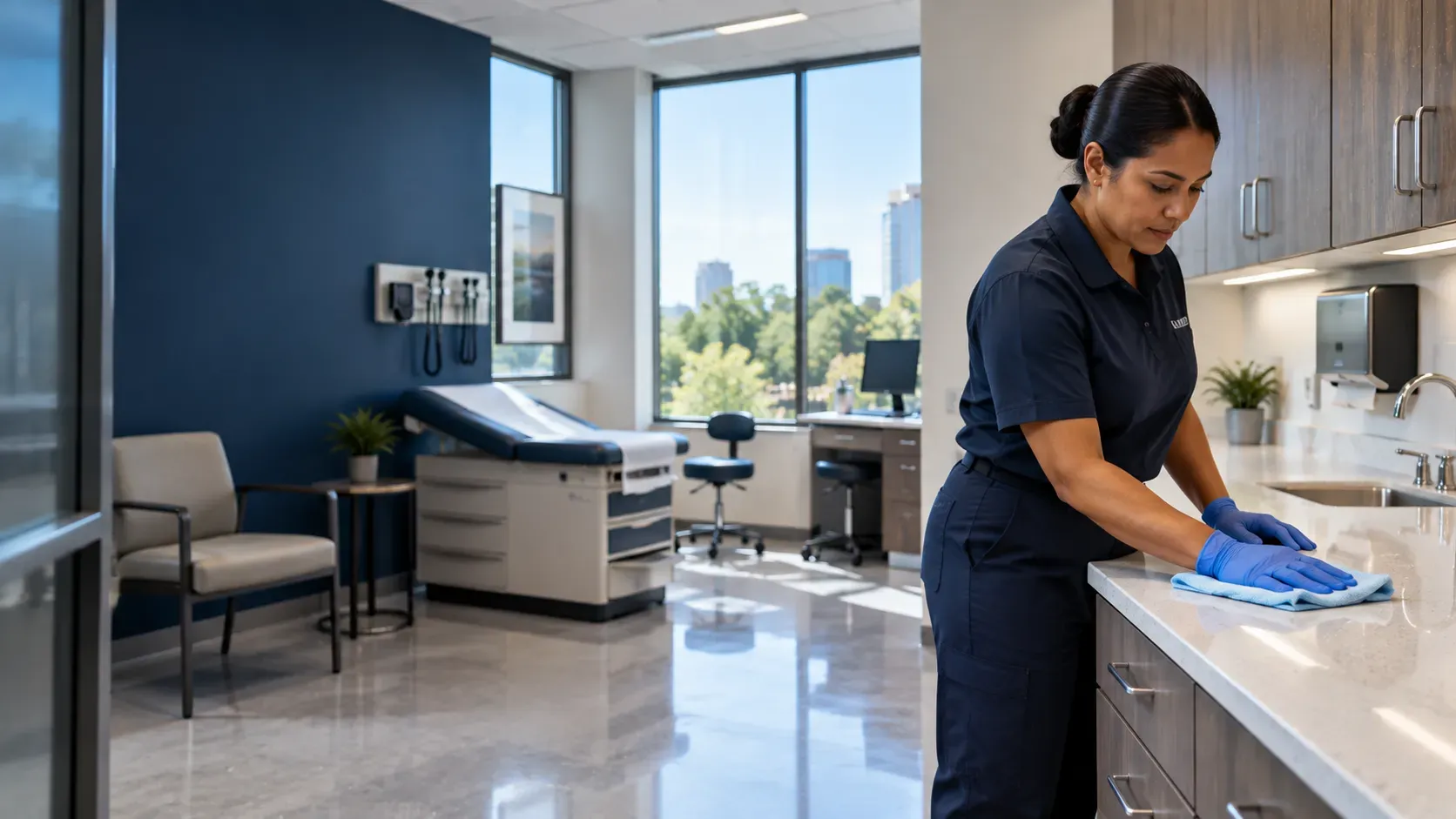
Selected organizational experience; service scopes vary by project. Illustrative images on this page are not photographs of these institutions.
One service category. Different operating requirements.
Technical cleaning shaped to the environment.
What is aseptic cleaning? On this page, it means environmental cleaning and disinfection planned to support contamination prevention in healthcare and technical spaces. It supports the facility’s aseptic practices; it does not make ordinary room cleaning a sterilization process. [1]
Hospitals & surgical facilities
Terminal and scheduled environmental cleaning for designated patient-care, operating and procedure areas. The plan separates contractor tasks from clinical staff duties and identifies the completion review.
Operating-room cleaning servicesCleanrooms & controlled spaces
Cleaning for designated cleanroom surfaces, entry and gowning areas, and adjoining spaces. Room use, approved materials, access procedures and the facility’s contamination-control plan shape the service.
Cleanroom cleaning servicesPharmacies & compounding environments
Environmental cleaning for designated pharmacy rooms, transition areas and surfaces. The written scope identifies the cleaning tasks and frequency, with pharmacy personnel retaining responsibility for compounding operations and product decisions.
Request a pharmacy cleaning quoteLaboratories & research facilities
Cleaning for approved laboratory workspaces and support areas. Define access, protected instruments, research materials and no-touch surfaces before work begins; equipment-specific tasks require their own instructions and assignment.
Laboratory facility cleaningFor facility directors, environmental-services leaders, infection-prevention teams, pharmacy and laboratory managers, and procurement. Medical practices can also review our medical office cleaning services.
Terminal cleaning is part of the service
Define the assignment—not just the cleaning time.
Cleanstar National provides terminal cleaning as well as recurring environmental cleaning. The schedule should identify the room’s use, the event that triggers service and who confirms completion.
Routine environmental cleaning
Scheduled care for assigned surfaces and areas during the facility’s operating cycle. Identify required tasks and access; do not simply defer necessary work until the building is quieter.
Terminal cleaning
A defined, comprehensive environmental cleaning and disinfection assignment. In inpatient settings it follows discharge or transfer; in operating rooms it is associated with the end of the procedural schedule. [2]
Periodic & project cleaning
Agreed detail work, newly opened areas or cleaning following maintenance and renovation. Identify the additional scope, timing and review before adding it to recurring service.
Between-case turnover and terminal cleaning are not interchangeable. The facility’s procedures determine the assigned work at each interval. [2]
Products, surfaces and application
The method matters as much as the schedule.
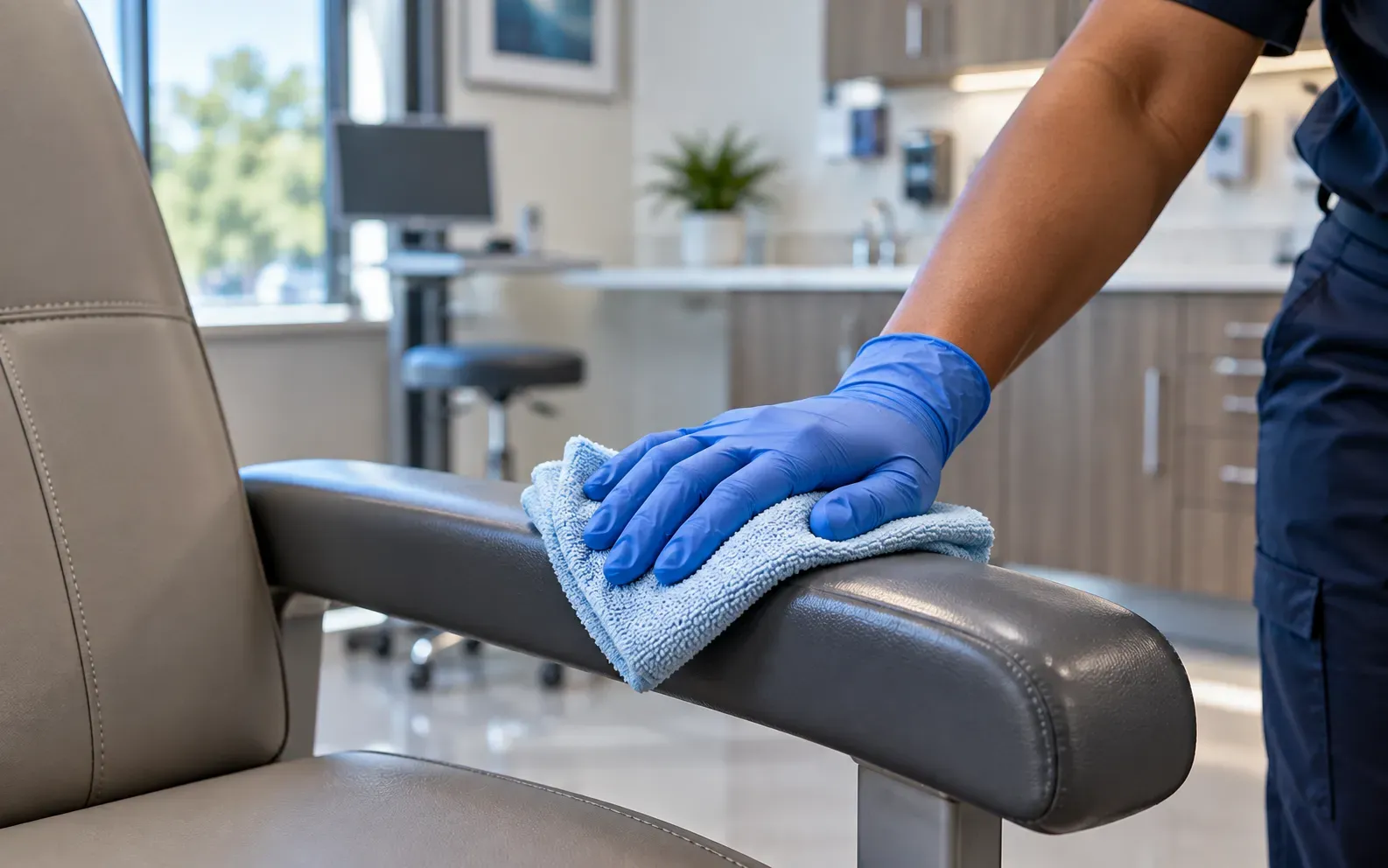
A service plan should identify what will be cleaned, the materials in the room, the approved products and how they will be used. A stronger-smelling chemical is not a substitute for the correct application.
For an EPA-registered disinfectant, its label determines permitted uses, application conditions and required contact time. Surface compatibility, preparation and any residue-removal step also belong in the procedure. [3]
For pharmacy and cleanroom work, bring the facility’s procedures into the review. Where USP <797> applies, its sterile-compounding requirements are part of the pharmacy’s responsibilities—not a cleaning-company certification. [4]
People and preparation
Clear assignments. Organized materials. Accountable work.
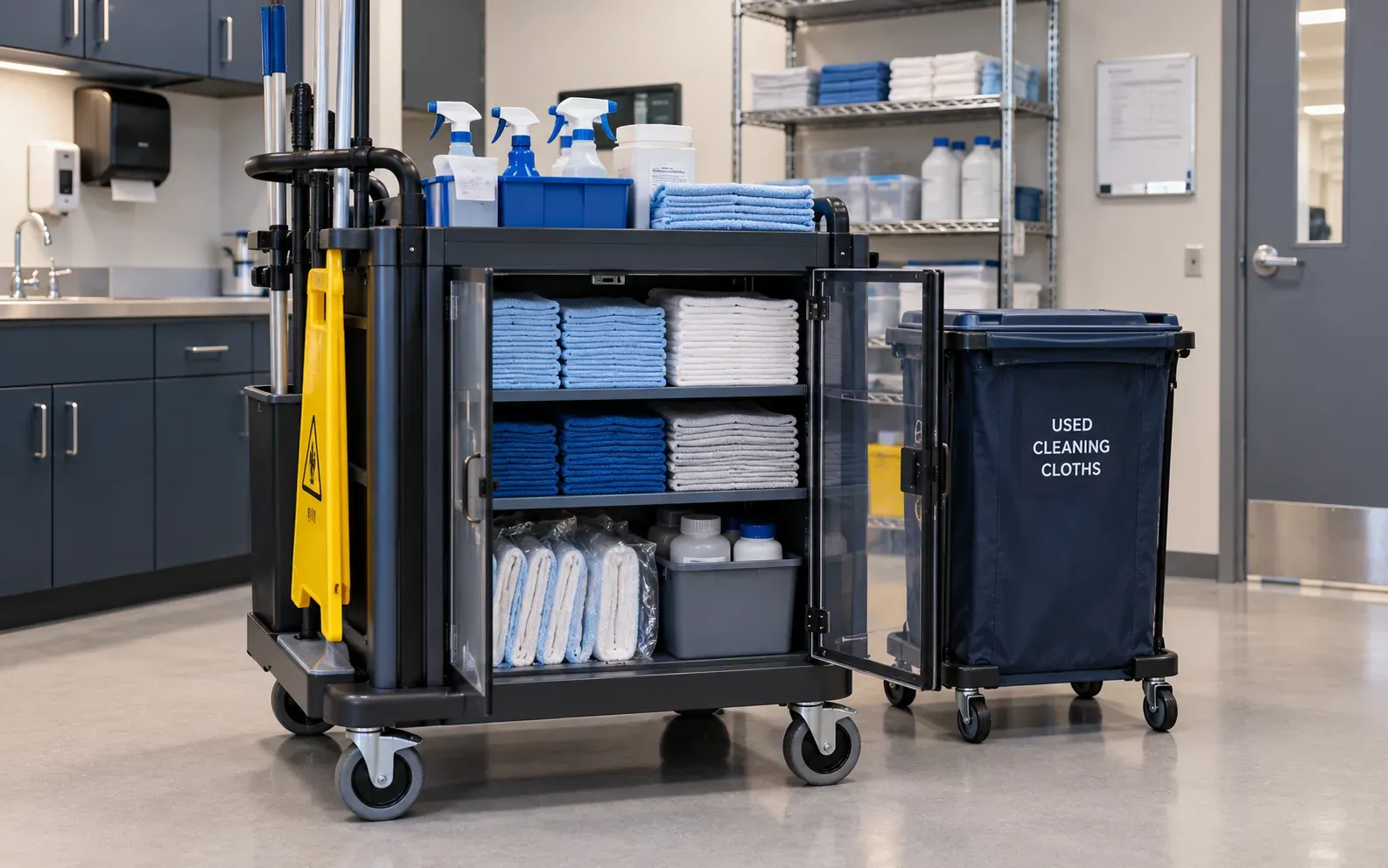
Before service begins, align the work with site access, orientation, task-specific training and supervision. Include the person authorized to answer questions when a room or condition differs from the plan.
- Zone assignments: identify which tools and materials belong in each area.
- Material handling: distinguish prepared supplies from used materials and define storage and handling procedures.
- Task readiness: confirm applicable gowning or protective equipment, product instructions and no-touch surfaces.
- Escalation: name the contact for access problems, unexpected residue or work outside the agreed scope.
These details form the site-specific operating plan; a color code or a credential logo does not replace them.
Documentation and completion review
Know what was completed—and what needs follow-up.
The scope should specify the service record, reviewer and correction process. An inaccessible room, a completed task and a maintenance referral are different statuses.
Agree on any verification methods and acceptance criteria before service. Cleaning records are not, by themselves, proof of sterility or cleanroom classification; ISO 14644-1 addresses air cleanliness by particle concentration. [5]
Keep responsibilities explicit. Environmental cleaning is separate from instrument reprocessing, medication preparation, hazardous-drug deactivation, regulated-waste treatment and facility certification or validation. Those activities are not automatically included.
A useful service-record structure
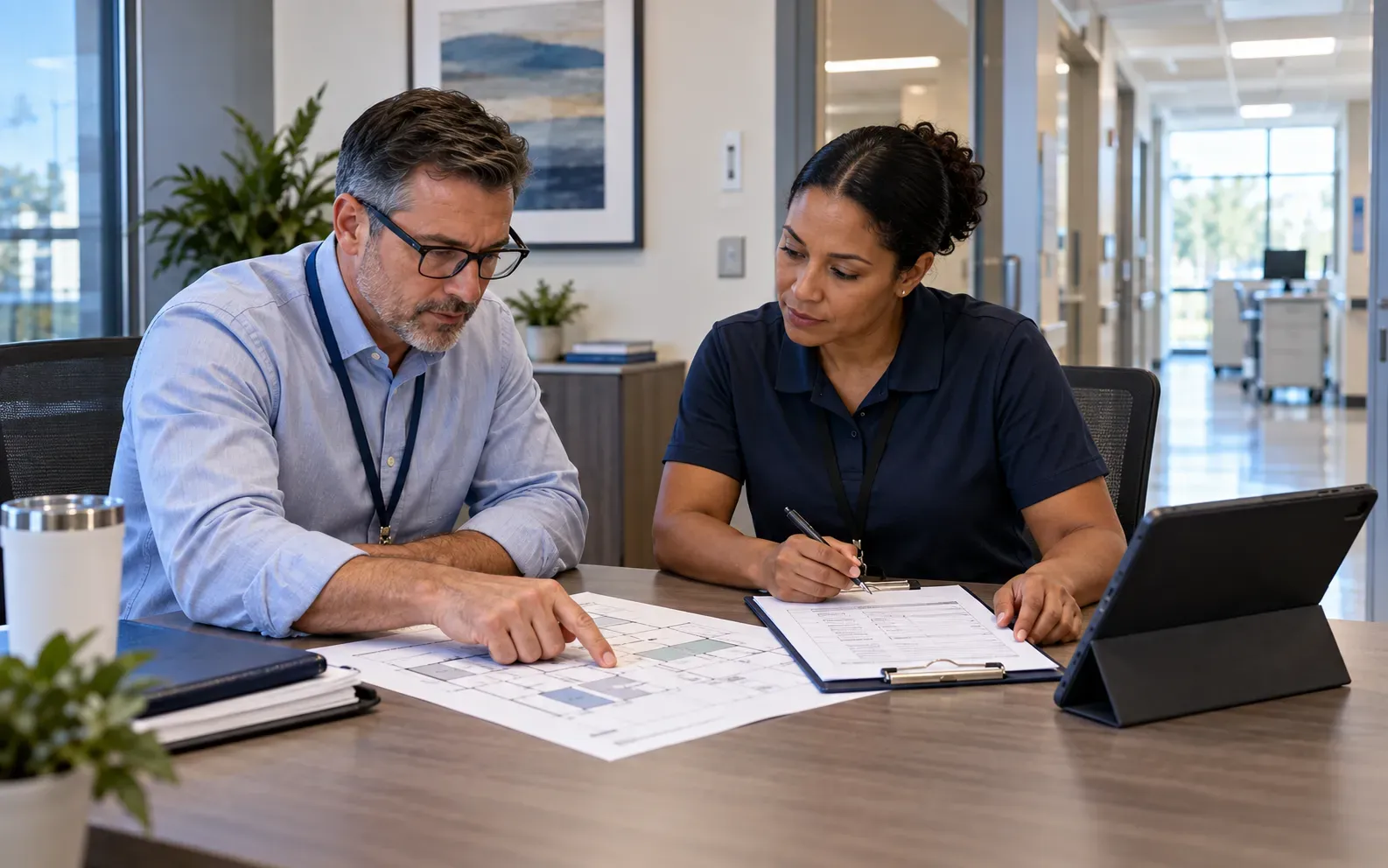
Agree on these fields during planning. This is a planning example, not a completed cleaning record.
- Area & assignment
- Room, surfaces and procedure reference.
- Timing & responsibility
- Service date, time and responsible team member.
- Status & follow-up
- Completion, exception, reviewer and next action.
Professional standards
Credentials, associations and program references.
Cleanstar National’s published credentials and associations are shown below with their existing designations. Discuss the applicable credential scope and site-specific personnel requirements during vendor qualification.
 Safety standards alignment
 IICRC credentials
 IJCSA member
 Green Seal program
These are distinct credentials, memberships and program references—not an aseptic-service, USP or facility certification. About Cleanstar National.
Atlanta-led. Two defined service areas.
Aseptic and terminal cleaning in Metro Atlanta and Athens.
50 miles from our Marietta office
Metro Atlanta service area
Locations within a 50-mile radius of 540 Collins Rd, Marietta, GA 30066. The radius is centered on our office, not downtown Atlanta.
10 miles around Athens
Athens-area service
Athens and its surrounding 10-mile area. Share the actual healthcare, pharmacy, laboratory or cleanroom address when requesting a proposal.
Prominent markets within the service-area discussion
Atlanta & nearby: Atlanta, including Buckhead and Midtown; Sandy Springs, Brookhaven, Dunwoody, Chamblee, Decatur and Tucker.
Cobb & northwest: Marietta, Smyrna, Kennesaw, Acworth, Powder Springs, Austell, Woodstock, Canton, Cartersville, Dallas and Hiram.
North & northeast: Roswell, Alpharetta, Milton, Johns Creek, Cumming, Norcross, Peachtree Corners, Duluth, Suwanee, Lawrenceville and Buford.
West, south & east: Douglasville, Villa Rica, East Point, College Park, Hapeville, Fairburn, Fayetteville, Peachtree City, Newnan, Stockbridge, McDonough, Stone Mountain, Lithonia and Conyers.
Athens area: Athens and nearby Winterville and Watkinsville-area locations within the 10-mile coverage.
Use the facility address: municipal boundaries can extend beyond a radius. The stated radii, facility address, access and schedule govern service planning.
Our general Georgia service-area page describes the wider company footprint. The two radii above define coverage for this aseptic and terminal-cleaning page.
Answers for facility and procurement teams
Aseptic and terminal cleaning questions.
What is aseptic cleaning?
Here, aseptic cleaning means environmental cleaning and disinfection planned to support contamination prevention in healthcare and technical spaces. The work is defined by the surfaces, room use, products and facility procedures. It is not a promise that the entire room is sterile.
Does Cleanstar National provide terminal cleaning?
Yes. Cleanstar National provides terminal cleaning for healthcare facilities, including designated patient-care, operating and procedure environments. The agreed service identifies the areas, tasks, timing, responsible personnel and completion review. Between-case cleaning and terminal cleaning are separate assignments.
Do you clean cleanrooms, pharmacies and laboratories?
Yes. Cleanstar National provides cleaning for cleanrooms, pharmacies and laboratories. Each environment has its own written scope, approved materials, access procedures and schedule. Medication preparation, instrument reprocessing, facility certification and laboratory operations are separate from the environmental cleaning service.
Is aseptic or terminal cleaning the same as sterilization?
No. Cleaning removes soil; disinfection addresses microorganisms under specified conditions. Sterilization is a separate validated process. Environmental cleaning does not replace clinical aseptic technique, instrument sterilization or the facility’s responsibility for releasing rooms and products.
How are products and cleaning methods selected?
The plan considers the surface, room use, facility requirements and product instructions. For EPA-registered disinfectants, the label determines permitted uses, application conditions and contact time. Material compatibility, residue requirements and the tools assigned to each zone are also reviewed.
Can service fit our operating schedule and documentation requirements?
Yes. Share your operating hours, terminal-cleaning needs, access windows and required records during the assessment. The proposal defines the service schedule, responsibilities, completion review and handling of exceptions. Required cleaning is not simply deferred to a convenient time.
Which Atlanta and Athens locations do you serve?
This service covers locations within a 50-mile radius of Cleanstar National’s office at 540 Collins Rd, Marietta, GA 30066, plus Athens and its surrounding 10-mile area. Provide the actual facility address so the team can confirm coverage, access and service scheduling.
What information is needed for an aseptic cleaning quote?
Start with the facility location, environment, areas needing service, requested frequency and target start date. Approximate cleanable area and an existing scope are helpful when available. Use the request-a-quote page and mention any RFP or procedures the team should arrange to review separately; do not include patient information or access credentials.
Start with your facility
Build a cleaning program your team can work with.
Tell Cleanstar National the location, type of environment, areas needing attention and service schedule. Whether you are replacing a provider, supporting your internal team or opening a space, begin with the work you need.
Useful first details: facility address, approximate cleanable area, aseptic or terminal-cleaning requirements, desired frequency and intended start date. Preliminary information is enough to begin the conversation.
The quote button opens our existing request form. In “Details about your service needs,” mention aseptic or terminal cleaning and any RFP or procedures available for review. Do not include patient information, access codes or confidential plans in the public message.
Cleanstar National, Inc.Serving facility teams since 1995
540 Collins Rd, Marietta, GA 30066
Technical references
- CDC: cleaning, disinfection and sterilization terminology.
- CDC: environmental cleaning procedures and service intervals(global guidance; apply the requirements for your facility).
- EPA: registered disinfectants, labels and contact times.
- USP <797>: sterile-compounding chapter scope(full chapter access may require a subscription).
- ISO 14644-1: air cleanliness by particle concentration.
References explain technical terminology; they are not endorsements of Cleanstar National. Facility procedures, applicable requirements and product instructions govern the work. Service imagery is illustrative.