Commercial food service facilities · Metro Atlanta
Commercial Kitchen Cleaning in Atlanta
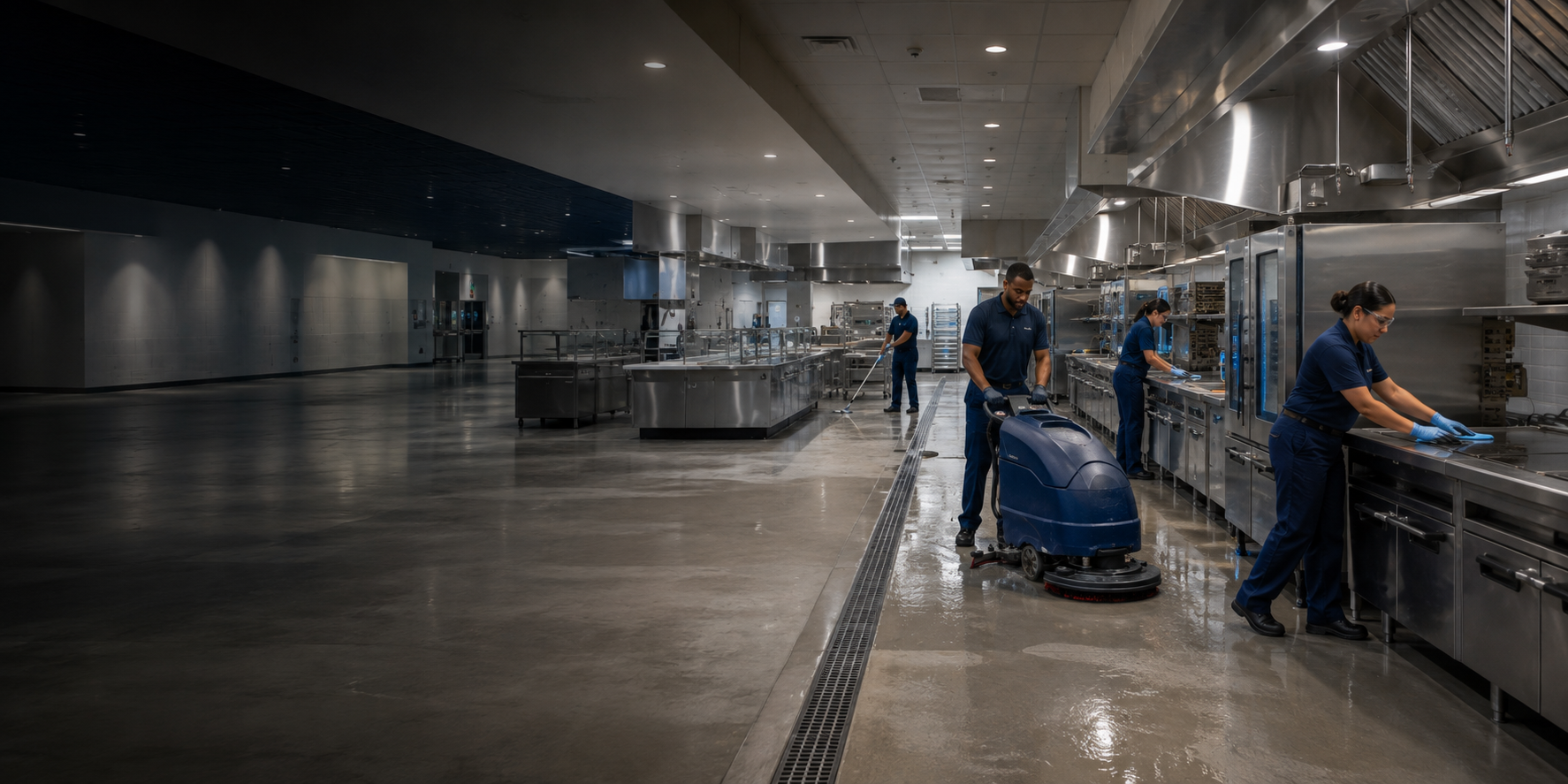
Grease on floors. Buildup around the cook line. A kitchen that needs more attention than the closing shift can give it. Cleanstar National provides commercial kitchen deep cleaning for restaurants, cafeterias, hotels, food halls and industrial kitchens.
Choose a one time deep clean or recurring service, with kitchen areas, equipment access and hood cleaning requirements defined before work begins.
Serving Metro Atlanta since 1995. Commercial facilities only. Service windows planned around your operation.
A written scope for surfaces, zones and responsibilities.
Coordinate cleaning with meal periods, access and deliveries.
Marietta based support for Metro Atlanta facilities.
Commercial kitchen deep cleaning services
Give every kitchen zone the attention it needs.
Commercial kitchen cleaning removes grease, food residue and accumulated soil from the surfaces and areas included in your service plan. A deep clean addresses buildup that routine daily cleaning can miss. The right scope connects the cook line, preparation areas, floors and support spaces instead of treating each as someone else's responsibility.
Kitchen floors, tile and grout
Degreasing and machine cleaning for suitable kitchen flooring, with attention to grout lines, edges, corners and accessible drain covers. Plan around floor condition and drying time. Explore ongoing commercial floor cleaning and care.
Cook lines and equipment
Detail accessible equipment exteriors, stainless steel surfaces, casters and surrounding floors. Identify which ovens, ranges, fryers and other equipment need interior cleaning, safe shutdown or authorized movement before including that work.
Prep and dishwashing areas
Define cleaning for worktables, sinks, splash areas, shelving and dishwashing zones. Where food contact surface sanitation is included, specify compatible products, label directions and the kitchen team's responsibilities before food preparation resumes.
Hoods and grease filters
Identify canopy surfaces, removable filters and grease collection areas for the proposal. Interior ducts and exhaust fans require an explicit system scope, not an assumption that a general kitchen clean covers them. Review the hood cleaning requirements below.
Walls, shelving and storage
Address washable walls, doors, baseboards and accessible shelves. Include refrigerator and walk in storage surfaces when food protection, access and temperature requirements have been agreed. Elevated surfaces and equipment interiors are listed separately.
Waste, service and dining zones
Connect waste stations, service corridors, counters and dining areas with your kitchen program. Add restrooms and common areas through commercial janitorial services so coverage does not stop at the kitchen door.
Commercial hood cleaning and exhaust systems
A clean kitchen and a clean exhaust system are different scopes.
If you need commercial hood cleaning in Atlanta, tell us at the first conversation. Your quote should identify exactly which hood and exhaust components are included, who will perform the work and what completion records will be provided.
- Hood canopy: interior and exterior surfaces, removable grease filters and collection components.
- Exhaust path: accessible duct sections, access panels, exhaust fans and any roof access or containment needs.
- Service coordination: equipment shutdown, protection of adjacent areas, cleanup and documentation of inaccessible sections.
Full exhaust system work requires separate scope confirmation. Wiping a canopy does not establish that the ducts and fan are clean. Fire suppression inspection or repair, grease trap pumping and plumbing work are not automatically included in kitchen cleaning.
Compare kitchen deep cleaning and hood cleaning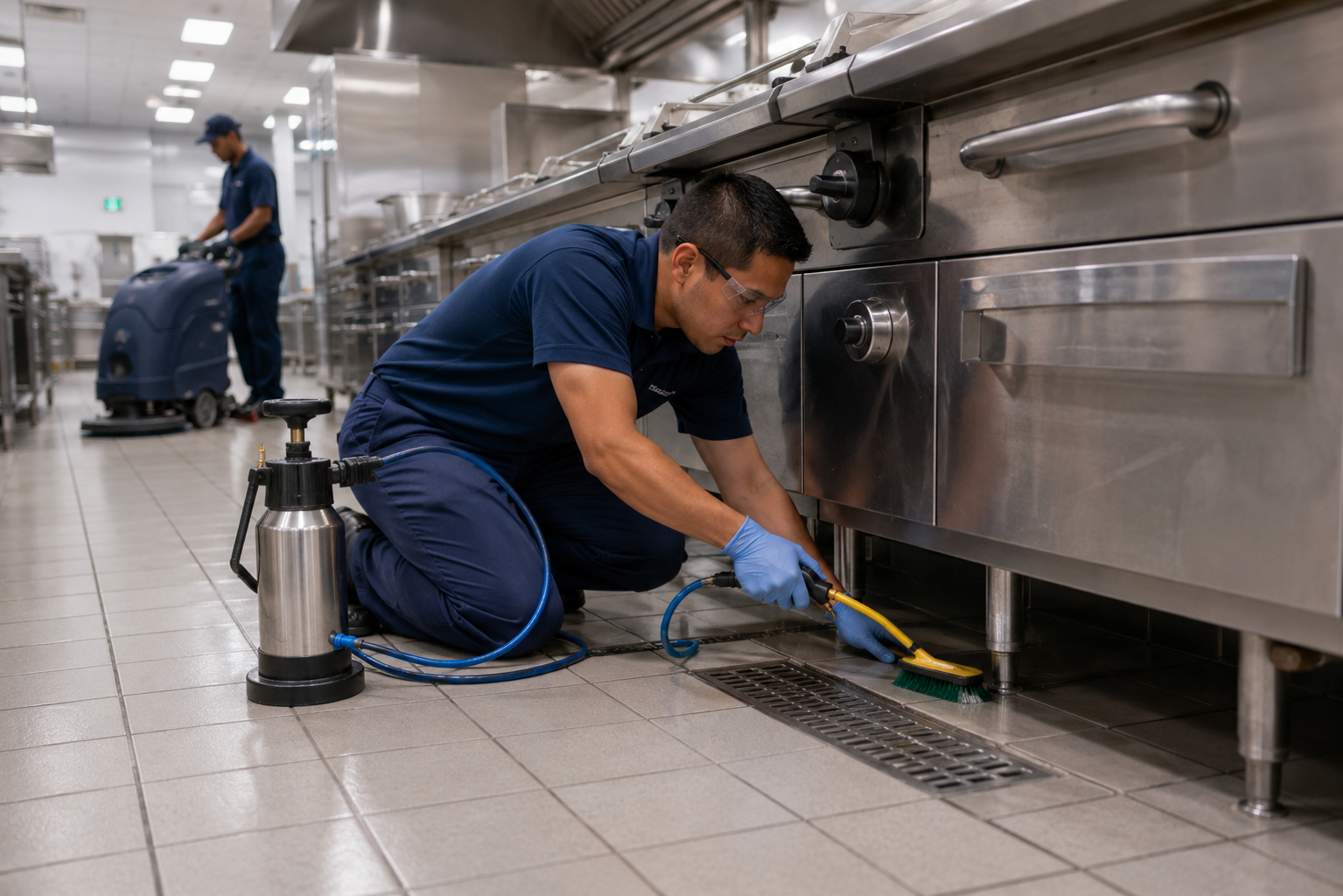
From individual kitchens to campus dining
Cleaning that fits the way your food service operation runs.
Kitchen size matters, but so do cooking volume, equipment layout and the time between shifts. We build the proposal around your facility rather than a single checklist for every building.
Restaurants and hospitality
Coordinate cook lines, dining rooms and banquet kitchens around opening times, reservations and events. Connect your plan with restaurant cleaning or hotel and hospitality cleaning.
Cafeterias and institutional dining
Plan kitchen and dining coverage for corporate campuses, schools, universities, healthcare facilities and senior living communities. Align shared spaces with your facility janitorial program.
Food halls and production kitchens
Clarify responsibilities between tenants, commissary operators and property teams. For food courts and busy shared dining spaces, day porter services can support spills, waste stations and common areas between deeper cleaning visits.
Local experience. Clear responsibilities.
Get a proposal your kitchen and facility teams can use.
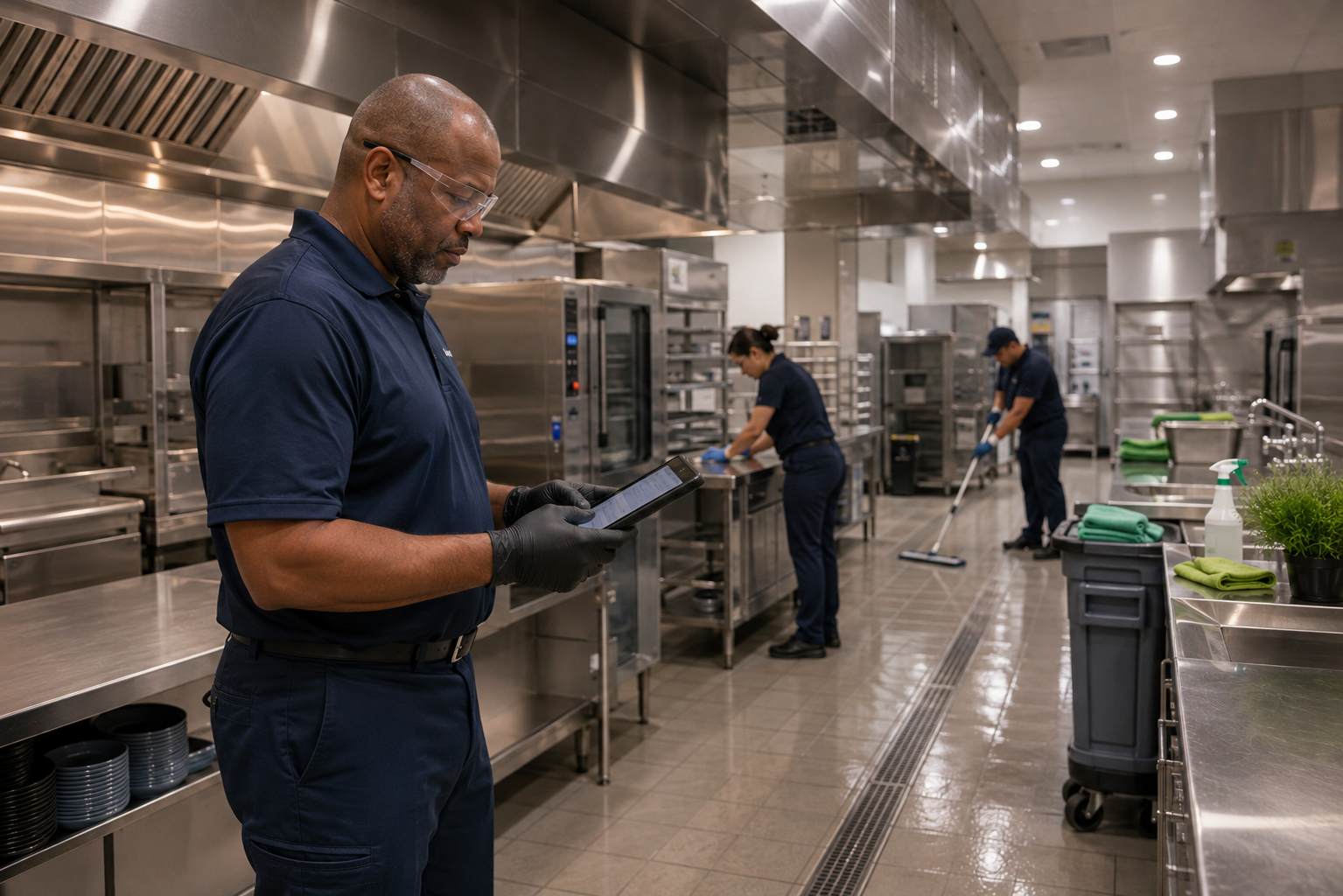
Cleanstar National has served Metro Atlanta facilities since 1995. Start with your facility address, kitchen size, cooking activity, current buildup and available service window. Photos or an existing scope can help us prepare for a more useful conversation.
Your proposal should make it easy to see what will be cleaned, how often, which equipment needs preparation and who checks the finished work. Use our kitchen cleaning scope of work guide to compare requirements across vendors.
Learn more about Cleanstar National and read client reviews.
1. Walk the kitchen
Review surfaces, grease buildup, equipment access, food storage, deliveries and the time available before the next service period.
2. Agree on the work
Document included areas, frequency, kitchen staff responsibilities, specialty services and any access restrictions before scheduling.
3. Clean and review
Complete the agreed work, review priority areas and record exceptions or follow up needs with the designated facility contact.
Questions before you book
Commercial kitchen cleaning FAQs
What does commercial kitchen cleaning include?
A kitchen cleaning scope can include floors and grout, washable walls, equipment exteriors, preparation and dishwashing areas, storage surfaces, waste zones and dining spaces. Equipment interiors, food contact sanitation and hood exhaust work must be specifically listed with access and preparation requirements.
Is hood cleaning included in a kitchen deep clean?
Not automatically. Hood canopy surfaces and filters must be identified in the proposal, and full exhaust system cleaning requires separate confirmation of ducts, fans, access, the service provider and completion documentation. General kitchen cleaning is not a substitute for exhaust system cleaning.
How often should a commercial kitchen be deep cleaned?
The right interval depends on cooking volume, grease accumulation, daily cleaning, equipment access and facility requirements. Routine cleaning and periodic deep cleaning serve different purposes. Hood exhaust inspection and cleaning schedules must be evaluated separately for the cooking operation.
Use the kitchen deep cleaning frequency guide to plan your discussion.
Can cleaning take place after hours or between shifts?
Service windows are agreed during planning and depend on availability and site access. We review meal periods, deliveries, equipment shutdown, food protection and the time needed before staff resume work. Include your preferred hours when requesting a quote.
Do you clean restaurants as well as large facility kitchens?
Yes. Cleanstar develops cleaning programs for restaurants, hotel and banquet kitchens, corporate cafeterias, food halls, food courts, schools, institutional dining, commissaries and industrial kitchens. The scope reflects the operation, not only its size.
Will cleaning guarantee a passed health or fire inspection?
No cleaning service can guarantee an inspection outcome. Cleaning is one part of facility readiness. Food handling, equipment condition, exhaust and fire protection systems, pest management and other operating responsibilities also matter.
Kitchen cleaning across Metro Atlanta
Tell us what your kitchen needs before the next service.
We serve facilities in Atlanta, Marietta, Smyrna, Kennesaw, Sandy Springs, Roswell, Alpharetta, Decatur, Norcross, Duluth and Lawrenceville, with additional Georgia locations listed in our service area directory.
Share your kitchen type, address, approximate size, preferred schedule and whether you need hood or exhaust work assessed. We will use those details to define the next step.