The High Stakes of Warehouse Spills: Are You OSHA Compliant?
Effective spill response protocols in high-volume distribution centers require immediate containment, classification of the hazard, and OSHA-compliant extraction methods. To prevent severe workplace injuries, costly OSHA violations, and facility downtime, logistics hubs must partner with specialized commercial cleaners who deploy trained rapid-response teams equipped with industrial floor scrubbers, proper PPE, and environmentally compliant disposal procedures.
The High Stakes of Warehouse Spills
In the fast-paced environment of a modern, high-volume distribution center, spills are an inevitable operational reality. Whether it’s a ruptured pallet of liquid detergent, a forklift hydraulic fluid leak, or a shattered container of industrial lubricants, how your facility responds in the first five minutes dictates the financial and legal fallout.
For enterprise logistics hubs in Atlanta, the stakes are exceptionally high. A mismanaged spill introduces three critical liabilities:
- Severe Safety Hazards: Slips, trips, and falls account for nearly 20% of all warehouse injuries, leading to massive workers' compensation claims.
- OSHA Violations & Fines: The Occupational Safety and Health Administration (OSHA) strictly enforces standards under 29 CFR 1910.22 (Walking-Working Surfaces). Failure to maintain clean, dry floors can result in fines exceeding $15,000 per violation.
- Operational Bottlenecks: An uncontained spill can shut down active automated guided vehicle (AGV) routes and forklift traffic, grinding your supply chain to a halt.
Hazardous vs. Non-Hazardous Spills: Knowing the Difference
Standard janitorial staff are often ill-equipped to distinguish between different types of industrial spills, leading to dangerous cross-contamination or improper disposal. High-volume fulfillment centers require a vendor that understands the chemical complexities of modern freight.
- Non-Hazardous Spills: These include water, food-grade liquids, and standard consumer goods. While they don't pose a toxic threat, they still create immediate slip hazards and must be cleared using industrial walk-behind scrubbers to instantly dry the concrete surface and restore traction.
- Hazardous Spills: These involve motor oils, corrosive chemicals, toxic solvents, or biological hazards. Handling these requires specialized Personal Protective Equipment (PPE), chemical-specific neutralizers, and strict adherence to EPA and OSHA disposal mandates.
Cleanstar National’s Rapid-Response Methodology
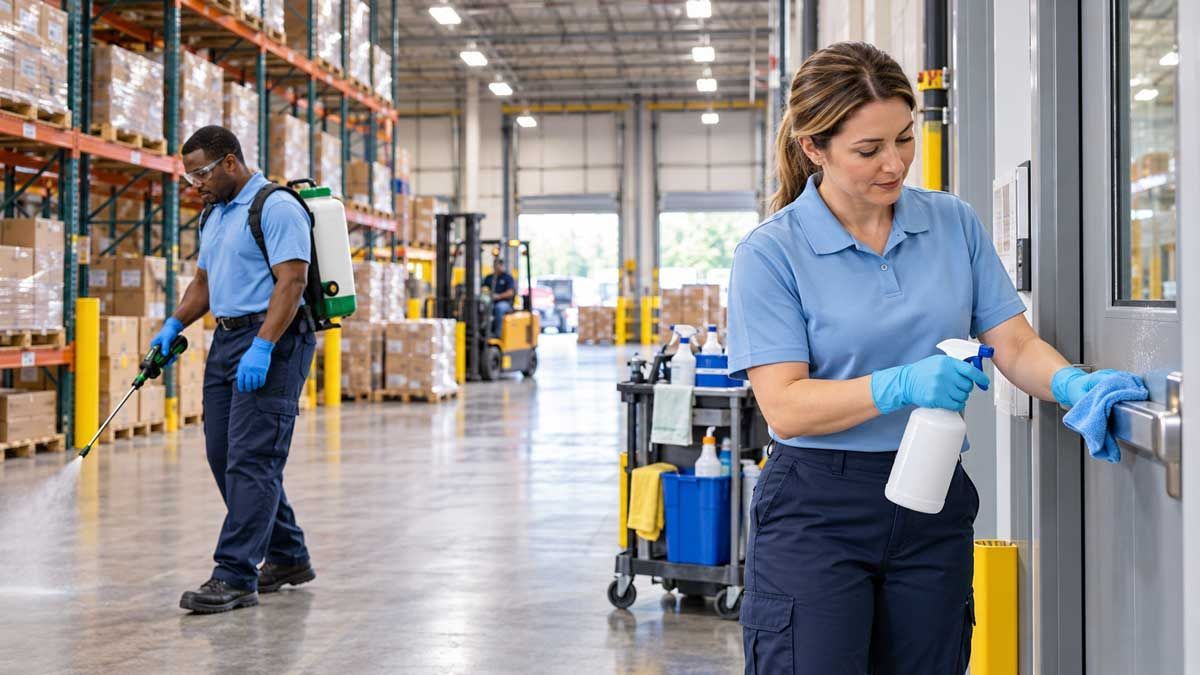
At Cleanstar National, we don't just react to accidents; we execute precision containment. Our OSHA-certified rapid-response teams are integrated into your facility's operational workflow, ready to deploy the following protocol:
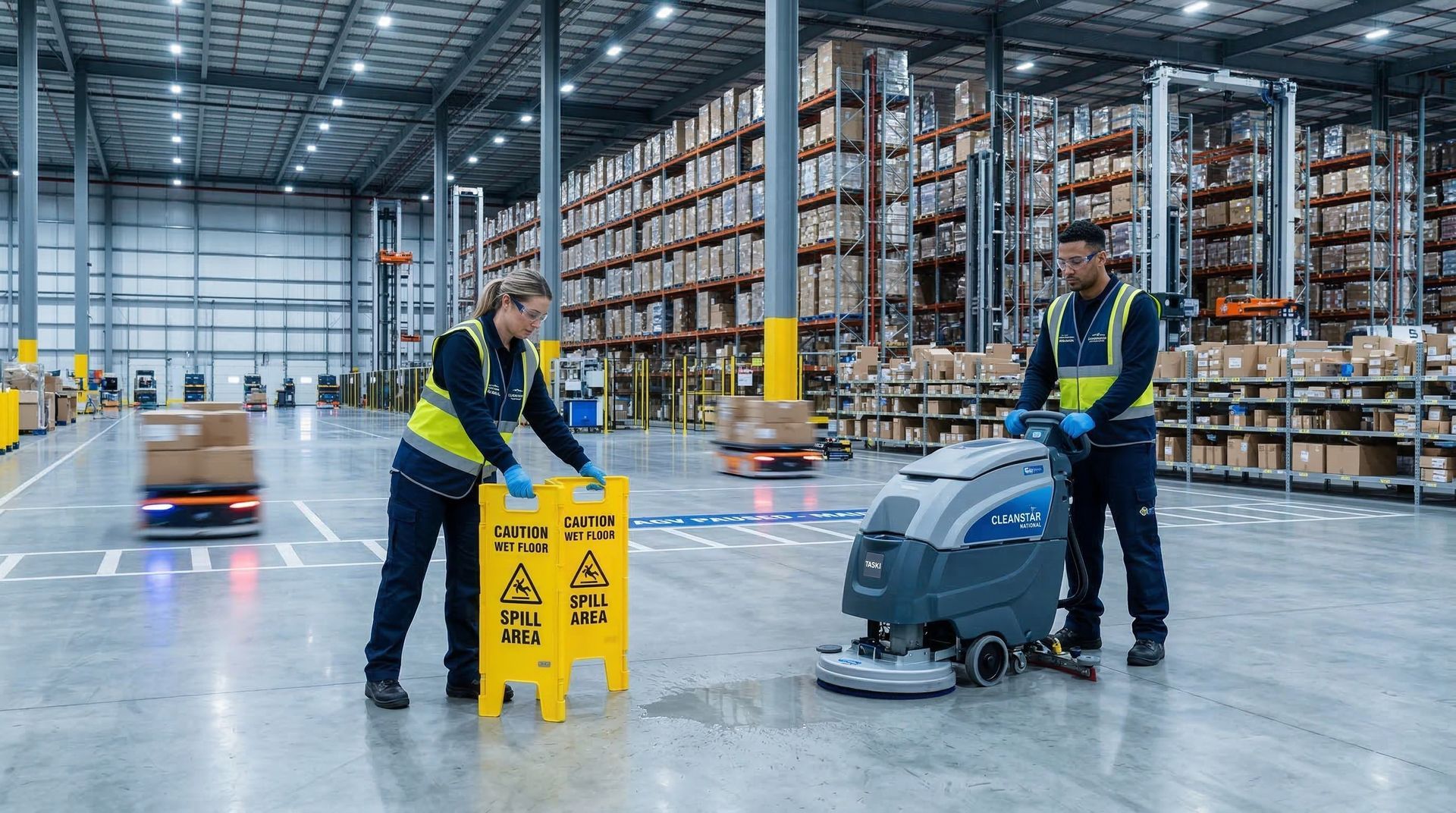
- Immediate Securing of the Perimeter: We instantly cordon off the affected zone using high-visibility barriers, halting AGV and foot traffic to prevent the spread of the contaminant.
- Hazard Identification & PPE Deployment: Our staff consults the facility’s Safety Data Sheets (SDS) to identify the substance and equip the appropriate gear, from heavy-duty nitrile gloves to respiratory protection.
- Containment & Neutralization: Using industrial-grade absorbent booms and neutralizing agents, we stop the spill from reaching facility drains, protecting your operation from environmental fines.
- Deep Extraction & Floor Restoration: Mops simply spread oils around. We utilize powerful, high-suction industrial scrubbers equipped with degreasers to extract the spill from the porous concrete, leaving the floor completely dry and slip-resistant.
- Incident Reporting & Compliance Logging: Every spill response is documented via our tablet-based QA tracking software, providing your safety officers with the verifiable data needed for OSHA compliance audits.
Proactive Safety: Why Standard Commercial Cleaning Fails
The demands of a million-square-foot automated distribution center cannot be met by a traditional commercial cleaning company. Supply chain facility managers need an enterprise-grade partner.
By employing strictly E-verified, background-checked staff who undergo rigorous, ongoing safety training, Cleanstar National ensures that your facility is protected by professionals who understand the intricate safety dynamics of heavy machinery, robotics, and high-speed logistics.
What are the OSHA requirements for warehouse floor cleaning?
OSHA standard 29 CFR 1910.22 requires that all workplace floors be kept in a clean, orderly, and dry condition. Whenever a wet process is used or a spill occurs, drainage must be maintained, and dry standing places or rapid cleanup protocols must be implemented immediately.
How quickly should a spill be cleaned up in a distribution center?
Spills must be addressed instantly. A perimeter should be secured within one minute of discovery, and extraction should begin immediately after the substance is identified to prevent worker injury, equipment damage, and workflow disruption.
Do regular janitors clean up hazardous chemical spills?
No. Standard commercial janitors are rarely trained or insured to handle hazardous chemicals. High-volume logistics centers require specialized industrial cleaners who carry appropriate OSHA certifications, PPE, and heavy-duty extraction equipment.
Protect Your Workforce and Your Bottom Line. Don't let an unexpected spill result in crippling fines or facility downtime. Partner with Atlanta's leader in industrial compliance and warehouse safety. Learn more about our automated facility micro-dust extraction and cleaning services in Atlanta and request a comprehensive safety and sanitation audit today.
Cleanstar National: Expert B2B Cleaning Solutions for Atlanta's Critical Industries