Georgia facility operations
A freezer aisle can look spotless and still deserve a closer look. What matters is not just the floor you can see, but how the area is cleaned, what moves through it and what the next shift needs before work resumes.
For cold storage and food processing facilities in Georgia, a useful sanitation plan starts with the operating conditions. A warehouse holding sealed frozen cartons is not the same environment as a chilled room handling exposed food. Treating them alike is where a cleaning specification can go wrong.
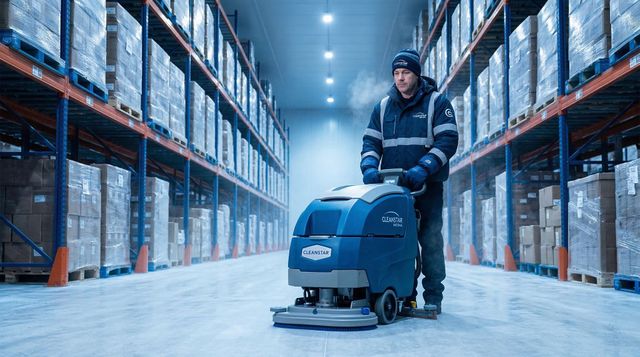
Cold protects product quality. It does not replace sanitation.
Refrigeration should not be mistaken for a pathogen control that solves every problem. The FDA explains that Listeria monocytogenes can survive and grow under refrigeration, and freezing does not eliminate it. A cold room still needs an effective cleaning program. [1]
The CDC currently estimates about 1,250 Listeria infections and 172 deaths each year in the United States. These are national annual estimates, not Georgia case counts or a tally of illnesses in 2026. They put the importance of food safety controls in perspective without predicting the risk at any individual facility. [2]
Frozen storage
For sealed product, start the walkthrough with floors, damaged cartons, pallet debris and door transitions. Include the condition of the packaging in the assessment.
Chilled rooms
Look closely at recurring moisture, spills and traffic routes. Identify where people, tools and handling equipment move between different areas.
Food processing
Where food is exposed, involve the food safety team before specifying the work. Separate building cleaning from food contact equipment sanitation.
These are starting points for a scope discussion, not interchangeable sanitation procedures. Our cold storage cleaning service page is the relevant place to begin a facility conversation.
Choose the cleaning method before choosing the machine
Start with the actual surface temperature, the floor material and the residue being removed. Ask how the proposed method handles moisture, how recovered material will leave the area and what condition the floor must be in before traffic returns.
There is no universal freezer cleaning formula. A method suited to an empty, isolated room may be unsuitable beside stored product or an operating production line. Dry collection, controlled liquid cleaning and a scheduled shutdown should be evaluated against the conditions of the specific job, not treated as blanket solutions.
For food operations covered by 21 CFR 117.35, cleaning and sanitizing agents must be safe and adequate under their conditions of use. The rule also distinguishes dry food contact applications from wet processing. A product description alone does not settle suitability for a particular surface or operation. [3]
For a registered sanitizer, the label matters. Confirm the permitted use, application conditions, concentration, contact time and any required rinse. EPA specifically explains that using less than the labeled contact time is inconsistent with the label. A cleaning schedule is not a reason to shorten it. [4]
A useful question for the walkthrough: “Show us how this method works at our operating temperature, and explain how the area is checked before we reopen it.”
For concrete, coated floors and traffic lanes, review commercial floor care and warehouse floor scrubbing as part of the scope. Equipment selection should follow the surface requirements, not the other way around.
Follow the moisture and the movement
During a walkthrough, do not stop at the center aisle. Include door thresholds, floor joints, the space beneath racking, drains where present and recurring wet areas. Ask which conditions return after cleaning and which need a maintenance response.
A practical plan should also identify where tools are stored, how they are cleaned and whether they can move between areas. Color coding can make assignments easier to recognize. It is not a physical barrier, and a colored mop does not make contamination impossible.
Agree on separate handling for drain tools, raw product areas and areas where ready to eat food is exposed. Define the handoff between the cleaning crew, maintenance and quality assurance rather than leaving it to the next shift to work out.
This attention to the wider environment has a clear basis: FDA environmental sampling includes both food contact surfaces and places such as floors, drains, carts and equipment housings. Its guidance emphasizes controls, verification and corrective action, not appearance alone. [5]
Where the project includes adjacent docks, storage aisles or support areas, industrial cleaning services can be discussed within the same written scope. Refrigeration repairs and food processing equipment work should be separately identified and assigned.
Use the right test for the question
A visual check answers whether visible residue remains. ATP testing helps assess residual organic material after cleaning. Neither should be described as proof that a surface is free of a particular pathogen.
A 2023 study published in Food Protection Trends compared 300 environmental samples across 17 United States food distribution centers. ATP readings were a poor predictor of whether Listeria species were present. The research supports using ATP for cleaning verification, not as a substitute for targeted microbiological testing. [6]
Ask the food safety team to define the verification method, acceptable results and response to a failure. That may involve residue checks, an allergen specific method or environmental pathogen testing, depending on the hazard being addressed. A failed check needs an assigned corrective action, not just a note in a report.
FDA describes environmental monitoring and product testing as ways to verify microbial hazard controls where appropriate. It also emphasizes the importance of investigating findings and preventing recurrence. [5]
Keep Georgia inspections and certification audits distinct
The Georgia Department of Agriculture regulates food manufacturing and warehouse distribution facilities through its Manufactured Food Program. Its specialists conduct unannounced inspections and review sanitation practices. Meat and poultry processing involves different inspection programs, so confirm the applicable oversight for your operation. [7]
A certification audit is a separate matter. GFSI recognizes certification programs; it does not certify individual facilities. The relevant question is which program, scope and edition apply to your site, not whether a contractor promises to make the building “GFSI compliant.” [8]
A current planning point for SQF sites
In its June 2026 update, SQFI described Edition 10 as the next basis for certification audits, with audits potentially starting as early as January 2027, pending GFSI benchmarking. The update highlights food safety culture, change management and environmental monitoring. Confirm your audit edition and transition timing with your certification body before changing controlled documents. [9]
For the cleaning scope itself, agree on a short, usable record of the work: the area, date, assigned task, products used, verification performed, exceptions and approval to return the area to service. The format can follow your existing system. The important question is whether another person can understand what happened and what still needs attention.
Build a scope the next shift can actually use
Before requesting a proposal, bring operations and quality assurance into the same conversation. Ask the provider to work from these six planning inputs:
- Areas and surfaces: State what is included and what is excluded.
- Operating conditions: Record temperatures, product exposure and moisture restrictions.
- Work windows: Identify traffic separation, access and any required shutdown.
- Methods: Agree on products, equipment and compatibility checks.
- Verification: Name the checks, acceptance criteria and corrective action owner.
- Handoff: Specify the records and who authorizes reopening.
For adjoining commissaries or food preparation spaces, review commercial kitchen cleaning separately. A freezer aisle scope should not silently expand into production equipment, exhaust systems or other specialist work.
Check our Georgia service areas and confirm your location, operating conditions and requested scope with the team.
Cold storage sanitation questions and answers
How do you clean a freezer floor without creating ice?
Start with the actual surface temperature, floor material and type of soil. Use a facility approved method and products suitable for those conditions. Any liquid application needs a compatible recovery and drying plan. Neither ordinary water nor a particular solvent is the right answer for every freezer. [3] [4]
Does freezing kill Listeria?
Freezing is not a reliable way to eliminate Listeria. The FDA explains that the organism can also survive and grow under refrigeration. Temperature control and sanitation address different parts of the risk; one does not replace the other. [1]
Does a passing ATP test prove a surface is free of pathogens?
How often should a cold storage facility be cleaned?
Set the schedule by area, product exposure, soil buildup, traffic and verification results. Include separate triggers for spills, damaged packaging and maintenance work. Food contact surfaces must be cleaned as often as needed to protect food, not simply according to a generic weekly calendar. [3]
Can cleaning happen while the facility stays open?
Sometimes, but that decision belongs in the work plan. Consider food exposure, traffic separation, the cleaning method, equipment access and the conditions required before reopening an area. Some tasks need an isolated zone or a planned shutdown. Do not assume every task can happen during production.
Is GFSI certification the same as a government inspection?
No. GFSI recognizes certification programs; it does not certify individual facilities. Certification audits under a recognized program are separate from government inspections. Confirm the applicable program, scope and code edition with your certification body and regulatory responsibilities with your food safety team. [7] [8] [9]
What information helps Cleanstar prepare a useful proposal?
Share the facility location, cleaning area, room temperatures, floor types, product exposure, operating hours and access restrictions. Identify the surfaces in scope, the records you need and who approves the completed work. Discuss any food contact equipment or refrigeration work separately rather than assuming it is included.
Sources and further reading
Research reviewed September 21, 2026. Publication dates and study periods are identified above; older research is not presented as new 2026 data.
- FDA: Listeria and refrigeration
- CDC: Current annual Listeria illness estimates
- 21 CFR 117.35: Sanitary operations
- EPA: Antimicrobial labeling and contact times
- FDA: Environmental sampling and verification
- Food Protection Trends: ATP study in distribution centers, 2023
- Georgia Department of Agriculture: Manufacturers and warehouses
- GFSI: How certification works
- SQFI: Edition 10 preparation and audit timing, June 2026
This article provides planning guidance, not a facility specific sanitation procedure or a guarantee of regulatory compliance. Your food safety team should approve methods, verification and release requirements for the actual operation.