
Failing a GFSI (Global Food Safety Initiative) or FDA sanitation audit is one of the most expensive risks a food logistics hub faces. Standard janitorial crews cannot clean sub-zero environments—their water-based chemicals freeze instantly, creating severe forklift slip hazards and trapping bacterial biofilms in the ice. True cold storage decontamination requires food-safe propylene glycol blends, dry-ice blasting, and zero-downtime execution to ensure distribution centers pass strict regulatory audits without ever dropping the freezer temperature.
The Chemical Freeze-Point Dilemma
Refrigerated warehouses and blast freezers operate anywhere from 32°F down to -20°F. When standard cleaners attempt to mop or scrub these floors with traditional water-based detergents, the solution flash-freezes.
This does not clean the facility. It creates a literal sheet of ice that encases dirt, forklift tire dust, and organic pallet debris, turning your warehouse floor into a massive liability for OSHA slip-and-fall violations and failing ATP (Adenosine Triphosphate) swab tests during an inspection.
Surviving the GFSI & FSMA Audit Gauntlet
Fortune 5 food & beverage brands will not store product in a facility that cannot prove compliance with the Food Safety Modernization Act (FSMA). Cleanstar National partners with supply chain directors to implement a Master Sanitation Schedule (MSS). We document every zone, chemical used, and frequency rate—giving your quality assurance managers the exact paper trail auditors demand.
The Sub-Zero Decontamination Protocol
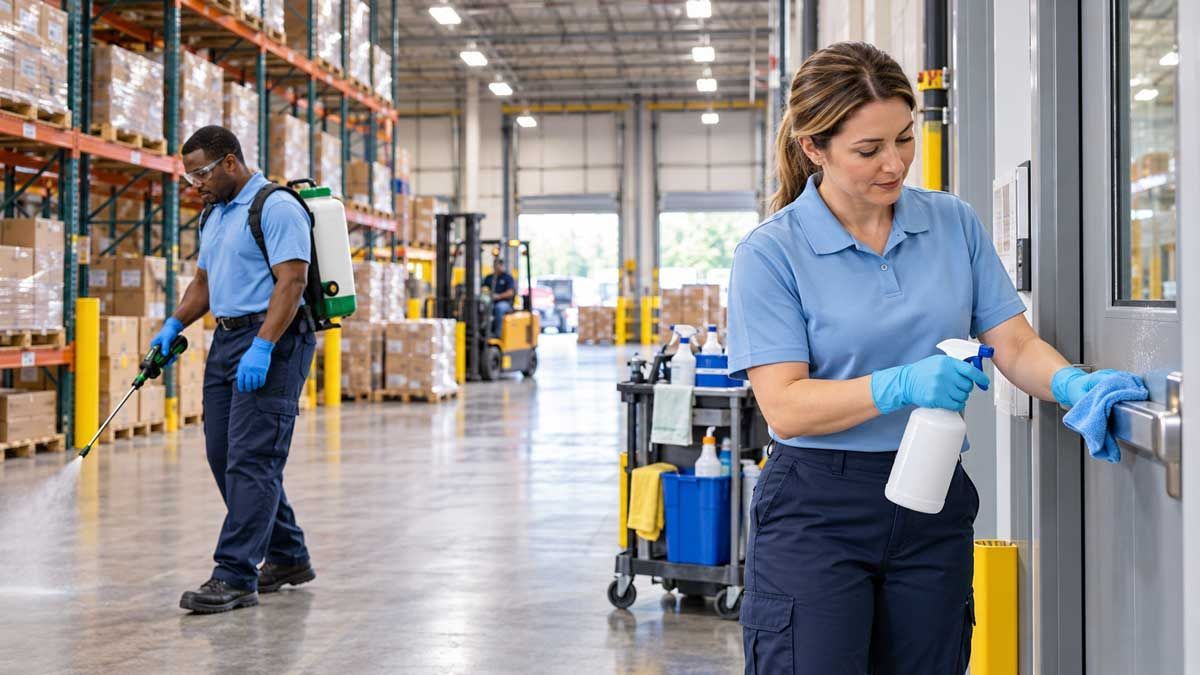
Logistics hubs cannot afford to power down freezers or halt automated retrieval systems (AS/RS) for cleaning. We deploy specialized techniques to execute deep cleaning while your facility remains fully operational:


Secure Your Cold Chain Compliance
Stop risking major compliance failures with unequipped janitorial vendors. Partner with Atlanta's leading enterprise sanitation fleet to protect your cold supply chain.