Hospital ATP Testing Cleaning Atlanta | Medical Vendor
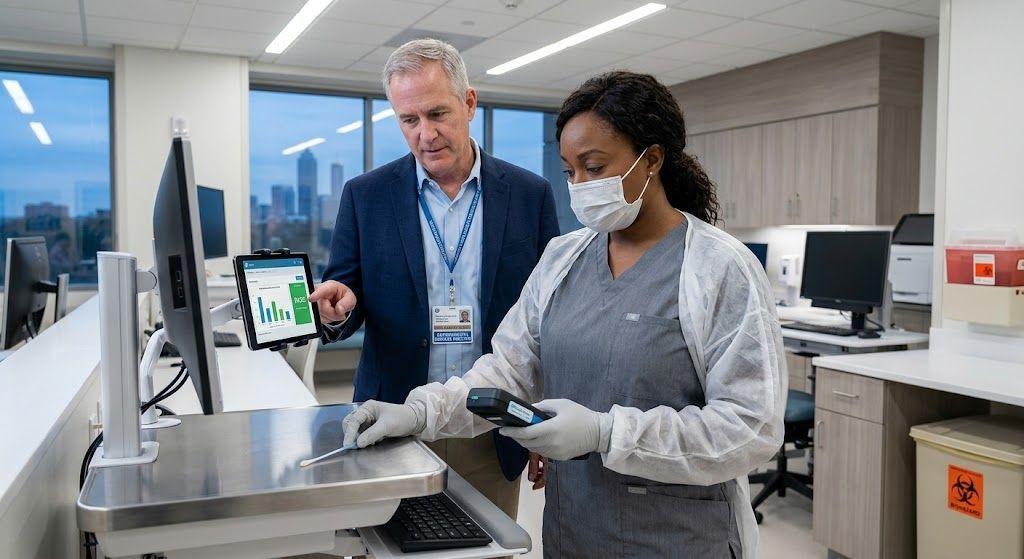
Modern healthcare administration requires measurable data. Environmental Services directors can no longer rely on subjective visual inspections to verify the cleanliness of a patient room or surgical suite. A stainless steel counter might look perfectly pristine to the naked eye while secretly harboring millions of active, dangerous bacteria.
To guarantee that biological matter has been completely eradicated from clinical surfaces, forward-thinking medical facilities now require their vendors to utilize Adenosine Triphosphate swab testing combined with medical-grade UV-C technology. This scientific validation protects hospital reputations, secures Medicare funding, and provides undeniable proof of environmental safety to regulatory auditors.
Moving Beyond the White Glove Test
When hospital leadership demands accountability, quantifiable metrics provide the only acceptable answer. Implementing routine swab testing removes the guesswork from environmental audits and holds sanitation teams strictly accountable for their daily performance.
Why is ATP testing required for hospital surface cleaning? Because visual assessments fail to detect microscopic bioburden. The Association for the Health Care Environment strongly advocates for data-driven validation methods to replace outdated visual checks. You can explore the industry's shift toward quantitative environmental analysis directly through the AHE official guidelines.
The Science of Adenosine Triphosphate
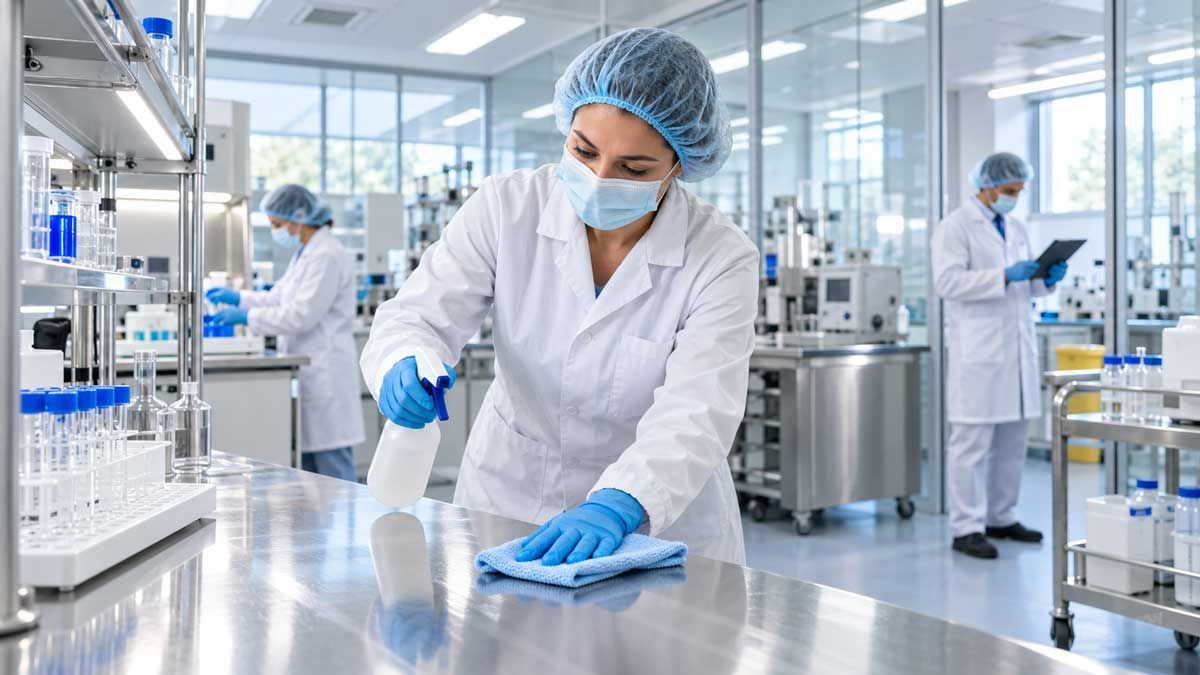
Adenosine Triphosphate is a molecule found in all living cells, including bacteria, human organic matter, and residual bodily fluids. The testing process is remarkably straightforward but clinically profound. A specialized technician swabs a high-touch surface—like a bed rail or a nurse's computer keyboard—and inserts the swab into a digital luminometer.
The device provides an immediate numerical reading of the biological residue present, measured in Relative Light Units. High numbers indicate a failed disinfection process. This real-time data prompts immediate corrective action, ensuring the room is recleaned before a vulnerable patient ever enters the space.
Data-Driven EVS Accountability for 2026
Hospital procurement teams and facility managers prefer vendors who bring their own advanced validation tools to the table. Tracking these numerical ATP scores over time allows administrators to identify problematic areas within the facility and adjust labor resources accordingly.
This analytical approach transforms environmental services from a basic maintenance function into a strategic, measurable asset that directly impacts your HCAHPS patient satisfaction scores. Additional insights on establishing environmental hygiene benchmarks are available from the Centers for Disease Control and Prevention.
Setting Benchmarks for Facility Health
Establishing baseline ATP scores allows medical networks to enforce strict quality standards across multiple properties. If a specific outpatient clinic consistently returns elevated biological readings, management can immediately trigger retraining protocols for the personnel assigned to that sector. Continuous monitoring guarantees that the facility remains constantly prepared for unannounced Joint Commission inspections and ensures standardized safety regardless of the zip code.
Integrating UV-C Technology with ATP Verification
The most advanced ATP testing hospital cleaning vendors in Atlanta do not stop at chemical disinfection. They pair their ATP verification with medical-grade UV-C light deployment.
Once a terminal clean is complete and the ATP swab verifies a passing grade, specialized robotic UV-C units are deployed to bathe the room in ultraviolet light. This secondary measure destroys the DNA of any remaining airborne or shadowed pathogens, providing a fail-safe layer of infection prevention that chemical applications simply cannot achieve alone. The ATP swab proves the physical soil is gone, and the UV-C light ensures the microscopic environment is entirely neutralized.
Advancing Your Standards with Cleanstar National
Your medical facility deserves a corporate partner who embraces scientific validation and advanced technology. We back our environmental protocols with hard data to give your administration total peace of mind. We don't just tell you a room is clean—we prove it.
Bring enterprise-level accountability to your Atlanta hospital, clinic, or surgical center by connecting with our specialized medical division at www.cleanstarnational.com.
To request a demonstration of our ATP testing and UV-C protocols at your facility, schedule a consultation at www.cleanstarnational.com/contact.
Cleanstar National: Expert B2B Cleaning Solutions for Atlanta's Critical Industries