Atlanta Hospital Infection Control Cleaning | B2B Vendor
Healthcare Associated Infections cost medical networks millions of dollars annually and severely compromise patient recovery. Facility directors and Infection Preventionists face immense pressure from the Centers for Medicare and Medicaid Services to keep infection rates at absolute minimums. Visual cleanliness means nothing if active pathogens remain on bed rails, call buttons, and privacy curtains. Stopping transmission requires a clinical approach to environmental surface management that standard commercial janitors simply cannot provide.
The Financial and Clinical Burden of HAIs
Pathogens like Clostridioides difficile, MRSA, and Vancomycin resistant Enterococci thrive on environmental surfaces. When patients, visitors, and medical staff touch these contaminated areas, the microorganisms spread rapidly throughout the ward. Beyond the devastating impact on patient health, hospitals face severe financial penalties under the CMS Hospital Acquired Condition Reduction Program for failing to control these outbreaks.
To mitigate these risks, administrators must partner with specialized hospital infection control contractors in Atlanta who understand the biology behind the cleaning process. You can explore the latest public health data regarding these transmission vectors via the official CDC Infection Control Portal.
The Pathogen Transmission Chain
Breaking the chain of infection demands precise chemical application and a deep understanding of microbiology. How do environmental services reduce HAI rates in hospitals? They do it by treating every surface as a potential vector.
Pathogens can survive on dry inanimate surfaces for months. A seemingly clean intravenous pump or mobile computer workstation can easily transfer deadly bacteria directly to a vulnerable patient if the environmental turnover process is rushed or executed with improper chemicals.
Advanced Environmental Surface Disinfection Protocols
Standard commercial cleaning focuses on removing visible soil. Hospital infection control focuses on removing microscopic bioburden. This shift in operational mentality requires specialized training. Technicians must understand the exact contact time required for every EPA registered product they deploy across patient care areas.
Disinfectants require specific dwell times to effectively neutralize stubborn bacterial spores. If a technician wipes the chemical away too quickly because they are rushing to turnover a room, the pathogen survives. It really is that simple. Your environmental vendor must enforce strict adherence to these chemical dwell times through continuous training and corporate oversight.
Advanced Protocols for Occupied Patient Rooms
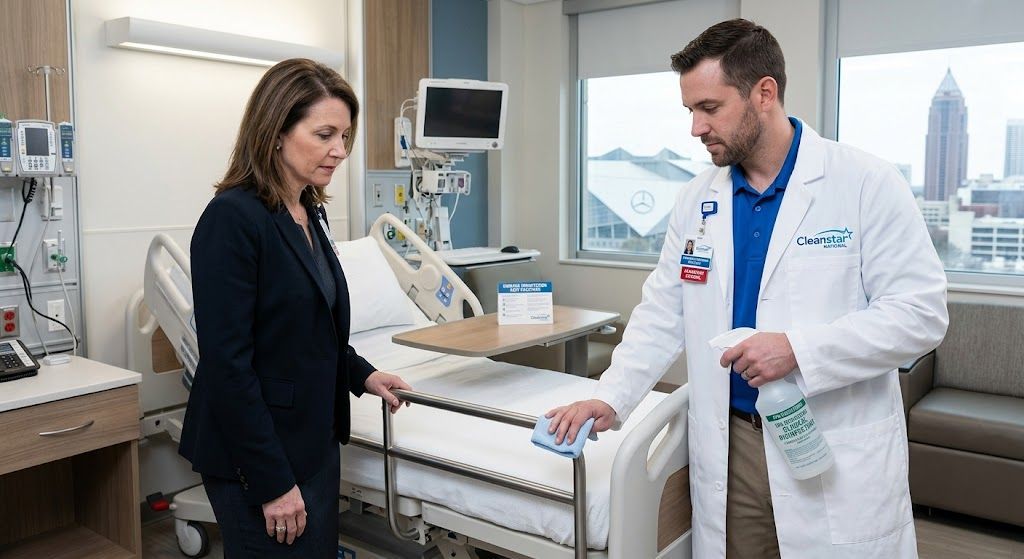
Occupied patient rooms present unique challenges for infection control teams. Technicians must perform their duties quietly and respectfully while ensuring complete surface decontamination. This delicate balance requires personnel who possess strong communication skills alongside their clinical training. They must navigate around medical equipment and vulnerable patients while systematically disinfecting high touch zones.
Upon patient discharge, the room undergoes a complete chemical reset. This terminal cleaning process ensures that the microbial footprint of the previous occupant is entirely erased before the next admission, utilizing advanced techniques like electrostatic spraying or medical grade UV light deployment where appropriate. You can read more about environmental standards for patient care areas through the American Hospital Association.
Enterprise Scale Infection Prevention in Atlanta
Large medical networks require standardized infection prevention protocols across all their campuses. A localized outbreak in a single outpatient wing can easily compromise the entire main hospital facility if containment procedures fail. Environmental teams must execute targeted disinfection routines multiple times per day in high traffic zones like emergency departments and surgical waiting areas.
By standardizing these clinical protocols across your entire real estate portfolio, hospital leadership can confidently predict their environmental compliance scores and focus their internal resources on patient care.
Strategic Partnership with Cleanstar National
Atlanta healthcare facilities need vendors who treat infection control as a rigorous science. We deploy highly trained teams who understand the biological stakes of their daily work and strictly adhere to the guidelines set forth by national regulatory bodies.
To protect your patients, avoid Medicare penalties, and stabilize your facility metrics, schedule a corporate consultation with our medical leadership team at www.cleanstarnational.com or request a comprehensive facility audit directly at www.cleanstarnational.com/contact.
Cleanstar National: Expert B2B Cleaning Solutions for Atlanta's Critical Industries