

Improper Server Room Cleaning Causes Data Loss
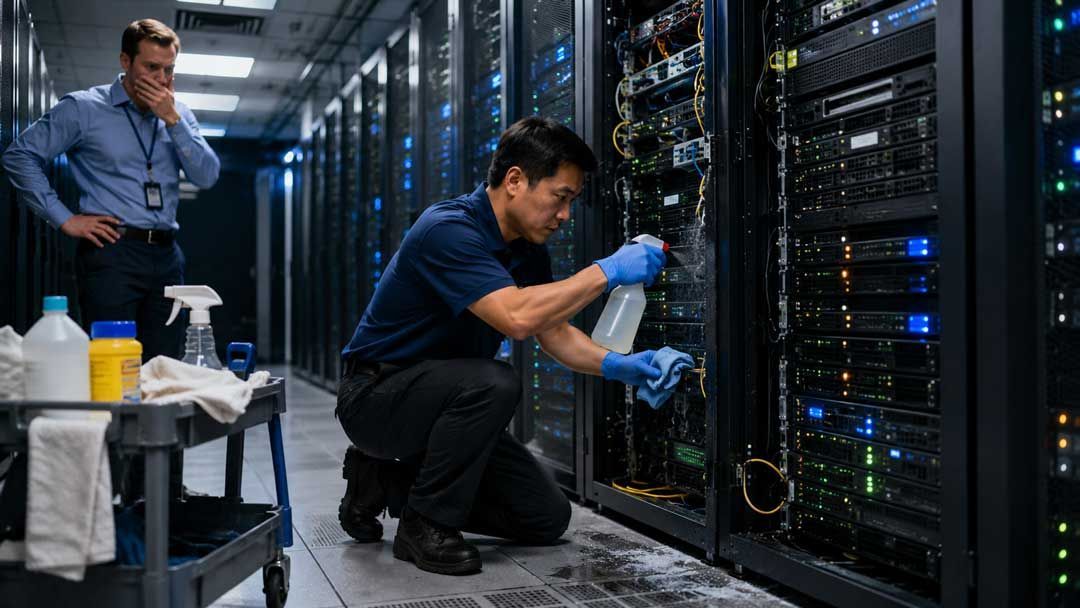
Server rooms hold the core systems that run modern business operations. Even small cleaning mistakes can cause sudden failures and big downtime costs for your sites. Without certified methods, dust in the air builds up fast.
Studies by Uptime Institute found most unplanned data center outages come from simple issues such as overheating or part failure due to poor controls. Experts warn that rough tools or wrong cleaning agents can wreck your gear far faster than normal use ever would, sometimes leaving board damage hidden until your critical workloads fail under pressure.
Meanwhile, missed air intakes clog with lint and block steady airflow across racks, pushing cooling systems hard while quiet threats grow behind your cabinet doors day after day. If you want continuity, you should use clear steps for critical room cleaning to cut these risks before they grow into lost revenue or fines.
Dust buildup, in turn, leads straight to risky server room heat in ways you may not spot early enough.
Dust Buildup Leads to Overheating
Dust loves to hide in server rooms. It slips into vents, cables, and racks with little notice. All that buildup isn't just ugly. Instead, studies reported in the Journal of Environmental Health show dust acts as a heat shield, trapping the heat electronics make, making cooling systems work harder and sometimes fail.
When cooling is blocked, your key parts can reach unsafe temperatures between 85°F and 125°F, a range shown to raise device failure rates by as much as 50%. This problem only grows as dust clogs fans or blocks airflow, leaving your vital hardware much more likely to fail or shut down.
There's no ignoring that a single hot spot can wreck a storage drive or corrupt your data, risks you dread. The tiniest bits of dust may even hold chemicals or metal, as highlighted in a 2024 IEEE Spectrum report, raising the risk of electrical faults in the heat.
That's why expert
server room cleaning in Atlanta remains key to protecting sensitive equipment from heat damage and data loss.
Clogged Filters Reduce Cooling Efficiency
Clogged filters are one of the most missed causes of poor cooling in data center environments, yet their impact goes far beyond just temperature control. When filters get packed with dust, the strain on cooling systems can lead to hardware issues and, in the end, huge data loss.
- Reduced Airflow Increases Server Temperatures: When airflow is blocked by dust-packed filters, you force cooling systems to work 30-40% harder to keep room temperatures steady, as reported by MIT research. The higher heat can push sensitive database servers past safe limits, raising the chance of memory errors and unplanned shutdowns.
- Overworked Cooling Systems Drive Up Energy Use and Costs: There's a clear link between filter health and power demand, and you can see blocked filters raise system energy use up to 20% beyond normal, according to Camfil's engineering data. When you run at high load all the time, it means more upkeep and fewer set windows for database cleaning or backups.
- Air Quality Failures Can Trigger Data Integrity Issues: Dirty filters hold both dust and gas-like contaminants that can harm server hardware and leave storage devices open to early failure. The shaky results can corrupt key records, and you may put core business data and security monitoring at risk of permanent loss.
Improper Cleaning Risks Equipment Damage
Clogged filters aren't the only risk hidden by poor facility hygiene. Poor server room cleaning can cause major gear damage and lead right to data loss.
- Electrostatic Discharge Hazards: Server rooms hold sensitive electronics that react poorly to static buildup during basic cleaning. Without antistatic methods or ESD-safe tools, even a minor static shock can badly harm circuit boards and memory modules. Data Center Frontier reports that ESD events account for up to 33% of unexplained hardware failures.
- Liquid Intrusion and Corrosion: If you use mops, sprays, or the wrong cleaning solutions near hardware, you create big gear threats. Liquids can seep into power supplies and drive enclosures, causing shorts, rust, and slow data loss. The Uptime Institute found that fluid-related incidents result in recovery costs that are, on average, 60% higher than all other mechanical mishaps.
- Abrasive and Damaging Cleaning Tools: Data center components need tools made to stop scratches and wear when you remove buildup. Rough cloths or general janitorial vacuums can scratch server housings, dislodge fans, and grind dust into connectors. Over time, these minor scratches let in grit and moisture, raising failure risks and data integrity loss.
Improper server room cleaning creates risks for your organization's most valuable IT assets. One slip can cause outages, downtime, or even huge data loss that breaks trust with your stakeholders. Studies show 75% of unplanned outages are caused by preventable site issues, like dust and debris.
Such hits carry an average cost of $8,850 per minute for large data centers, so strong risk control is key. Cleanstar National Inc delivers
certified data center cleaning and critical environment cleaning across Georgia and the Southeast.
We use proven HEPA, ESD, and ISO steps to clear out dust before it can harm your systems or cause gear to fail. Our teams do each clean using strict checklists, with exec oversight and live reports. These safeguards help you keep sensitive rooms compliant with industry rules and free from surprise threats.
If you treat cleaning as mission-critical, not routine care, you see fewer hits and better audit results. When you partner with us, you align with a company dedicated to your uptime, compliance, and day-to-day strength.
So avoid the steep costs of poor cleaning by choosing Atlanta's authority: Cleanstar National Inc.
Cleanstar National: Expert B2B Cleaning Solutions for Atlanta's Critical Industries