Data Center Cleaning Risk Analysis: Protecting Uptime Through Critical Environment Control
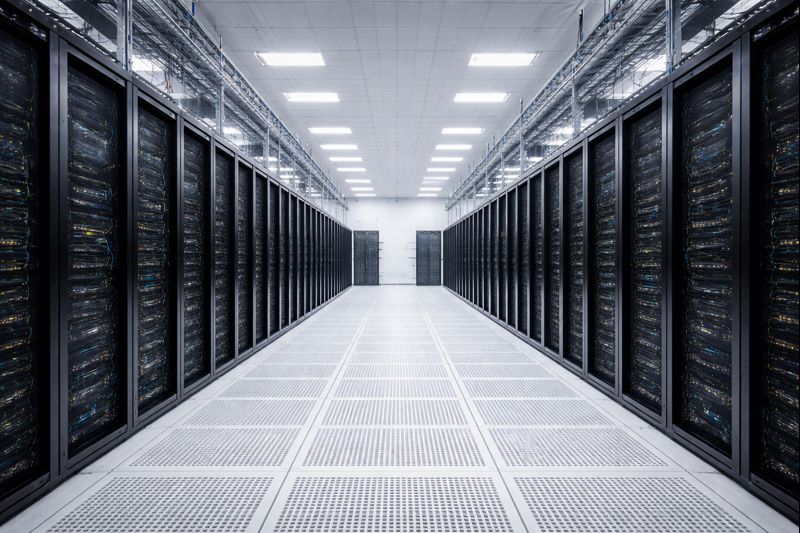
Raised temperatures in server rooms can trigger equipment shutdowns within minutes. Preventing downtime depends on more than visible dust removal. Fine particulate buildup, often hidden below racks or inside air handlers, directly impacts hardware reliability and system uptime.
This risk spans multiple industries. Fire investigation data shows that accumulated debris such as paper fibers contributes to electrical fire events in commercial environments with mission-critical infrastructure. In addition, electrostatic discharge (ESD) generated by particulate accumulation beneath cables and flooring systems has been linked to a significant portion of data loss incidents in controlled environments.
Consistent
critical environment cleaning for data centers maintains airflow stability so cooling systems operate within designed thresholds during peak demand. As infrastructure ages beyond warranty cycles, structured maintenance programs help extend asset lifespan by reducing heat-related component stress and corrosion risk.
Regulatory scrutiny continues to increase. Audit frameworks now evaluate environmental hygiene alongside operational controls, requiring documentation that demonstrates consistent particulate management. Proactive cleaning programs reduce exposure to compliance findings, operational disruption, and insurance-related disputes.
Maintaining uptime begins with controlling environmental risks before they escalate into system-level failures.
Prevent Equipment Overheating and Failures
Dust accumulation accelerates in high-density server rooms. Restricted airflow increases thermal load, elevating the likelihood of overheating events. Even marginal temperature increases reduce hardware lifespan and impact system stability.
The American Society of Heating, Refrigerating, and Air-Conditioning Engineers identifies airflow disruption and thermal fluctuation as primary contributors to equipment failure. Blocked vents, cable congestion, and particulate buildup create localized hot zones that degrade performance.
When airflow is obstructed, systems compensate through increased cooling demand. This leads to higher failure rates in drives, processors, and power systems. Structured server room cleaning programs, combined with HVAC maintenance, maintain operational thresholds and reduce unplanned outages.
This approach protects infrastructure performance while supporting business continuity requirements.
Avoid Dust-Induced System Downtime
Downtime linked to particulate contamination carries a measurable operational impact. The Uptime Institute reports that environmental factors contribute significantly to avoidable outages.
- Dust accumulation within equipment restricts performance and increases failure rates
- Subfloor contamination introduces hidden risks that are often missed during visual inspections
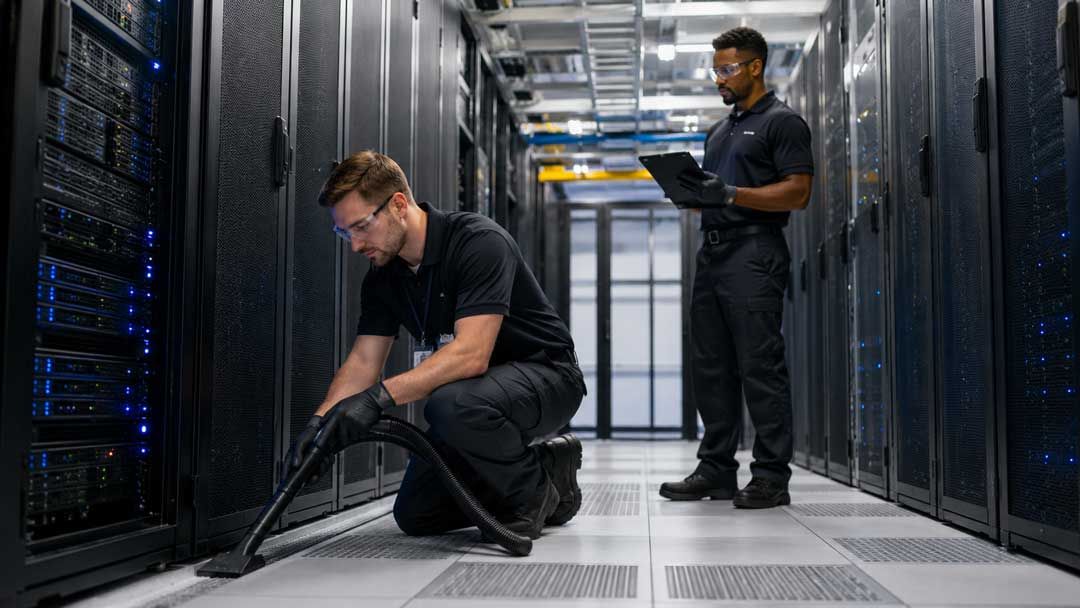
- Certified technicians apply anti-static, controlled cleaning methods to protect sensitive infrastructure
- Scheduled inspections identify contamination patterns before they escalate into outages
Preventive server room cleaning reduces exposure to these risks while supporting uptime targets and compliance requirements.
Mitigate Fire Hazards from Contaminants
Contaminant buildup introduces ignition risk in high-density electrical environments. Dust and fiber accumulation act as combustible material when exposed to heat or electrical discharge.
- Accumulated particulate matter increases ignition probability on energized components
- Clean environments support effective fire suppression system performance
- NFPA 75 and NFPA 76 standards require control of combustible dust in data center environments
- Compliance with fire protection standards reduces exposure to insurance disputes and operational losses
- Cleaning protocols aligned with fire safety frameworks strengthen overall facility resilience
Protect Against Electrostatic Discharge Risks
Electrostatic discharge remains a critical risk factor during cleaning operations. ESD events are often undetected at the time of occurrence, but can cause latent hardware failure.
The ESD Association outlines strict handling protocols for sensitive electronic environments. Non-compliant tools, standard vacuums, and improper materials increase the likelihood of charge generation.
- Synthetic materials generate static through movement across surfaces
- Non-grounded equipment transfers charge directly to sensitive components
- Even low-voltage discharge events can damage microelectronics
- Failures may appear weeks after exposure, complicating root cause analysis
ESD-controlled cleaning protocols, grounded equipment, and certified technician training are required to mitigate this risk.
Maintain Optimal Airflow and Cooling
Facility layout and cleanliness directly influence airflow performance. High-density racks generate significant thermal output, requiring unobstructed cooling pathways.
- Dust accumulation restricts vent and grille performance
- Blocked airflow increases system workload and energy consumption
- Poor maintenance increases overheating risk in critical zones
- Cooling inefficiencies drive higher operational costs
Data from the Uptime Institute indicates that poorly maintained airflow systems significantly increase failure probability. Structured cleaning ensures consistent air distribution and thermal balance.
Extend Equipment Lifespan with Structured Cleaning
Equipment longevity is directly linked to environmental control. Contaminants accelerate wear, reduce efficiency, and increase replacement frequency.
- Reduced particulate exposure minimizes mechanical stress
- Clean environments maintain filter and cooling efficiency
- Controlled conditions reduce electrical fault occurrence
- Consistent maintenance supports long-term asset value
Industry analysis from Data Center Frontier indicates that facilities with structured cleaning programs experience measurable extensions in hardware lifecycle performance.
Ensure Compliance with Industry Standards
Compliance requirements for server room environments continue to evolve. Cleaning programs must align with regulatory frameworks governing air quality, safety, and documentation.
- ISO 14644 establishes particulate control requirements for controlled environments
- OSHA guidelines define workplace safety and exposure limits
- EPA-aligned practices support environmental and chemical handling compliance
- GMP frameworks apply to regulated industries operating within controlled environments
Documentation remains critical. Cleaning logs, particulate readings, and process records provides verifiable proof during audits and inspections.
Security considerations also apply. Cleaning operations must align with access control protocols to prevent operational or data integrity risks. Controlled entry, monitored activity, and documented workflows support compliance across technical and security domains.
Integrated Risk Control Through Certified Execution
Rigorous risk analysis is essential for every server room cleaning program. Each cleaning event introduces potential exposure to particulate, electrostatic, and operational risks if not managed under controlled conditions.
Cleanstar National Inc operates as a risk mitigation partner for controlled environments. The organization maintains:
- 700+ E-Verified professionals across multiple operating regions
- A self-performing workforce with zero outsourcing
- Founder-led operations established in 1995
- Certified alignment with OSHA, IICRC, IJCSA, Red Cross, EPA, ISO 14644, and GMP protocols
- 24/7 operational readiness for mission-critical environments
Cleaning execution is supported by documented procedures, ESD-safe equipment, HEPA-filtered systems, and controlled access protocols. Each engagement includes audit-ready reporting and environment-specific risk controls.
This model supports uptime, regulatory compliance, and infrastructure protection across data centers, laboratories, and high-security facilities.
Cleanstar National Inc delivers critical environment cleaning for data centers designed to align with operational risk thresholds and audit expectations. Each program is structured to maintain environmental control, protect infrastructure, and support uninterrupted operations in high-performance environments.
Cleanstar National: Expert B2B Cleaning Solutions for Atlanta's Critical Industries