Approved work areas
The scope identified the raised-floor and underfloor areas included in the project rather than extending assumptions to the whole facility.
Over 30 years of Commercial Janitorial Service across Georgia
Enterprise case study · Metro Atlanta
A documented project summary describing the site context, agreed scope, coordination requirements, and project records available for an Atlanta data center engagement.
This case study describes one project. Conditions, scope, site controls, and outcomes vary by facility.

Work begins with the stated project objective, approved areas, and facility direction.
Access, work boundaries, operating conditions, and service windows are reviewed before scheduling.
Public statements are limited to the approved case-study summary and project context.
Project context
This public summary describes a zinc-whisker remediation project for an Atlanta telecommunications data center. The client name, exact location, and proprietary equipment details are not included.
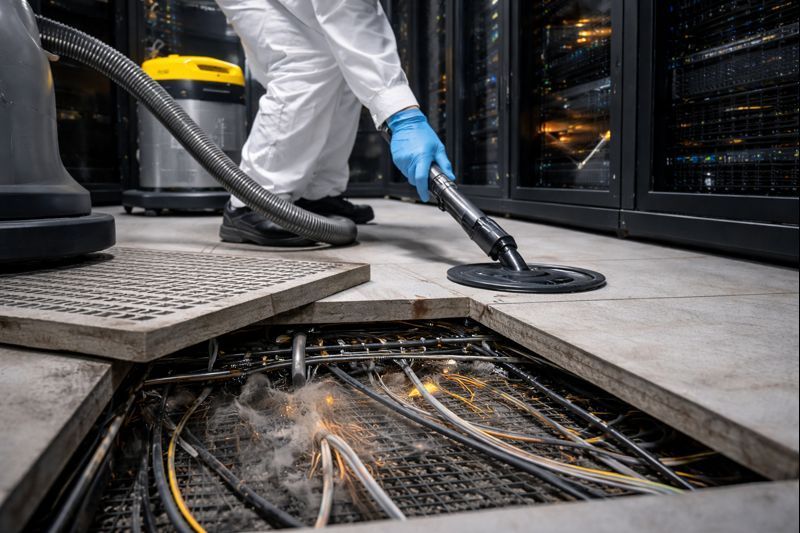
The project brief identified a raised-floor environment of approximately 40,000 square feet and a reported concern involving zinc whiskers within designated facility areas. The goal was to develop a commercially scoped plan around the facility’s stated access requirements, work boundaries, and operating conditions.
Zinc whiskers are microscopic filament-like structures that can develop on certain zinc-coated steel surfaces. Whether they are present or relevant to a particular data center requires a site-specific review of the available facility documentation, material conditions, and project requirements.
This is a summary of one engagement, not an engineering assessment, laboratory finding, compliance certification, or promise of a particular outcome at another facility.
Project record
The distinction between documented context and a broader claim matters in a critical environment. This table confines the summary to information described in the approved case-study brief.
| Project detail | What the record supports | Public source basis |
|---|---|---|
| Facility context | Atlanta telecommunications data center with a raised-floor environment. | Approved case-study brief |
| Reported concern | A zinc-whisker remediation scope was developed for designated project areas. | Approved case-study brief |
| Scale noted | Approximately 40,000 square feet of raised-floor environment. | Approved case-study brief |
| Timing noted | A 96-hour work window is identified in the project brief. | Approved case-study brief |
| Planning emphasis | Site-directed access, operating requirements, work boundaries, and closeout coordination. | Approved case-study brief |
Scope and site constraints
Critical-environment projects need more than a cleaning checklist. The planning conversation must establish what work is approved, where it may occur, when access is available, and what the facility team needs documented at closeout.
The scope identified the raised-floor and underfloor areas included in the project rather than extending assumptions to the whole facility.
Planning incorporated the facility’s stated access procedures, operating priorities, and the available work window before scheduling began.
Closeout expectations, communication points, and facility-provided requirements were part of the scope conversation.
Planning approach
The public record does not substitute for a facility-specific technical plan. It does show the coordination points that should be established before a data-center cleaning or remediation project is scheduled.

Documented project activity
This simplified sequence describes the commercial project flow. Specific work methods, facility controls, and technical requirements are established per project.
Review the available project brief, documented objective, designated areas, and facility-provided requirements.
Confirm the access process, site contacts, operating conditions, communication points, and work window.
Perform only the commercial work identified in the agreed scope and within the approved site boundaries.
Coordinate the agreed status communication and project closeout information with the facility team.
Facility team takeaways
A data-center zinc-whisker concern is site specific. Facility teams get a stronger proposal when they lead with written requirements, current documentation, clear access direction, and the practical limits of the work area.
Cleanstar National’s role is commercial cleaning work within the agreed scope. The facility remains responsible for its own engineering, security, operating, emergency, environmental, regulatory, and equipment-specific procedures.
Describe the areas of concern and provide project records or requirements that should guide the scope review.
Identify approved areas, access conditions, contacts, service windows, and exclusions before work is planned.
Separate facility observations, contractor activity, customer statements, and any third-party findings.
Report only what project documentation supports instead of making blanket performance claims.
Related Cleanstar services
These internal resources help facility teams continue the planning conversation with the appropriate commercial-service context.
Explore scope-defined commercial cleaning programs shaped around facility operations, access, surfaces, and quality expectations.
Explore enterprise cleaningDiscuss commercial floor cleaning and maintenance priorities as part of a broader facility plan.
Explore floor careReview Cleanstar’s cleanroom-focused page for a separate critical-environment service conversation.
Explore cleanroom cleaningData-center planning FAQ
Zinc whiskers are microscopic filament-like structures that can develop on some zinc-coated steel surfaces. Whether they are present or relevant at a specific facility requires a site-specific assessment and review of the available documentation.
No. This case study describes one project. Facility conditions, approved scope, access controls, operating requirements, and outcomes vary by site.
A facility team can provide the relevant areas, project objective, available site documentation, access procedures, operating constraints, proposed timing, and any written requirements that should shape the commercial scope.
Yes. Facility teams can upload an RFP or scope for review so the initial conversation can focus on the stated work areas, timing, access conditions, and project requirements.
Each site is reviewed individually. The proposal process considers the facility's stated access procedures, operating requirements, work boundaries, and available service window before work is scheduled.
This page describes laboratory testing, third-party findings, or certification only when those items are specifically documented for a project. It distinguishes facility-provided findings, contractor observations, and third-party reports.
Start with the right information
Cleanstar National serves Metro Atlanta facility teams. Request a scope review or upload an RFP so the planning conversation can begin with the information that matters.

Commercial cleaning programs designed around the operating rhythm, access, surfaces and quality expectations of Metro Atlanta facilities.
Corporate office
540 Collins Rd